The edge feels safer than it is
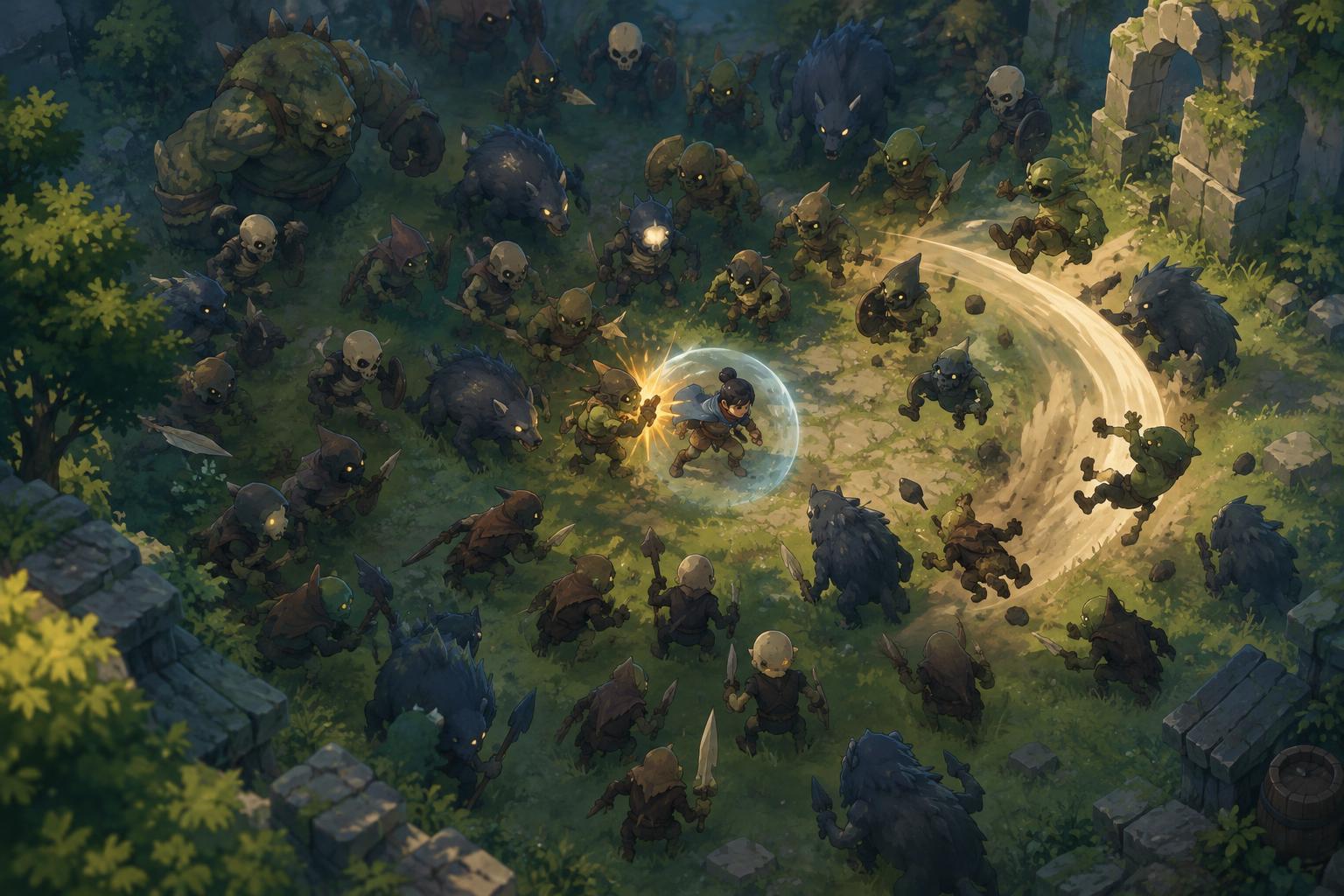
When enemies approach from several directions, backing toward the edge of an arena feels sensible. The boundary is one side you no longer have to watch, and a line of enemies in front of you may seem easier to manage than a loose crowd. That can be useful for a moment, especially if your attacks cover the open side well. The danger is treating the boundary as a permanent position rather than a temporary tool.
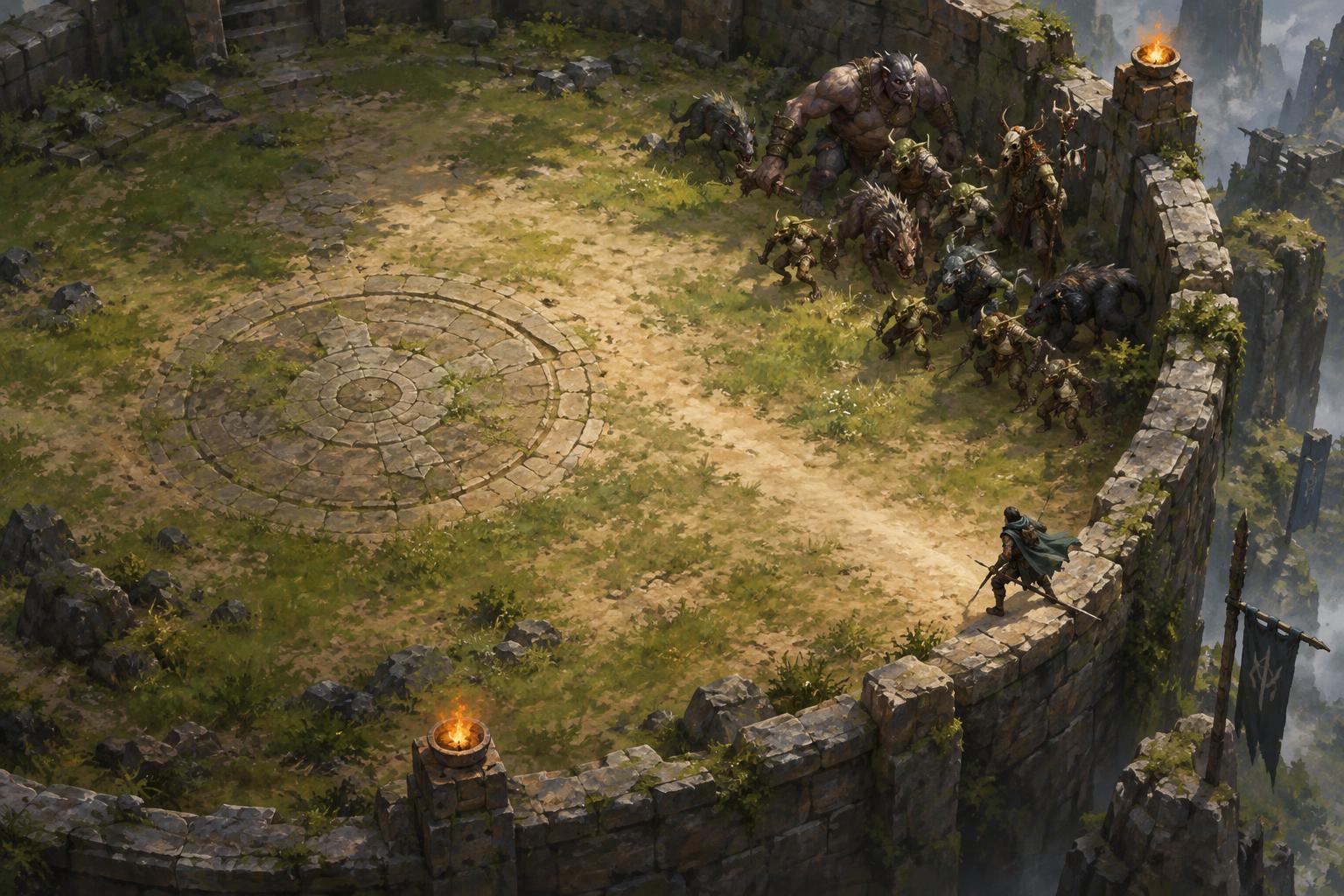
In open space, you can change direction to avoid a dense group. At the edge, roughly half of those directions are gone. Enemies do not have to surround you completely to create a trap; they only need to block the few paths that remain. A small mistake then has a larger cost because there is less room to correct it. This is general guidance for arena-survival games, not an official guide to any particular game.
How a retreat becomes a trap
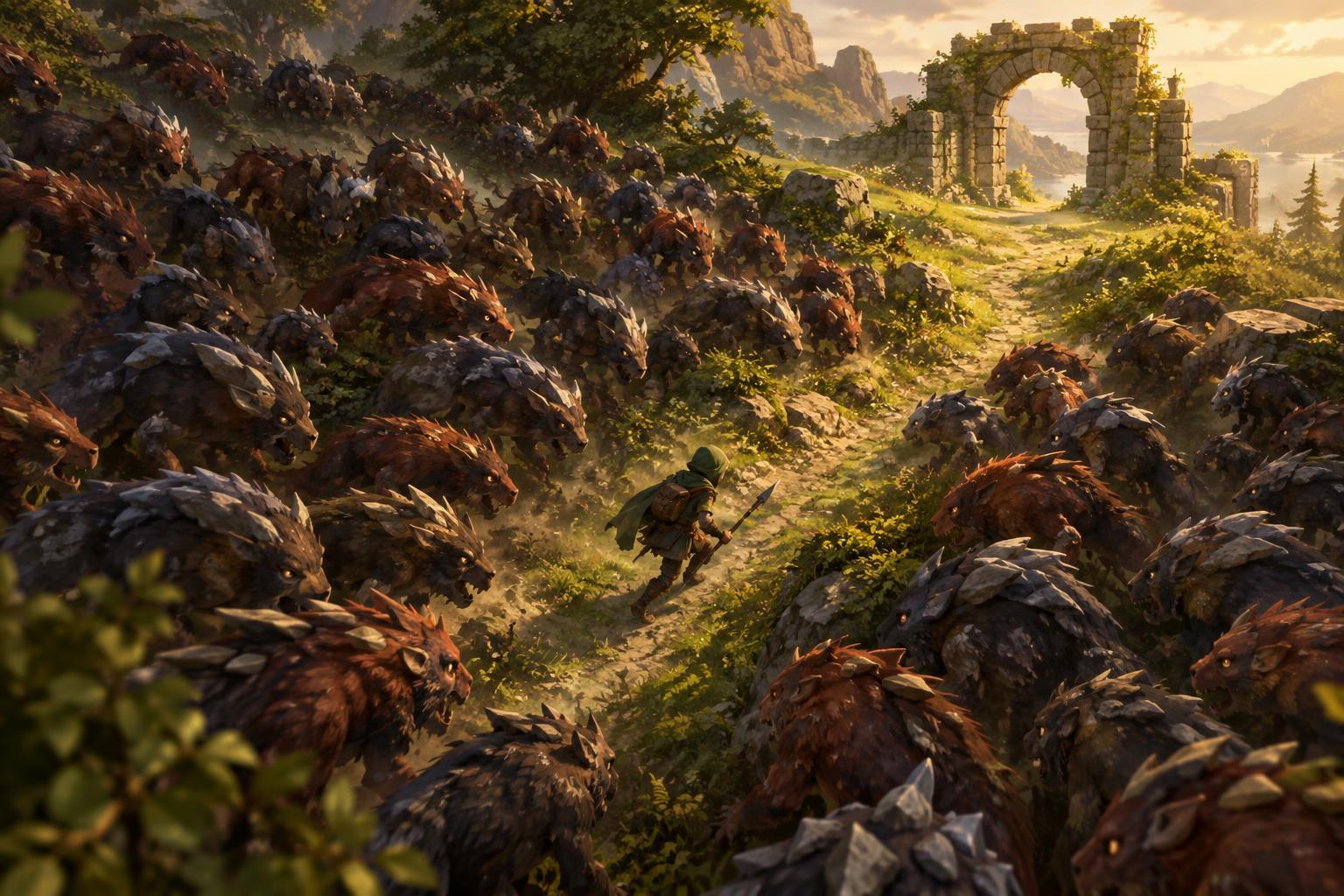
An edge trap often develops gradually. You retreat from a thick group, reach the boundary, and continue moving along it. Enemies following behind form a tail, while enemies ahead narrow the route. If you keep retreating, the crowd may become too wide to pass safely. A corner makes this worse: two boundaries meet, leaving even fewer directions to take. The exact enemy behavior varies by game, but the loss of maneuvering room is the same.
Your attacks can add to the illusion of safety. A build that reliably clears enemies directly in front may keep a narrow lane open while leaving the sides crowded. That lane works until a tougher enemy, a missed attack cycle, or a change in movement speed interrupts it. Retreating along the wall can also pull the crowd into a long shape that is hard to cross when you finally want to return to the center.
The boundary does not always create the trap by itself. The problem is arriving without an exit plan. Before moving toward an edge, look for the route you expect to use afterward. If that route depends on squeezing through a gap that is already closing, turn toward open ground sooner.
Use the boundary briefly, then leave it
A safer retreat is a shallow arc rather than a straight line into the wall. Move away from the immediate threat while preserving space to turn. If you do reach the boundary, travel only as far as needed to get past the most crowded area, then angle back into the arena through a visible opening. This gives pursuing enemies time to follow your old path while you reclaim room to maneuver.
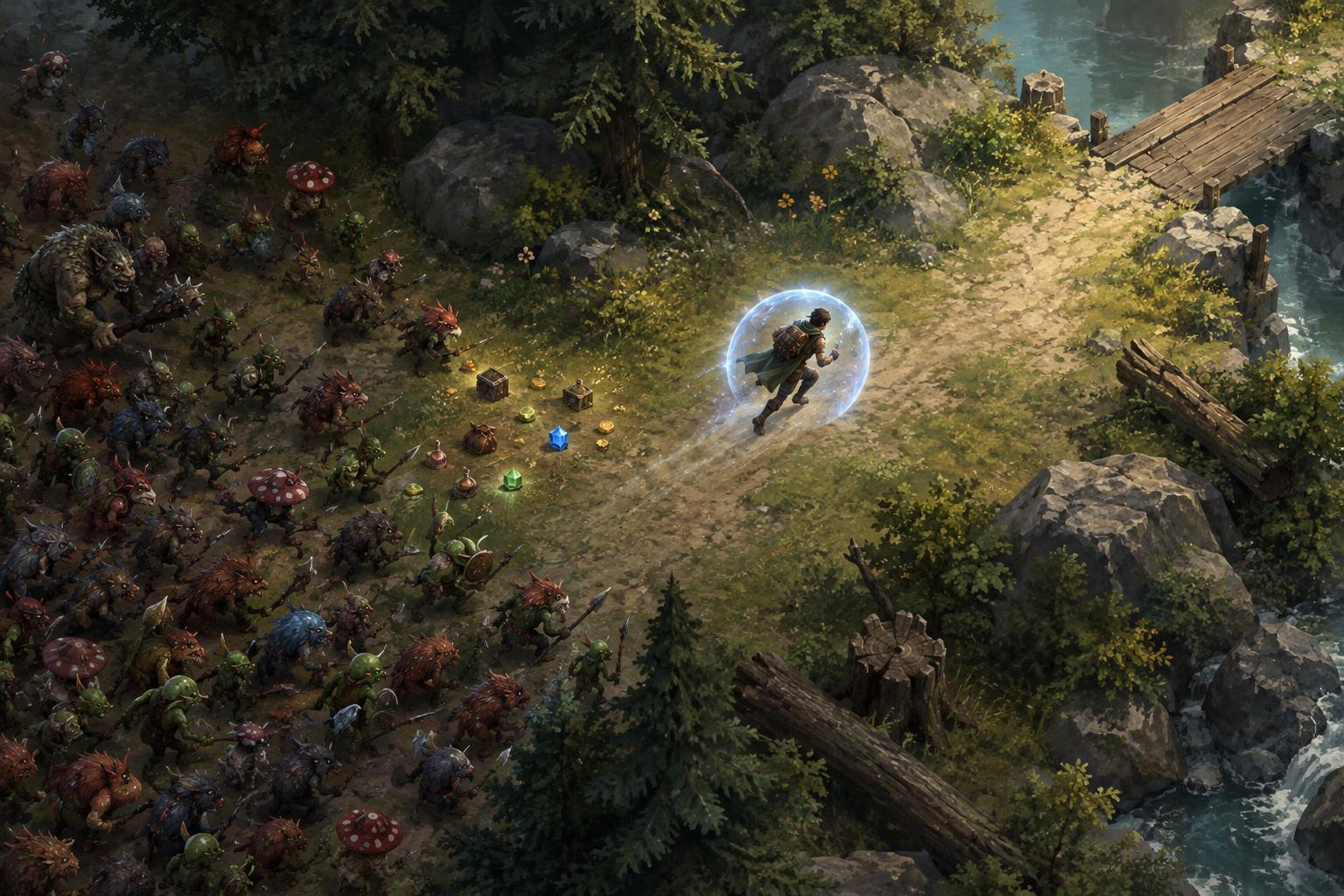
Watch the space ahead of your character, not just the enemies closest behind. A clear gap that is moving away from you may be less useful than a wider opening you can reach now. Turn before you are forced to make a last-second crossing. In games with a dash, shield, knockback effect, or temporary invulnerability, consider those tools a way to support a planned exit—not a reason to stay pinned against the wall.
Sometimes the edge is still the best available position. An attack may cover one side especially well, or a map feature may give you a predictable route. The key question is whether you can leave when conditions change. A position that works only while every attack lands is more fragile than one with a clear second path.
Practice keeping an escape lane
On your next run, try checking your exits whenever you change direction. Identify one route forward and one route back toward open space. If both begin to fill, move before the gap disappears. This simple habit shifts your attention from your current position to the space you will need a few moments later.
You can also learn from an edge trap without treating it as a failure of reflexes. Notice where you first lost the option to turn inward. Was it when you reached the boundary, when you followed it too far, or when you waited for an attack to clear a path? Recognizing that earlier decision point is more useful than focusing only on the final collision.
Good movement in an arena-survival game is not always about staying near the center. It is about keeping choices available. Visit an edge when it helps you shape a crowd or avoid an immediate threat, but leave while there is still a comfortable opening. The safest route is often the one that preserves your next move.