Give storage a job before adding more of it
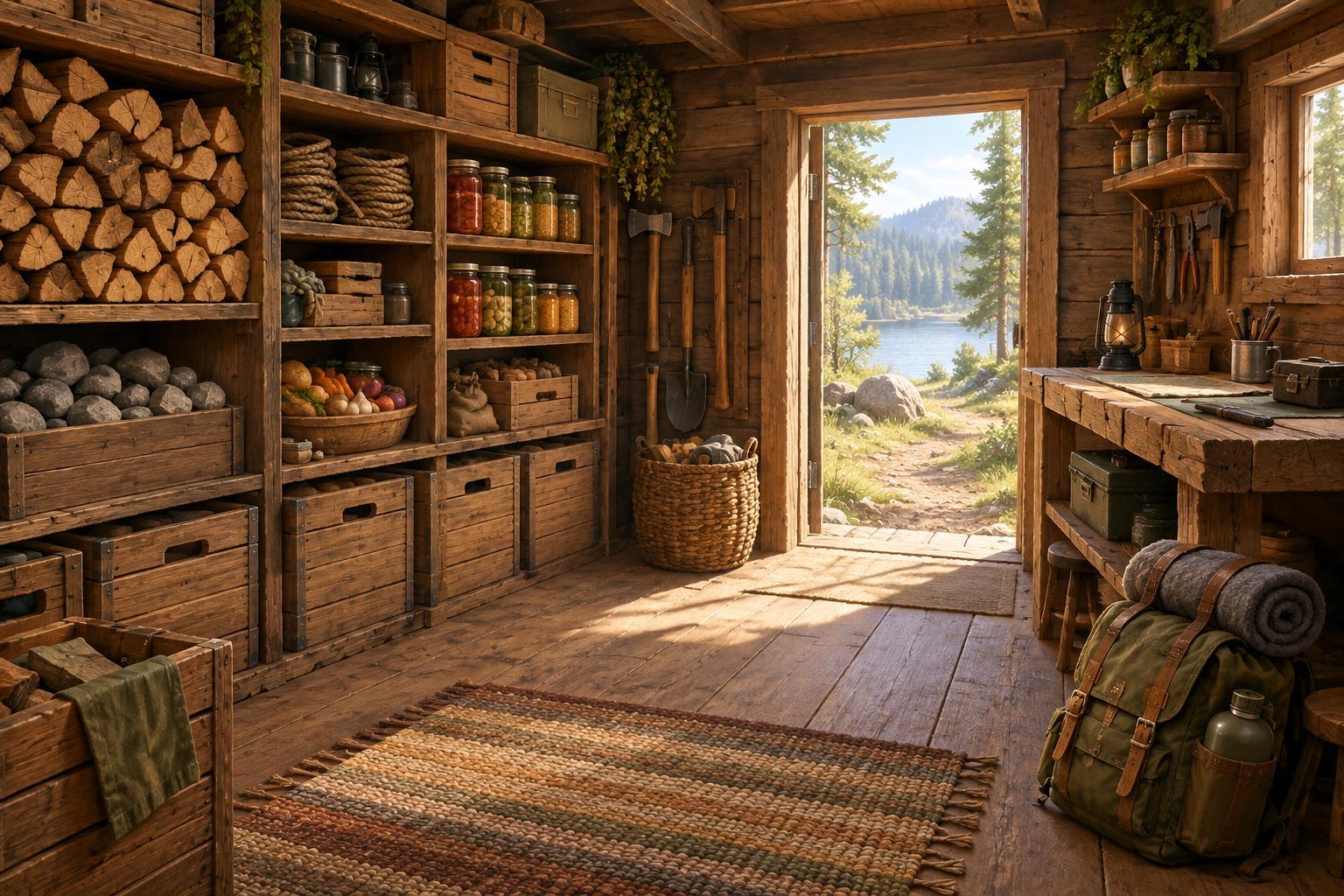
A growing pile of containers can look like progress, but extra space does not help much if you cannot remember where anything goes. Start with a few broad purposes rather than a separate box for every item. One container might hold food and other consumables, another common building materials, and another tools and equipment. The exact groups will depend on what the game lets you collect and store.
This is unofficial, general guidance for survival games, not a storage recipe for a particular title. Before designing a large system, notice what you look for most often. If you repeatedly open several containers to find one material, that material needs a clearer home. A small arrangement that you understand is usually more useful than an elaborate one you have to relearn after every session.
Put frequently used supplies near the activity
Think about the trips you make inside your base. If crafting requires moving between storage and a workstation, keep commonly used crafting materials nearby when the game allows it. Place food and travel supplies where you prepare to leave. Keep repair materials close to the equipment they serve. The goal is not perfect symmetry; it is fewer searches and fewer forgotten items.
A drop-off container near the entrance can make returning from an expedition less disruptive. Put newly collected items there first, then sort them when the area is safe and you have time. Treat it as a temporary holding place, not permanent storage: if it stays full, useful supplies become hard to find again. Sorting a small batch after each trip is easier than facing an entire base full of mixed loot.
Use labels and simple rules you can remember
If the game supports signs, container names or distinct visual markers, use short labels that describe what belongs inside. Broad labels such as “Food,” “Building” and “Tools” are easier to follow than categories with complicated exceptions. If labeling is unavailable, use consistent positions: for example, supplies for leaving the base could always go on the side nearest the exit.
Decide what to do when an item fits two categories. A piece of wood might be fuel in one situation and a building material in another. Choose one primary location, or reserve a small amount beside the station where you use it most. Consistent rules matter more than finding a theoretically perfect category. For a separate, real-world look at packing and organization beyond games, you can browse Pakowanie i organizacja · Wypoczynek z Pomysłem.
Keep a small reserve for your next outing
Storage should help you leave prepared, not just help you keep everything you find. Consider setting aside a modest travel supply area for items you commonly take on a trip, such as food, light sources or spare tools where those mechanics apply. Check that area before leaving rather than searching the whole base while trying to remember what you need. Avoid putting every valuable item into a ready-to-go pile; keep reserves for recovery or future projects.
As your needs change, revise the arrangement instead of adding containers without a plan. A resource that was rare early on may later arrive in large quantities and need more space. A workstation you use often may deserve its own nearby supply box. Every so often, try to find several common items without rummaging. If the search feels awkward, move or relabel what caused the confusion. An effective base is one that makes the next routine task simple.