Think of a bomb as a resource, not a last resort
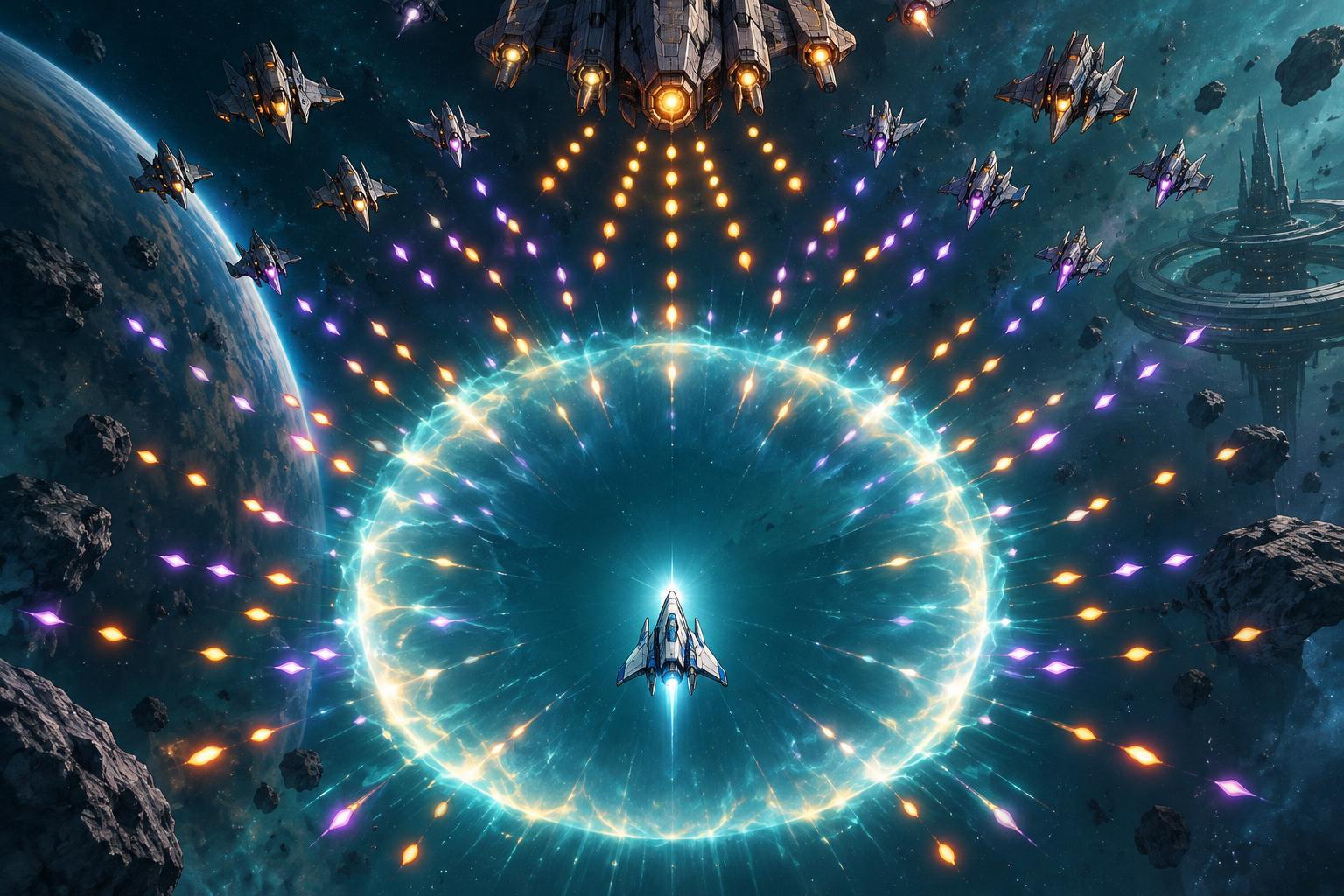
In many shoot-’em-ups, bombs clear projectiles, damage enemies or grant a brief window of safety. Their exact effects vary by game, but their purpose is similar: they let you exchange a limited resource for control of a dangerous situation. The most common mistake is treating a bomb as something to use only after every possible escape has failed. By then, the player may already be hit.
A better rule is to bomb when you can identify a serious threat but still have time to act. If a dense pattern is closing off your route, you are trapped near the edge of the screen, or an unfamiliar attack has begun while your movement options are poor, a bomb has a clear job. Surviving with one fewer bomb is usually better than losing a life while carrying a full stock.
Bomb before the trap closes
Good bomb timing starts with watching space rather than staring only at your character. Ask where the next safe lane will be, whether an enemy is about to block it, and how much room you have to change direction. A pattern can be manageable while it is far away and nearly impossible once it reaches the bottom of the screen. The moment your planned route disappears is often a more useful trigger than a projectile getting close.
Bombing early can also help you recover position. If a bomb clears bullets but has a short protective effect, use that window to move away from a corner and return to an area with multiple exits. Do not spend the entire reprieve chasing damage unless the game’s mechanics make that a safe choice. The goal is to leave the bomb animation in a better position than the one that forced you to use it.
Match your timing to the bomb system
Not every shoot-’em-up rewards the same decision. Some bombs activate immediately; others have a delay. Some games let you cancel a hit by bombing within a brief window, while others offer no such recovery. A bomb may erase every projectile, clear only nearby threats, or leave certain attacks untouched. Before building a habit around last-second saves, learn what the game actually permits.
Resource rules matter just as much. If a lost life resets your bomb stock, dying with several unused bombs may be especially costly. If bombs are scarce across an entire run, you may need to accept manageable risks in early stages so you have an answer for later patterns. In games that award bombs frequently, using one to preserve a strong attempt can be sensible. Check how your chosen game replenishes bombs, then judge each use against the resources you can reasonably expect to have next.
Use bombs to protect a plan, not just a life
A bomb can be valuable even when you might survive without it. Consider using one to pass an attack you have not learned yet, secure room to handle an approaching enemy, or protect a run that is already going well. It can also be worth bombing before a risky attempt to collect an item if missing that item would be less damaging than losing a life. The question is not simply, “Can I dodge this?” It is, “What happens to the rest of my run if I try and fail?”
On the other hand, using a bomb whenever the screen looks busy can prevent you from learning patterns you could handle reliably. During practice, choose a specific attack to study. Try moving through it with a planned route, then bomb if that route breaks down. This keeps practice purposeful without turning every attempt into a test of how long you can delay pressing the button.
Build a simple decision rule
Before a stage or boss, decide what will make you bomb. Your rule might be: bomb if you are pushed into a corner with no visible exit, if a new pattern begins while you are out of position, or if you must cross a dense stream to reach safety. These triggers are easier to follow under pressure than a vague promise to “save bombs for later.” After a run, notice whether you bombed too late, too early or at a moment that genuinely improved your position.
The best timing is not always the most dramatic timing. A well-used bomb turns a situation you cannot confidently control into one you can. As you learn a game’s patterns and resource system, the moments that call for one become easier to recognize—and the bombs you save will be saved for a reason.