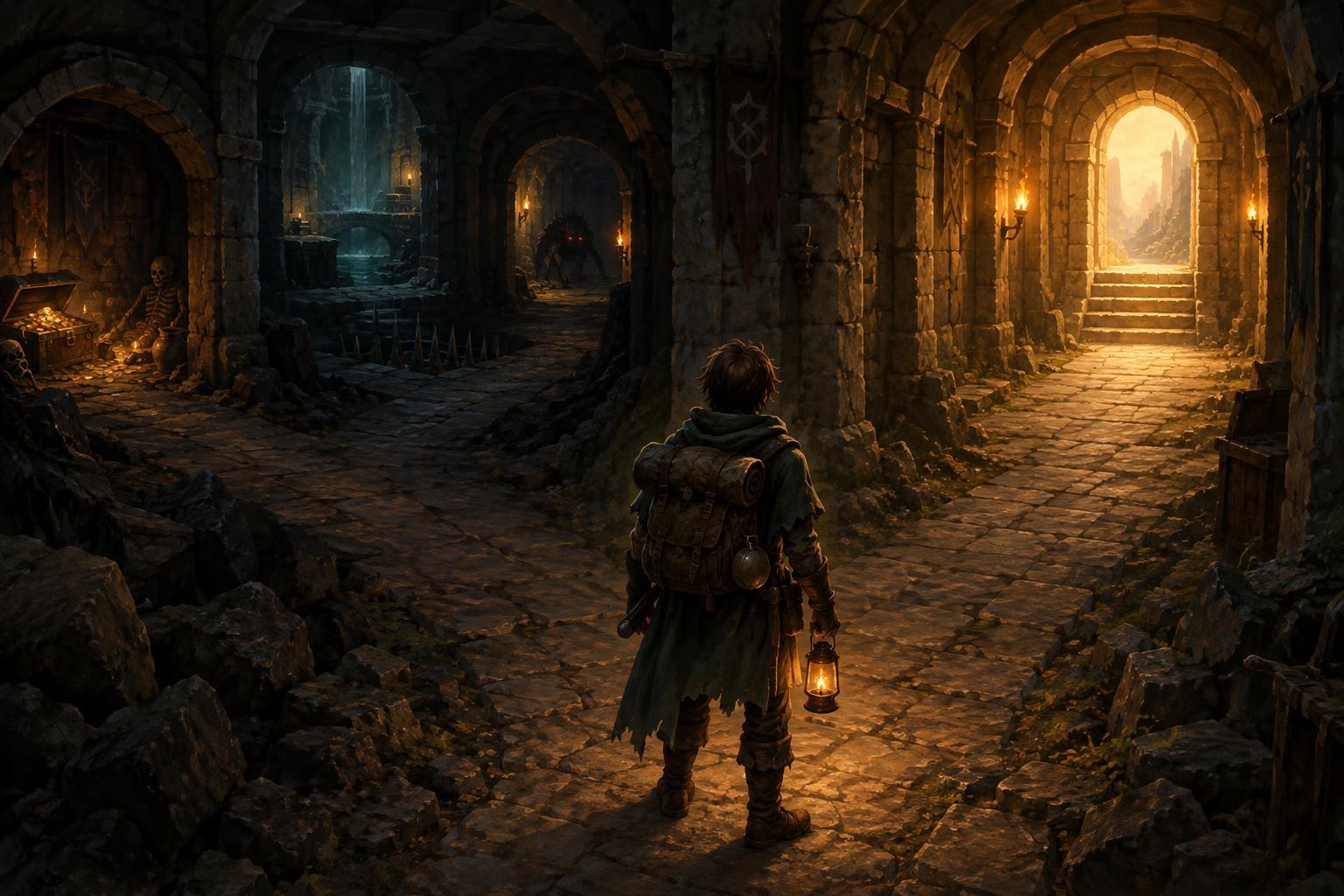
Decide what this run needs
A procedural stage can make every unexplored corridor feel like a missed opportunity. It might contain a useful upgrade, a shop or a safer route forward. It might also contain a fight that costs more than its reward is worth. There is no universal rule to clear every room or rush every exit. The better question is: what would another detour do for this particular run?
Start with a simple objective. Are you trying to finish the run, learn an unfamiliar enemy, collect a resource or test a build? If survival is the priority and you have already found the exit, an optional room needs a strong reason to justify its risk. If you are still missing a basic tool your build depends on, exploring may be worth more. This is unofficial editorial guidance for thinking through those choices, not a rule tied to any one game.
Compare possible rewards with certain costs
Exploration often has uncertain rewards, while some of its costs are easy to see. Another encounter may consume health, ammunition, limited-use abilities or time. A long route may also leave you exposed before a boss or a more difficult stage. Before entering a side path, ask what you realistically hope to find and what you can afford to spend looking for it.
Look for clues the game provides. A visible reward, a marked shop or a known resource room gives you more information than an unmarked corridor. Consider whether the reward improves your ability to handle what comes next. A small upgrade can be valuable when it completes a useful combination, but less important when your build already handles ordinary enemies comfortably. If the potential reward is vague and your resources are low, leaving is often the clearer choice.
Check whether your build is ready to move on
The same stage can call for different decisions depending on your build. A setup that defeats groups quickly may make optional rooms relatively cheap. A build that depends on positioning, careful aim or scarce charges may pay a higher price for each extra fight. Compare your current strengths with the challenges you expect ahead, rather than judging your build by the number of upgrades it has collected.
Think in terms of missing functions. Can you deal with crowds? Can you handle a durable single target? Do you have a reliable way to create space when surrounded? If a detour could address a clear weakness, it has a purpose. If you cannot name what the build needs, more loot may simply add variety without improving your chances. In games where upgrades are random, recognize that exploration offers a chance to fix a weakness, not a guarantee.
Use a stopping rule before you get greedy
Procedural stages are good at encouraging one more room. Setting a stopping rule before you enter a detour can keep that impulse from deciding for you. For example, you might explore until you find one useful upgrade, until you reach a chosen health threshold or until the route branches again. Once you hit that limit, return to the exit instead of negotiating with yourself after every reward.
Make the rule fit the game. If enemies grow stronger over time, a delay may be more costly than it first appears. If you can retreat safely and rooms remain cleared, checking a nearby branch may be a modest commitment. If backtracking creates new danger, even a short detour deserves more thought. A stopping rule is not meant to remove spontaneity; it gives you a deliberate reason to stop when the stage keeps offering possibilities.
Treat the exit as progress, not a missed opportunity
Leaving a stage with unopened rooms can feel incomplete. In a run-based game, though, survival and information are rewards too. Reaching the next area lets you see what your build can actually handle and teaches you which resources matter most there. An exit is especially attractive when you have a workable build, limited recovery options or no clear reason to expect a useful reward nearby.
After a run, review one decision rather than every room you skipped. Did exploring solve a specific problem, or did it drain resources you needed later? Did leaving early reveal that your build lacked something important? Use that observation to adjust your next stopping rule. The goal is not to make every choice perfect. It is to make each detour intentional—and to recognize when moving on is the strongest move available.