Start with a problem, not a weapon list
Weapon synergy means two or more effects become more useful together than they would be in isolation. In a survival or arcade-style roguelite, that does not always mean finding a named combination or a special upgrade. A slow, hard-hitting attack may benefit from an effect that keeps enemies in its path. A short-range weapon may become safer when another effect clears space around the player. The useful question is not simply “Are both weapons strong?” but “What problem does one solve for the other?”
Begin by noticing how a run is failing. Are enemies reaching you between attacks? Are groups easy to manage but durable targets taking too long? Do you have plenty of damage directly ahead but no answer to threats from behind? Pick one weakness and look for an effect that addresses it. This gives your build a purpose without requiring a rigid plan before you know which choices the run will offer.
Pair coverage with control
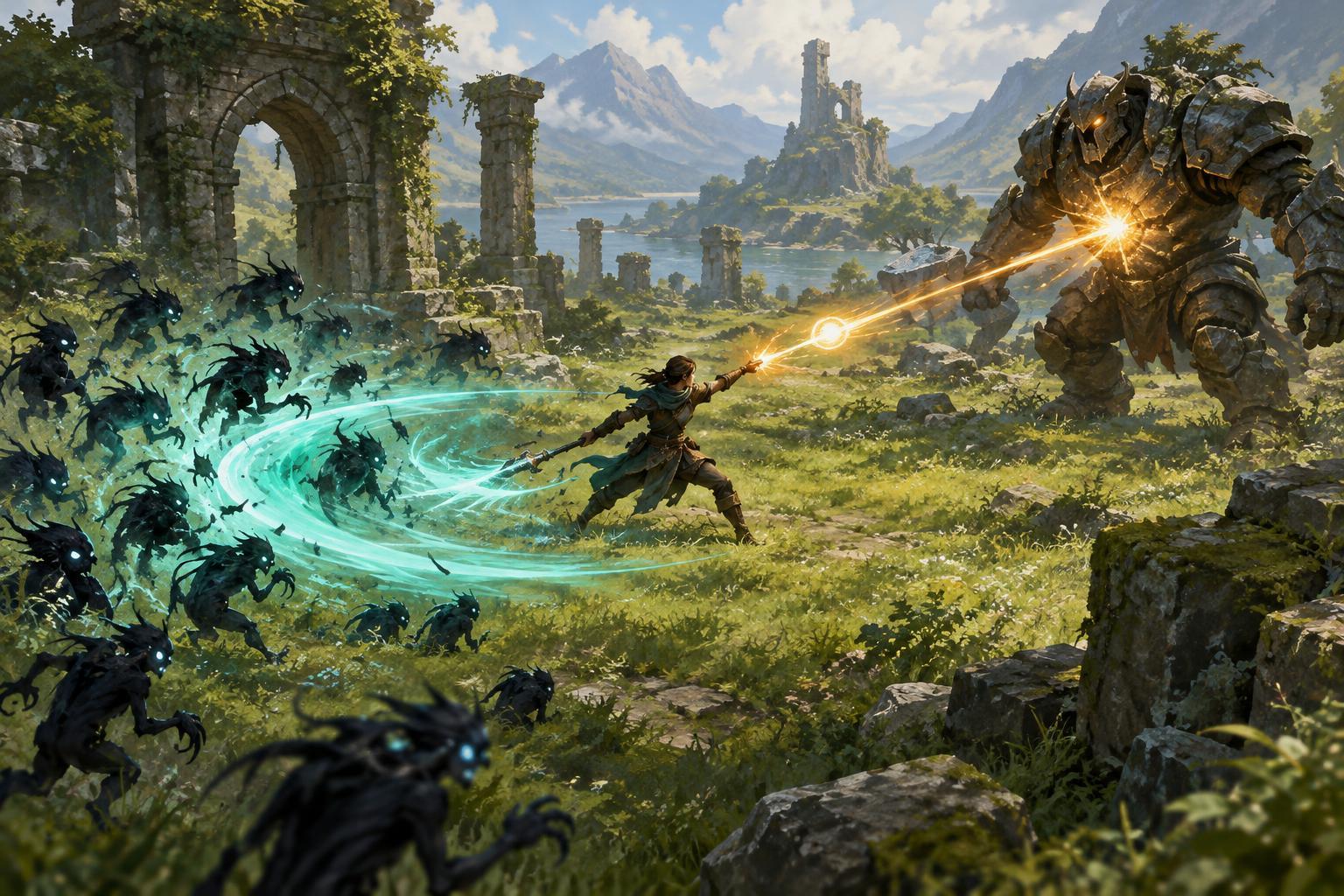
Coverage describes where and how often a weapon can hit: a narrow line, an area around the player, a wide sweep or repeated hits across the screen. Control describes what happens to enemy movement, such as slowing, pushing or briefly interrupting it. These effects often reinforce each other. If an attack lands in a fixed area, control can keep targets there longer. If a weapon hits only in front of you, an all-around defensive effect can make positioning less punishing.
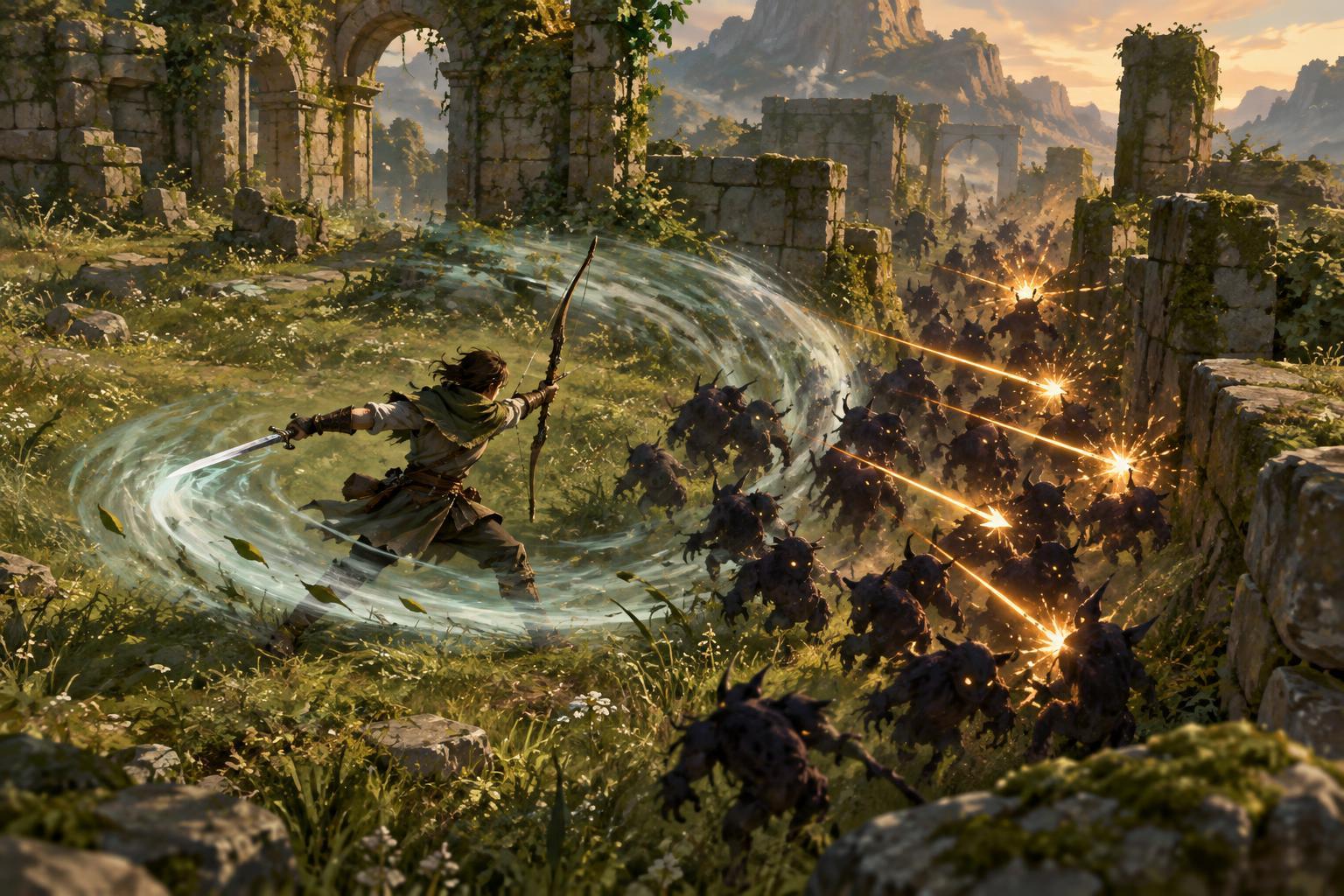
Consider how the pairing behaves during movement, not just while standing still. A broad area attack may handle nearby groups, while a directional attack opens a route through the crowd. That combination has a clear job: one effect protects your immediate space and the other helps you choose where to go. By contrast, two weapons that both cover the same narrow lane may leave your sides exposed, even if each has impressive damage.
Match damage to the time enemies spend in range
Some effects deliver damage in a quick burst; others need repeated hits or time in an area to do their work. A burst can remove a dangerous target before it closes in. Damage over time tends to gain value when enemies remain exposed long enough for multiple ticks or hits. Slows, pulls and persistent zones may support that style, depending on how a particular game handles enemy movement and overlapping effects.
Attack timing matters as much as damage type. If two weapons have long gaps between activations, those gaps may line up and leave you vulnerable. A frequent, lower-impact attack can bridge the downtime of a slower one. Alternatively, two bursts may work well when you can deliberately gather enemies and trigger both at the right moment. Watch a few encounters after choosing a new effect: are enemies being hit by both weapons, or are they leaving before the second can contribute?
Check the cost of making the pairing work
A promising combination still needs enough upgrades to become reliable. If both weapons require several levels, rare supporting items or careful positioning, building both at once can delay the moment either one starts solving your immediate problem. Early in a run, a dependable weapon that covers a weakness may be more useful than an elaborate pairing that only pays off later.
Look for upgrades with shared benefits. A general improvement to attack frequency might support both a defensive effect and a main damage source, while an improvement to area might help two attacks reach the same cluster. But shared upgrades are not automatically optimal: a stat that benefits one weapon greatly may barely affect another. When the game provides descriptions or a way to observe damage and behavior, use them to check whether the proposed link is real.
Use a simple test during each run
Before taking a new weapon, describe your current build in one sentence: “I can clear nearby groups, but I struggle with isolated tough enemies,” for example. Then ask whether the new effect fills that gap, strengthens what already works or merely duplicates it. Duplication can be worthwhile when a particular threat demands more of the same coverage, but it should be a choice rather than an accident.
After a few encounters, look for visible signs of cooperation. Do controlled enemies stay inside damaging areas? Does one attack create space for you to aim another? Are cooldown gaps easier to survive? If the answer is no, adjust your next upgrade toward the missing piece rather than forcing the original plan. Good synergy is a practical relationship between effects, enemies and movement—not a fixed recipe that works in every run.