A simple loop with a changing question
An arcade survival game can be described in four verbs: fight, collect, upgrade, repeat. The player faces a growing stream of threats, picks up resources earned through play, chooses ways to become stronger and tests those choices against the next wave. The controls may be simple, but the situation keeps changing. A weapon that clears open space early on may struggle when enemies approach from several directions.
The loop works because each step gives the next one a purpose. Fighting creates rewards; rewards make upgrades possible; upgrades change how the player fights. Meanwhile, mounting pressure prevents a successful tactic from staying comfortable forever. This is an independent editorial discussion of game design, not an official guide to any particular game.
Fight: make movement and positioning matter
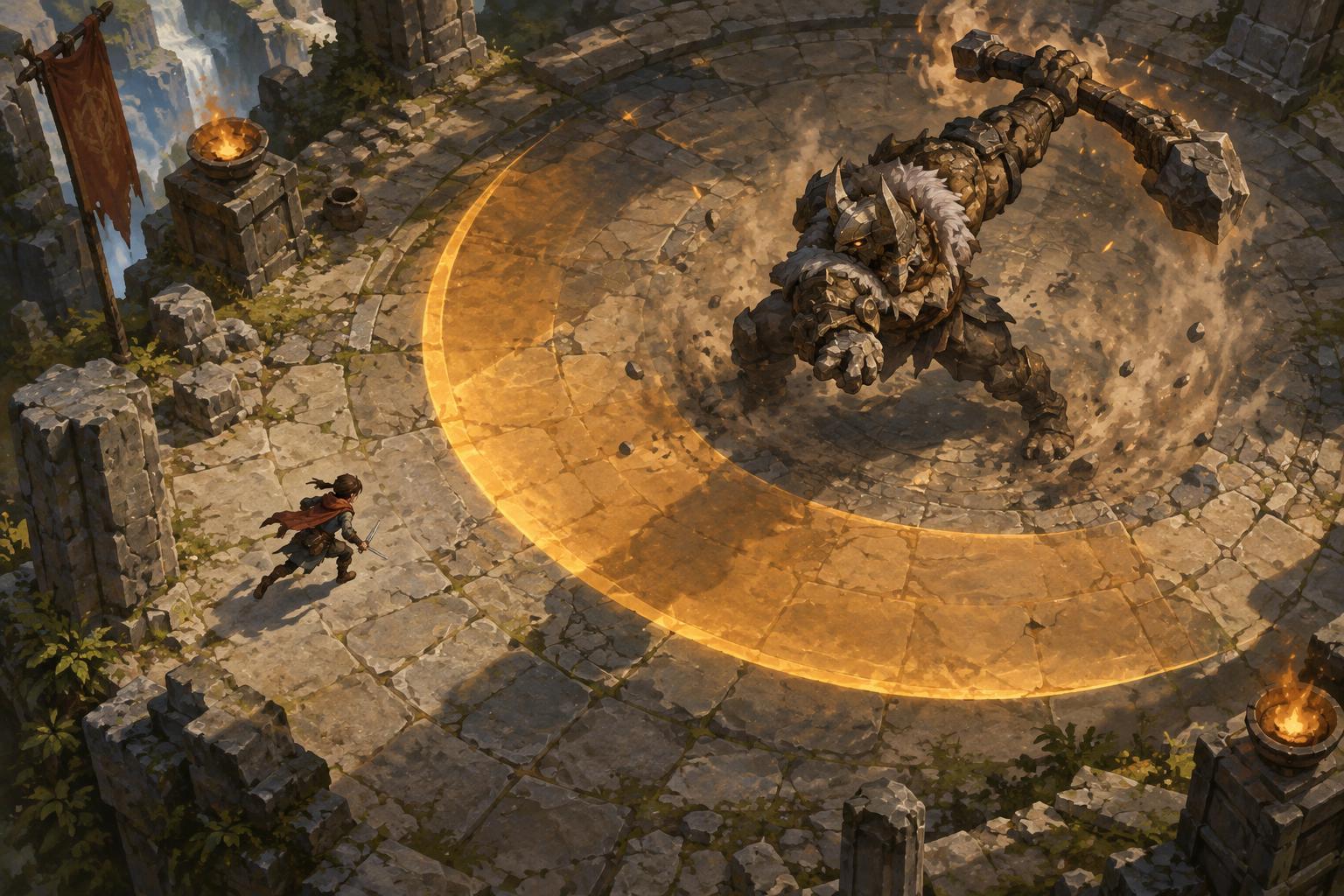
Combat is the moment-to-moment foundation. In some games the player aims and attacks directly; in others, weapons fire automatically while the player concentrates on movement. Either approach can create meaningful decisions if enemies leave enough room to respond. Players might circle a crowd to keep an escape route open, move toward a valuable pickup or accept a risky position to deal more damage.
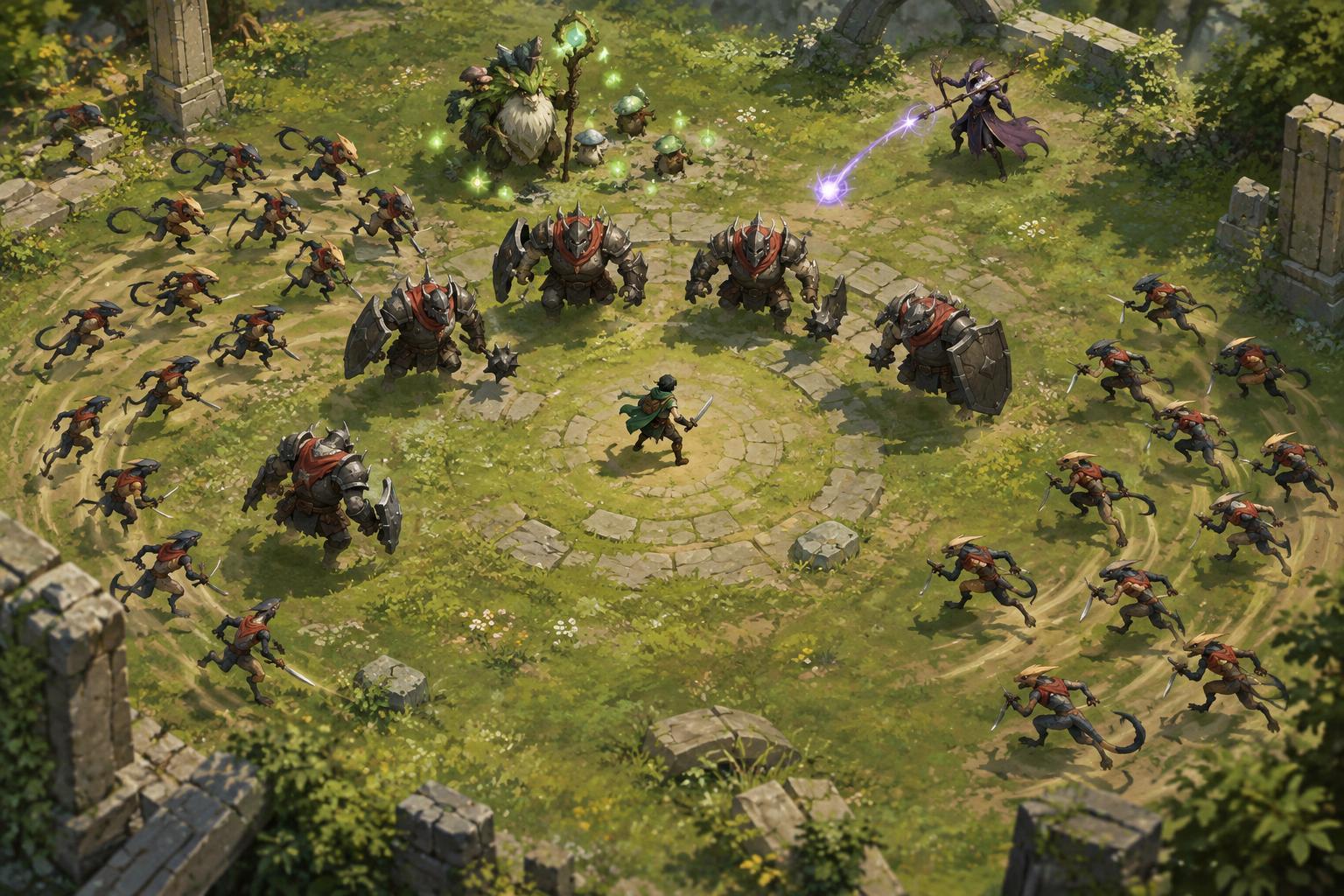
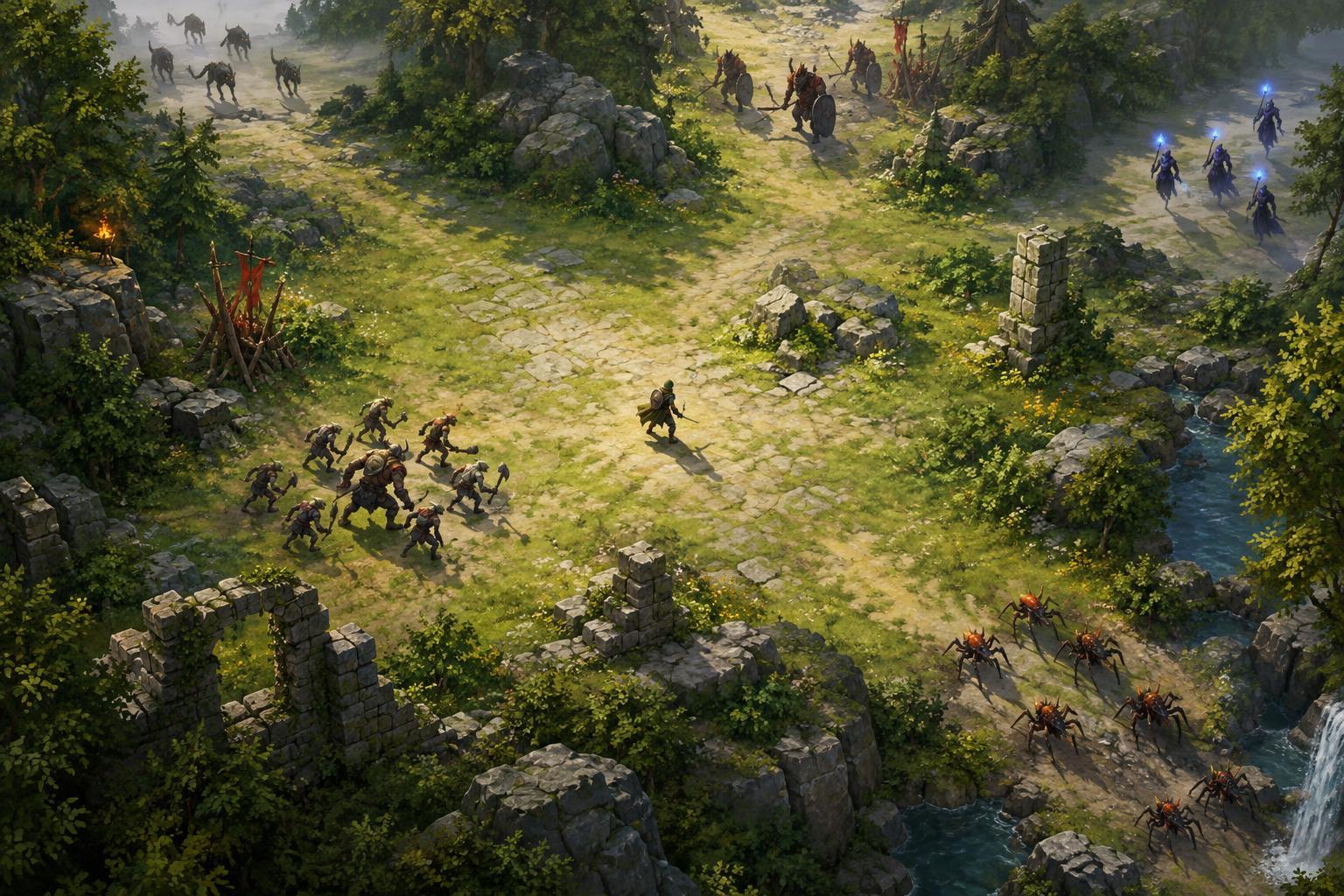
Readable feedback is as important as enemy numbers. A player should be able to tell when an attack lands, where a threat is coming from and why they took damage. Variety need not mean constant novelty: a slow enemy that blocks a route and a fast enemy that closes distance can change the shape of a fight together. When threats are understandable, a failed run feels like something the player can learn from rather than an arbitrary interruption.
Collect: turn risk into a decision
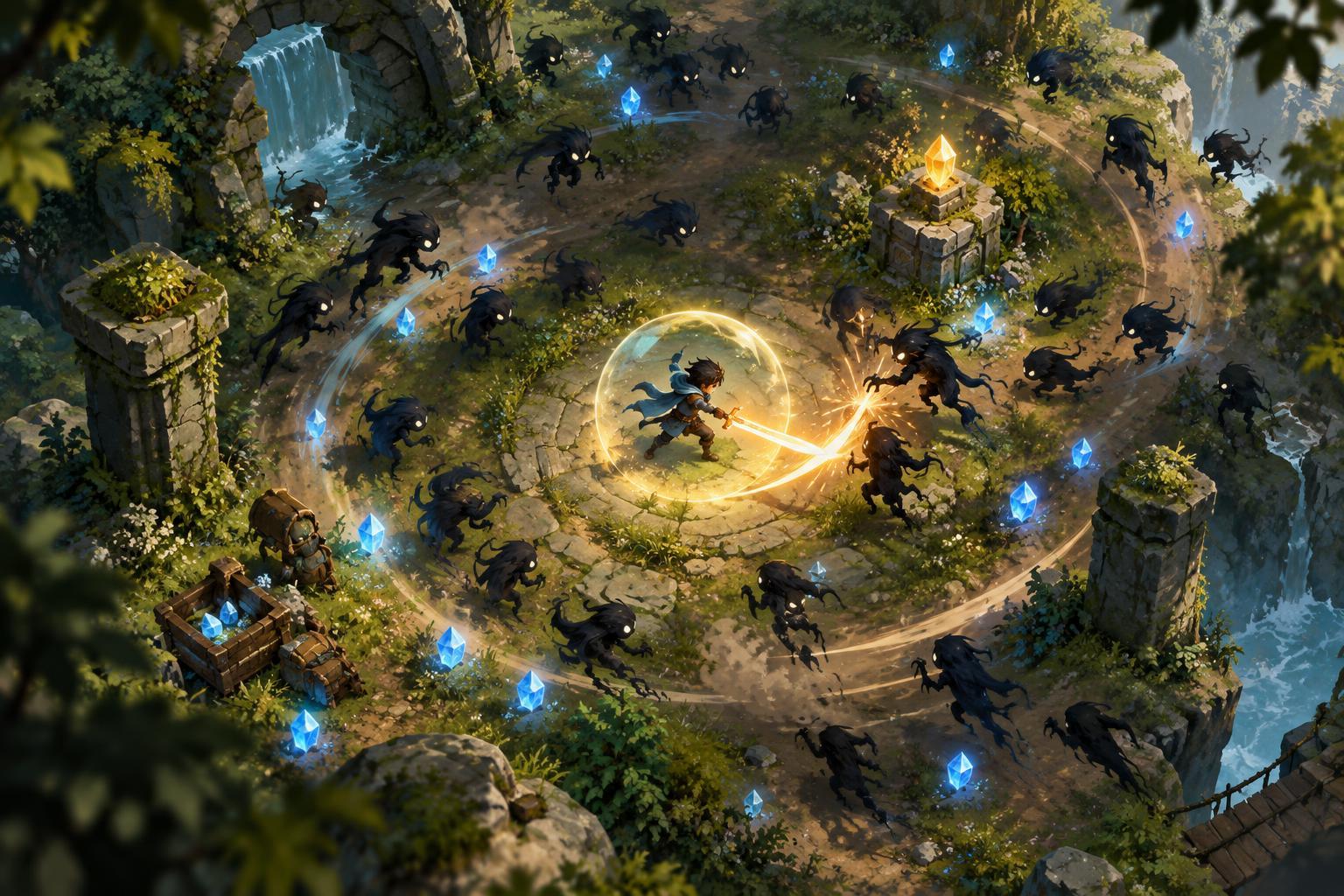
Pickups connect combat to progression. Experience, currency or temporary supplies give players a reason to move toward places they might otherwise avoid. A dropped reward is not just a prize; its location creates a small positioning problem. Is it safer to gather it now, or clear space first and return? Even a brief detour can matter when enemies continue to advance.
Collection feels best when its value is clear and the effort to gather it fits the pace of the game. If every reward requires careful navigation, movement may become tedious. If rewards arrive without any trade-off, collecting may lose its role as a decision. Designers can vary pickup placement, attraction range or collection tools to shift the emphasis between precision, risk-taking and the pleasure of sweeping up a crowded field.
Upgrade: give the next fight a new shape
An upgrade is most interesting when it changes a plan, not merely a number. Extra damage can be useful, but wider coverage, a shorter attack interval or an effect that protects nearby space may alter where the player can safely stand. Choices become more engaging when players can compare an immediate weakness with a longer-term goal: take a defensive option to survive the next wave, or develop a combination that may pay off later.
Good upgrade choices also need to be legible. Players should understand the likely effect of an option without having to calculate every interaction in advance. At the same time, a little uncertainty gives them room to experiment. Runs can feel distinct when several approaches are viable, rather than when one attractive-sounding upgrade quietly makes every other choice irrelevant.
Repeat: preserve learning while renewing pressure
The final step happens both within a run and between runs. After an upgrade, the player returns to fighting with a revised toolkit. After a defeat or completion, they can try again with a better sense of enemy behavior, useful combinations and when to take risks. Persistent unlocks can add variety, but the repeat loop should not depend entirely on permanent power. Learning how to play is itself a form of progress.
A strong loop balances familiarity with change. Players need enough consistency to recognize the consequences of their choices, and enough variation to reconsider those choices. The practical design test is straightforward: after each cycle, does the player have a reason to act differently? If fighting, collecting and upgrading keep answering that question in new ways, repetition becomes the point of the game rather than a sign that nothing is happening.