Give players a useful first action
A long tutorial can explain every rule before a run begins, but explanation is not the same as understanding. In a survival or arcade game, players often learn more from moving through a small threat than from reading a description of movement. The first moments should offer a useful action, a clear reason to take it, and enough space to notice what happens.
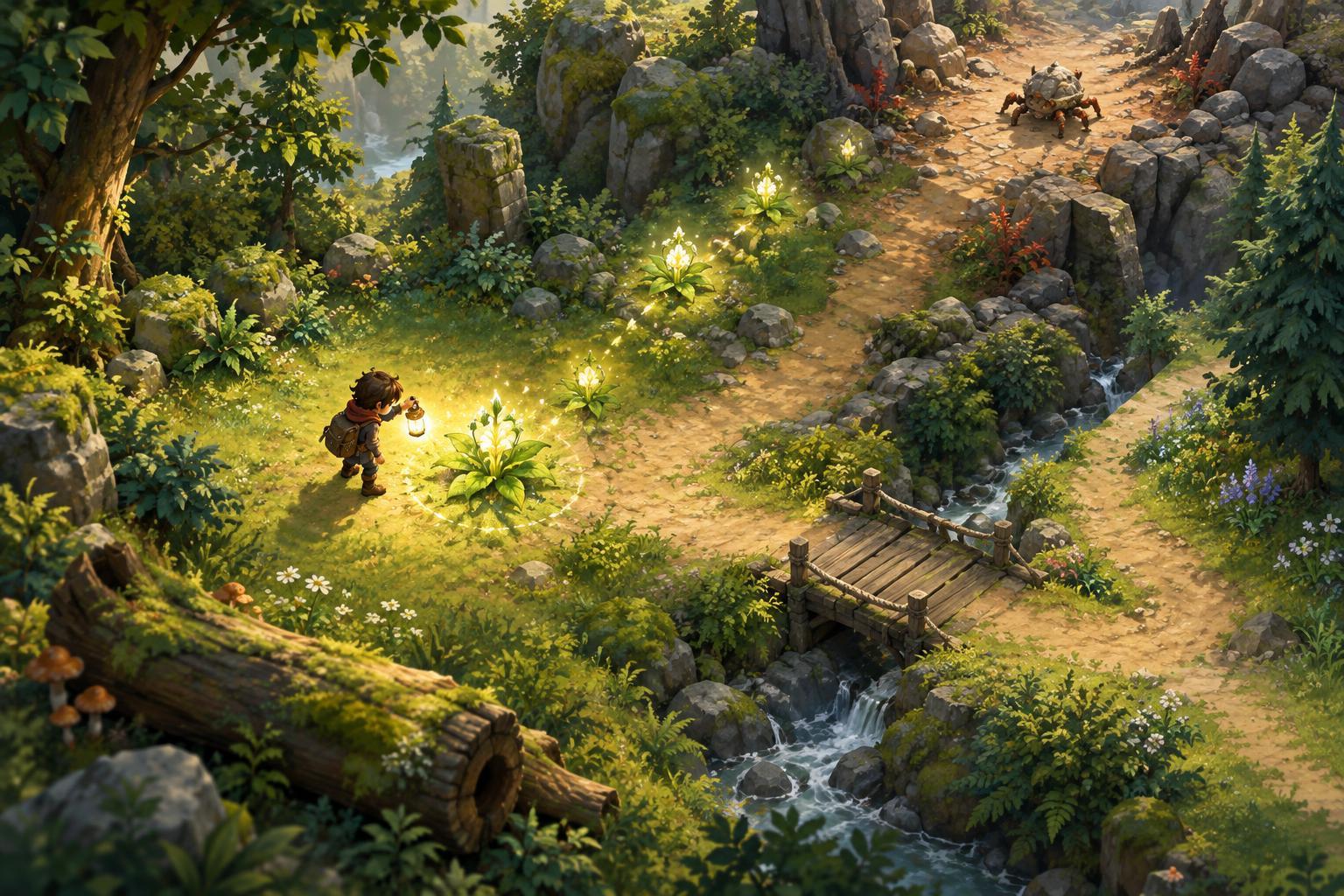
For example, a starting arena might place one slow enemy at a comfortable distance. Moving away demonstrates that position matters. If attacks happen automatically, the player can see the attack rhythm while concentrating on movement. The encounter teaches two ideas without asking the player to memorize either one. It also leaves room for curiosity: Can the player circle the enemy? Does standing still change the outcome? Good introductory design lets players test those questions safely.
Build lessons from predictable cause and effect
Learning through play depends on readable feedback. When a player picks up a healing item, the health display should change in an obvious way. When an attack reaches farther after an upgrade, that difference should be visible during the next encounter. Clear effects help players connect an action to its result, especially when the screen is busy.
Introduce one important variable at a time when possible. A new enemy that moves faster can teach spacing; an enemy with a distinct attack pattern can teach timing. If both arrive alongside a new control, a timer, and several unfamiliar icons, players may struggle to tell which choice caused a failure. Repetition helps, too. A mechanic learned against one slow enemy can reappear later in a denser wave, where the same idea remains useful under pressure.
Use choices to teach strategy
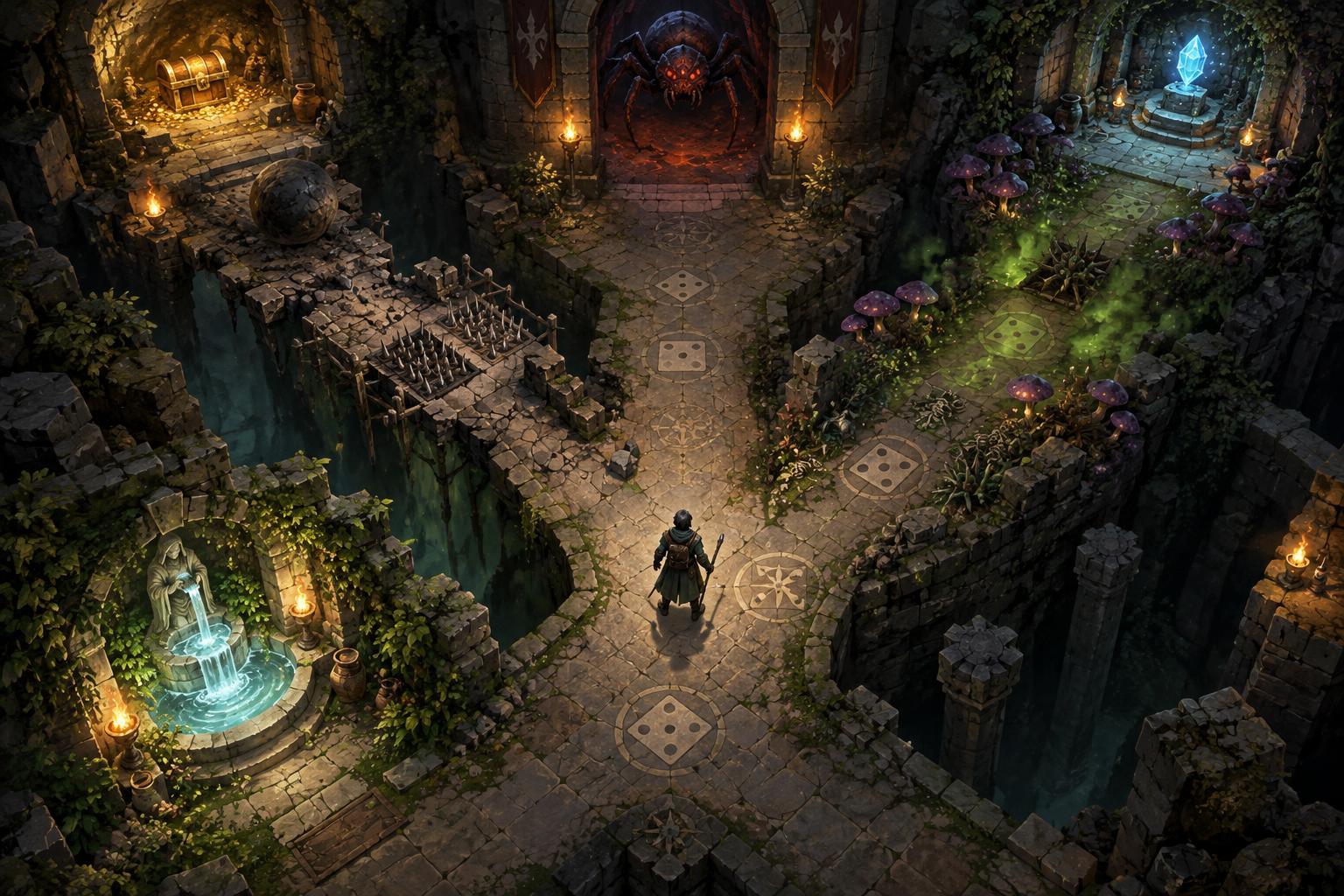
Roguelite upgrades are natural teaching moments because they invite players to predict an outcome. A choice between wider attack coverage and stronger single-target damage asks a practical question: What problem is the current build failing to solve? The next few encounters then provide an answer. Players learn not only what an upgrade does, but when it might be valuable.
Early choices work best when their effects are easy to distinguish. Two upgrades that both make attacks slightly stronger may offer little insight to a beginner. A clearly wider attack and a clearly faster attack encourage comparison. Later, once players understand those foundations, a game can introduce subtler trade-offs and combinations. Brief descriptions still matter, but they should support the experiment rather than replace it. Players should be able to make a reasonable guess before choosing and recognize the result afterward.
Let mistakes teach without ending curiosity
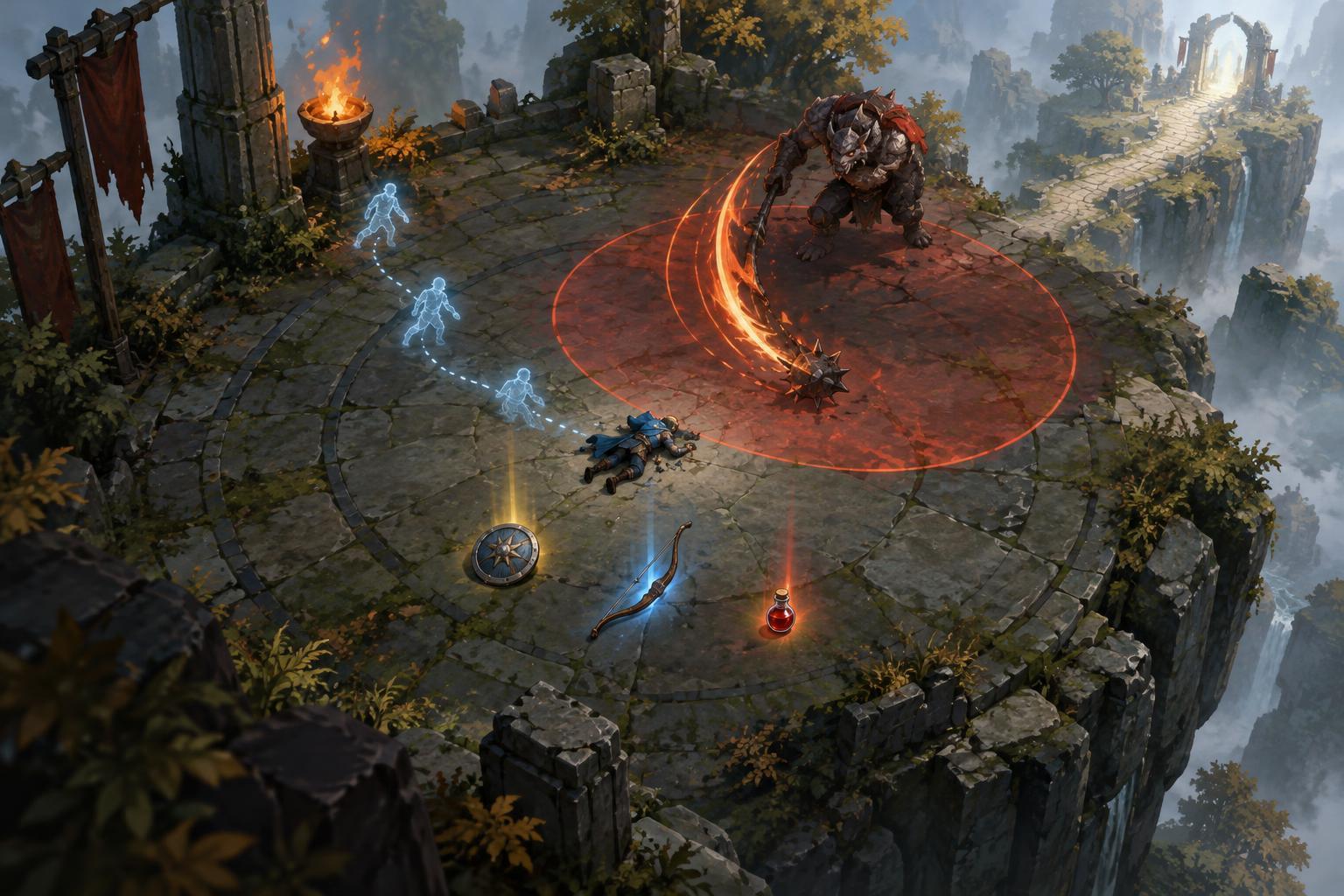
Failure can be informative in a survival game, but only if players can understand what happened and try a different approach. An early wave that overwhelms a stationary player may teach the need to keep moving. If the player instead loses because of an unseen hazard or an unexplained rule, the lesson is less useful. The goal is not to remove danger; it is to make danger legible.
Short recovery loops also support learning. A quick restart gives players a chance to test a new route or upgrade while the previous attempt is fresh in mind. Designers can reinforce that process with a concise end-of-run summary: the cause of defeat, a notable build choice, or a mechanic the player encountered for the first time. Such prompts should point toward experimentation without insisting that there is only one correct strategy.
Keep help available without stopping the game
Teaching through play does not mean withholding information. Control reminders, an accessible help screen, and plain-language descriptions give players another route to understanding. This is especially important when visual effects are subtle, timing is tight, or a player uses an unfamiliar input method. Optional explanations can clarify a mechanic without forcing every player through the same sequence of pop-ups.
A useful design check is to watch whether a player can answer three questions after an encounter: What did I do? What changed? What could I try next? If those answers are difficult to find, the game may need clearer feedback or a gentler setup rather than more tutorial text. This independent editorial look at game design treats the opening minutes as the first part of play, not a test players must pass before the game begins.