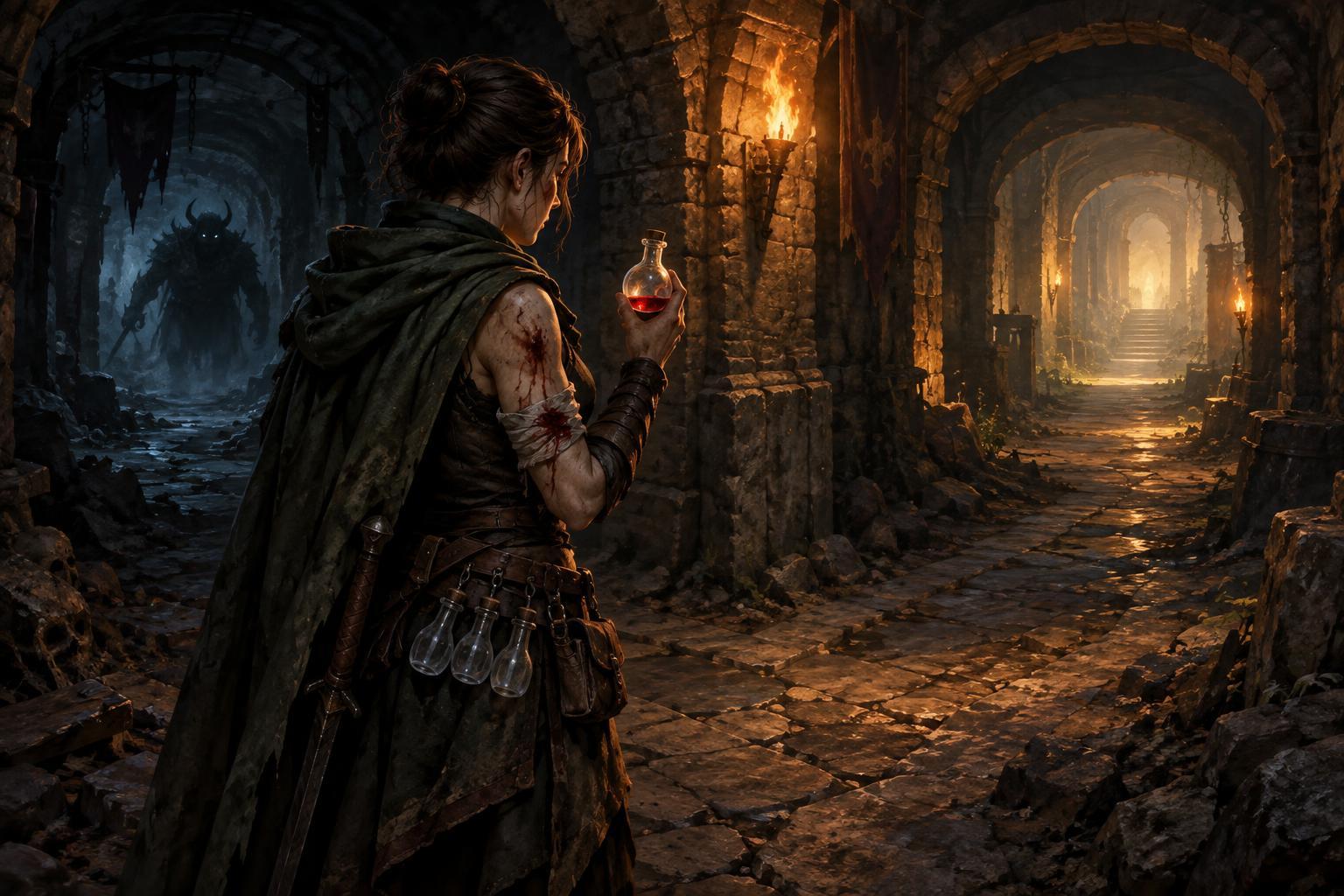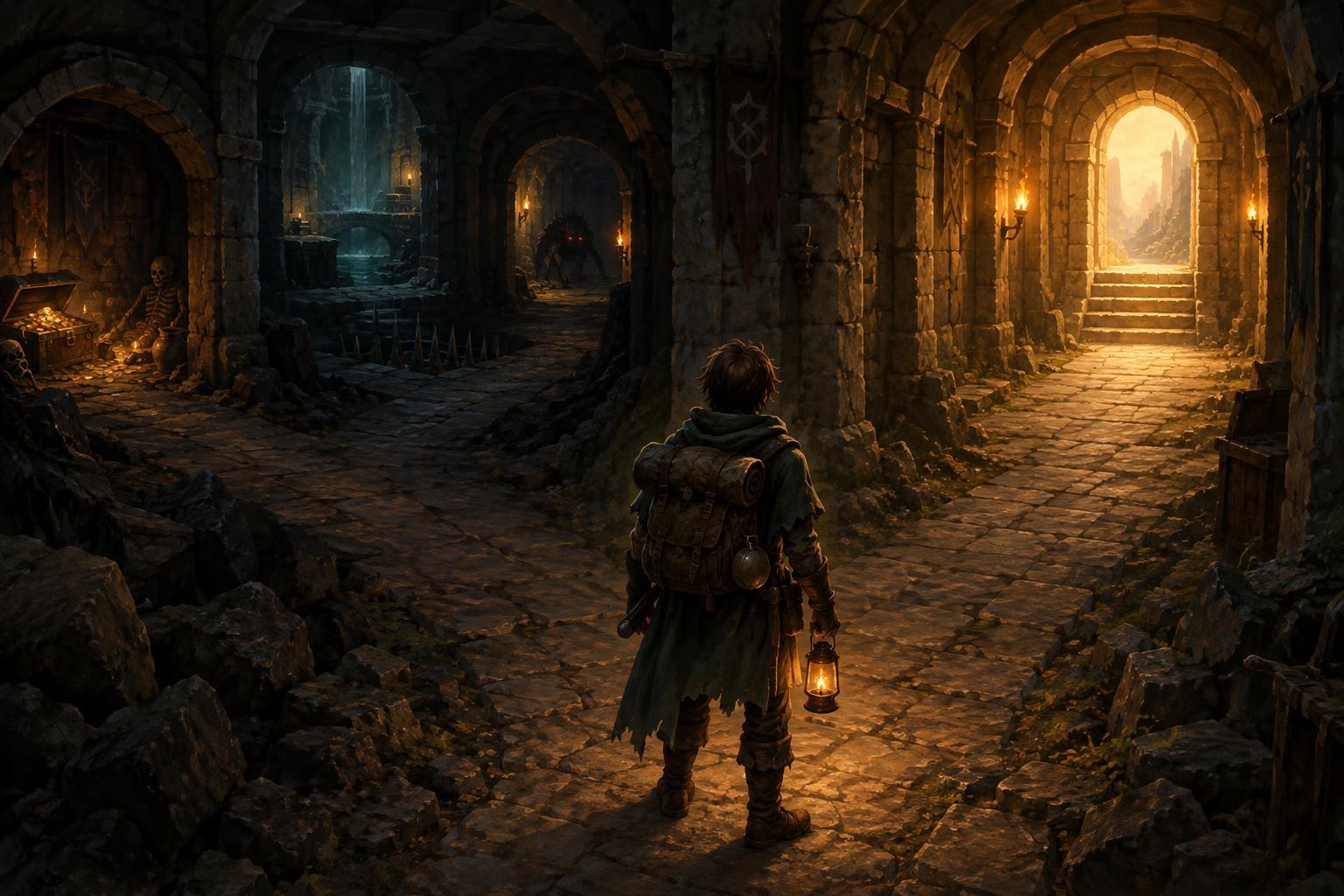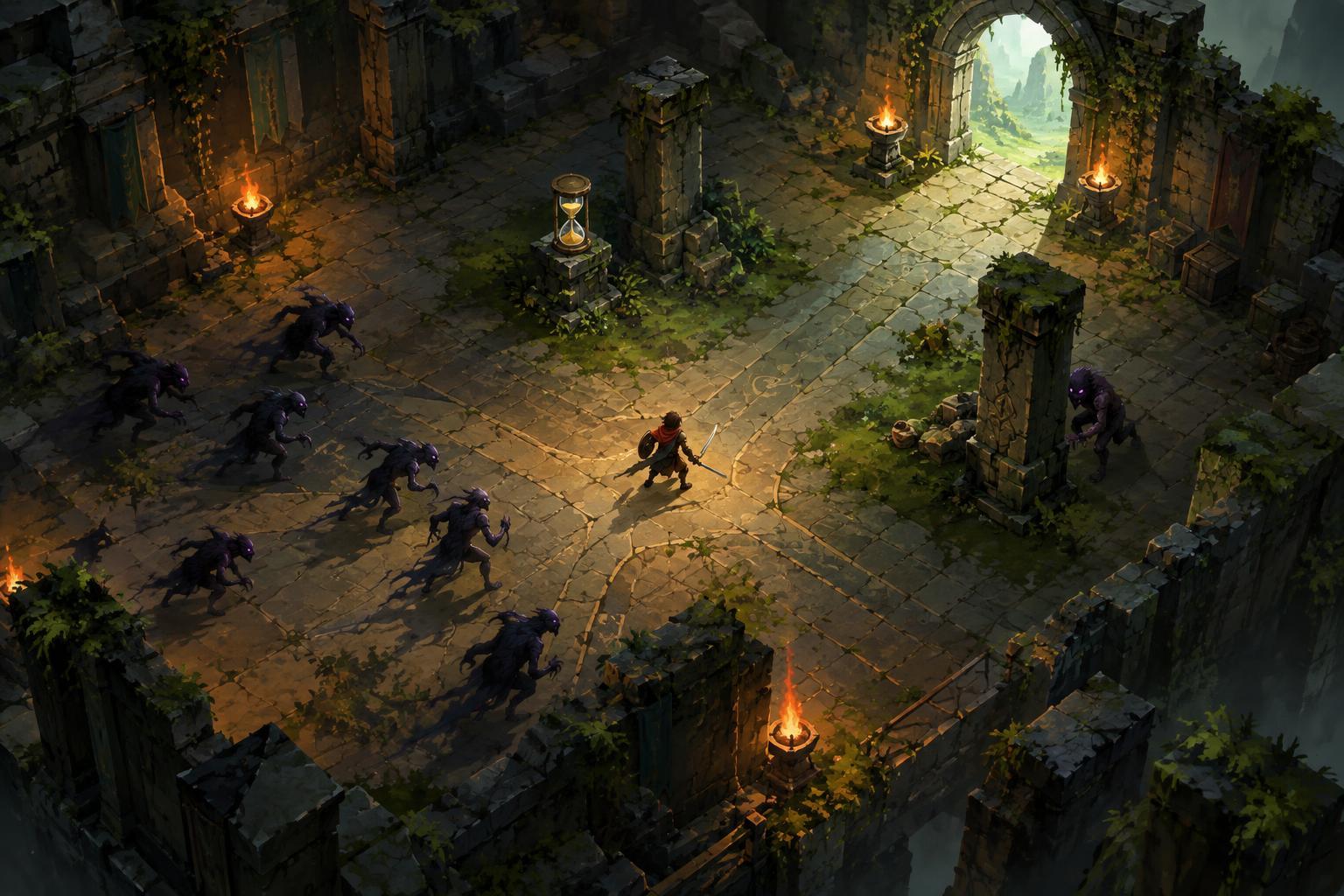
Find the win condition before you fight
A crowded screen can make every stage look like a test of combat. Yet defeating enemies is not always what finishes it. Some stages end when a clock runs out, others require a room to be cleared, and others ask you to reach an exit. Before committing to a route or build, look for the condition that actually triggers completion.
Start with the objective text, map markers and any counter on the interface. A countdown may indicate time remaining until success, but it could also be time left to reach a destination. An enemy counter may track a required clear, or it may simply describe a wave. Watch what changes after a small action: does defeating an enemy advance the objective, does approaching a marker reveal a path, or does the stage continue regardless of your kill count?
This is independent editorial guidance about common game-design patterns, not an official guide to any particular game. Individual stages can use familiar signals in different ways. When a cue is ambiguous, treat your first moments as a brief observation period rather than assuming the goal.
Survive the timer: preserve space and options
In a survival objective, your job is to stay alive until a specified moment. Eliminating enemies may help by opening space or reducing pressure, but chasing every target can be unnecessary or dangerous. A safer route often keeps escape lanes available and avoids getting pinned against walls, hazards or dense groups.
Build choices should support consistent survival rather than a single burst of damage. Depending on the game, that might mean reliable area coverage, movement, defensive tools or effects that control nearby enemies. Consider whether picking up an upgrade is worth crossing a crowded area. A reward that improves the rest of the run has value, but not if reaching it is likely to end the run first.
Read the clock alongside the stage’s other cues. A timer reaching zero may finish the objective, start a final wave or unlock an exit. If the rules are unclear, keep enough room to respond instead of spending the last seconds in a corner. The useful question is not merely “How long can I last?” but “What must I be ready to do when time runs out?”
Clear the room: locate what still counts
A clear objective rewards thoroughness. The stage may not advance until all required enemies, waves or targets are gone. Here, avoiding every fight can delay progress, and leaving a single enemy behind may force an awkward trip across the map. Check whether the objective tracks individual foes, groups, spawn points or a boss; those details change where you should spend your attention.
When the counter stops moving, scan for overlooked corners, newly opened areas and markers that distinguish required targets from ordinary enemies. Some games spawn the next wave only after the current one is cleared. Others let optional enemies remain after the required targets are defeated. Do not assume that an empty-looking central area means the room is complete.
For these stages, damage that reliably reaches scattered targets can be as useful as damage that only excels against a tightly packed crowd. Plan a sweep through the room rather than repeatedly crossing it at random. If you have limited healing or other resources, clear safer pockets first, then approach the most hazardous target with a route back out.
Reach the exit: progress is a place, not a kill count
An exit objective shifts the focus from holding ground or clearing enemies to movement. Look for a door, portal, edge marker or map indicator, then work out whether it is available immediately or requires a key, switch or earlier objective. Fighting can still be useful when enemies block the route, but stopping for every encounter may increase risk without bringing you closer to completion.
Choose a path with manageable hazards, not necessarily the shortest line on the map. Keep an eye on whether the exit marker moves, becomes active after a wave or needs an interaction. In stages with several steps, restate the current goal after each change: survive until the door opens, clear the guards, then reach the door. That simple check prevents an old strategy from carrying over after the objective changes.
Clear visual and audio cues can make these transitions easier to follow, but busy effects may obscure them. If a game offers interface scaling, contrast settings, input remapping or a way to review objectives, use whichever options help you notice changes and act comfortably. Whatever the objective, the strongest habit is to pause mentally at each new stage or wave: identify what ends it, identify what is merely helpful, and move accordingly.