Learn what the weather system actually tracks
In survival games, weather is rarely just a visual effect. Cold, heat, rain and wind may drain a meter, increase resource use or slow recovery. Some games track a single exposure value; others separate body temperature, wetness, stamina and clothing condition. Before committing to a long trip, check which indicators change when you step outside, enter cover or equip different gear. The rules vary by game, so a familiar-looking snowstorm does not necessarily behave like one you have encountered elsewhere.
Pay attention to the direction of a meter, not only its current value. A character who is warm but cooling quickly may be in more immediate trouble than one who is cold but recovering beside a fire. Look for warning icons, status descriptions and changes to movement or stamina. If the interface gives little detail, make a short, low-risk test near a safe location: spend a moment outside, return to shelter and compare the results. That small experiment can reveal more than guessing during an emergency.
Treat shelter as a system, not just a roof
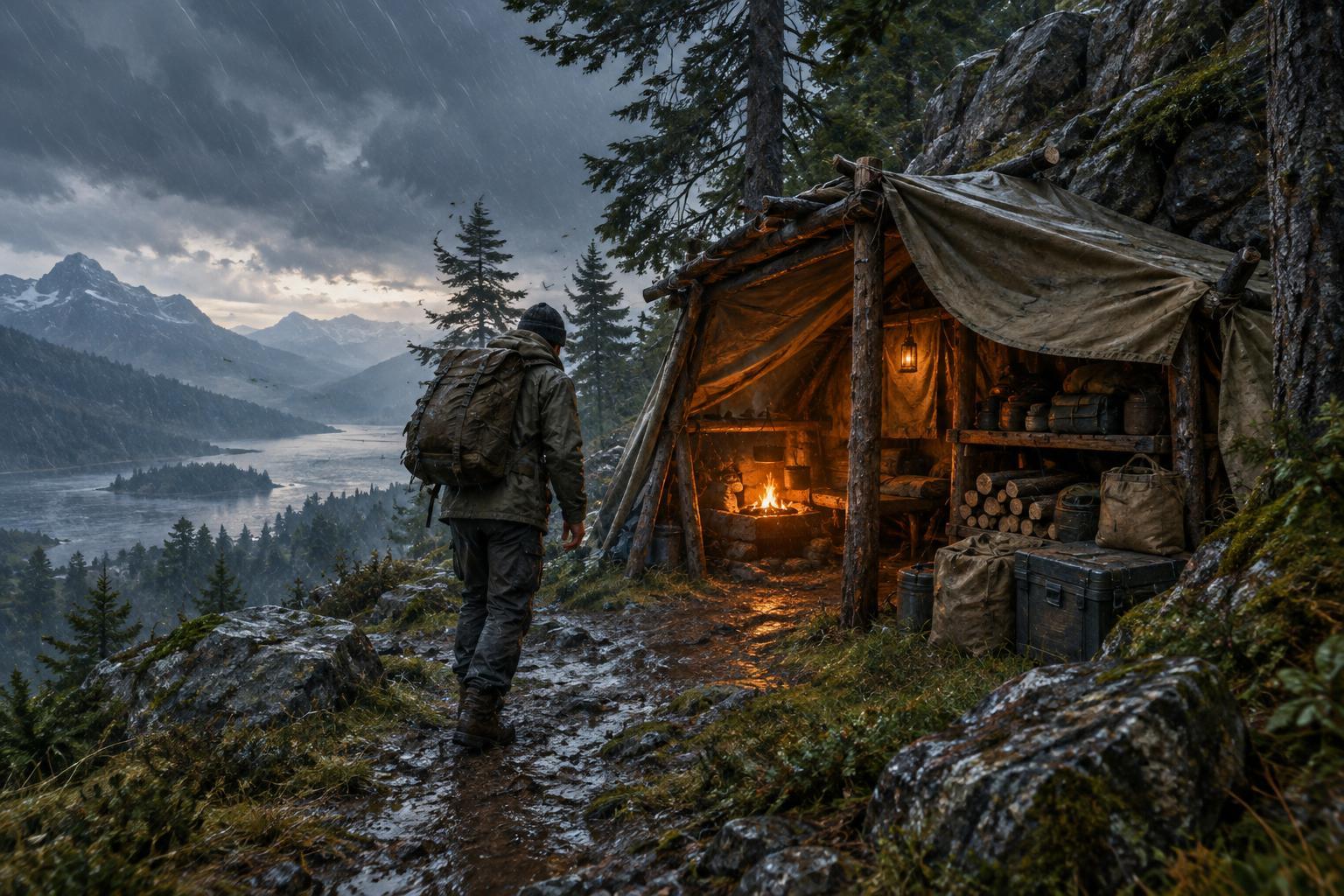
A good shelter interrupts the specific threat you face. A roof may block rain without stopping wind; a cave may reduce exposure while leaving you far from food or fuel. When choosing a base or temporary stop, consider cover, access to resources and the route back from your usual gathering areas. A modest shelter on a dependable path can be more useful than an elaborate one that takes too long to reach when conditions turn.
Test what the game counts as protected space. Does standing under an overhang change the exposure indicator? Does a wall help only when the wind comes from one direction? Can a fire burn through a storm, and does it require fuel you can replace? If building materials are scarce, prioritize the parts that solve the immediate problem. In some games that means a roof and a heat source; in others, enclosed walls or a dry place to store supplies matter more. Keep a small reserve at shelter so arriving safely does not leave you unable to recover.
Prepare for the return trip before setting out
Plan travel around the journey home, not only the destination. A route that is easy in clear weather may become dangerous after dark, during heavy rain or when stamina is low. Before leaving, note at least one place where you can wait out conditions. Carry whatever the game makes useful for a short delay: spare fuel, a repair item, food, water or materials for temporary cover. There is no universal packing list; the goal is to preserve an option when your original plan stops working.
Inventory space is part of exposure management. Filling every slot with loot can force you to abandon supplies or move slowly at the worst moment. Consider setting a turnaround rule, such as heading back when your protective item is worn, your emergency fuel is needed or you reach a particular landmark. A rule chosen in calm conditions is easier to follow than a decision made while several warning meters are falling.
Respond early when conditions change
When weather worsens, stop and identify the fastest way to reduce the rate of harm. Moving indoors, leaving wet ground, changing equipment or lighting a fire may help, depending on the game. Do not assume that using a healing item solves exposure if the underlying meter is still moving in the wrong direction. First stabilize the condition, then spend resources on recovery. If travel remains necessary, choose a known route over an unexplored shortcut unless the known route is clearly unsafe.
Watch for compounding problems. Bad weather can make gathering fuel harder, while low stamina can slow the walk to shelter. Wet equipment may remain a problem after the rain ends. If you have reached cover but are not recovering, check for a second cause: inadequate clothing, missing fuel, a lingering status effect or a shelter that the game does not treat as enclosed. Solving the visible weather event is not always the same as ending its effects.
Use each setback to improve the next run
A failed trip can provide a useful answer to a specific question. Were you caught too far from cover, or did you reach cover without the supplies needed to recover? Did the warning appear early enough to turn back? Change one part of your approach at a time: move a supply cache, choose a shorter route, carry a different backup item or leave sooner. This makes it easier to tell which adjustment helped.
Exposure systems often reward habits more than perfect equipment. Check the forecast or visible sky when the game offers that information, keep an escape route in mind and avoid spending your final recovery resource on a routine outing. This is independent editorial guidance, not an official guide to any particular game. The most reliable strategy is to learn the rules of the game in front of you and build enough margin for the weather to surprise you.