Make the challenge a real choice
An optional challenge works best when players understand that they can decline it. A dangerous side room, a tempting pickup guarded by enemies, or a switch that intensifies the next wave can all create a decision without blocking the main route. The key is to leave a viable alternative. If refusing the challenge makes the rest of the run nearly unwinnable, the choice is optional in name only.
Timing matters as much as placement. A risk offered early may appeal to players who want to shape a build, while the same risk late in a run can ask whether they trust the build they have assembled. Repeated opportunities let cautious players reconsider later. They also let experienced players decide when a challenge fits their resources rather than following a single prescribed path.
Show the stakes before asking for commitment
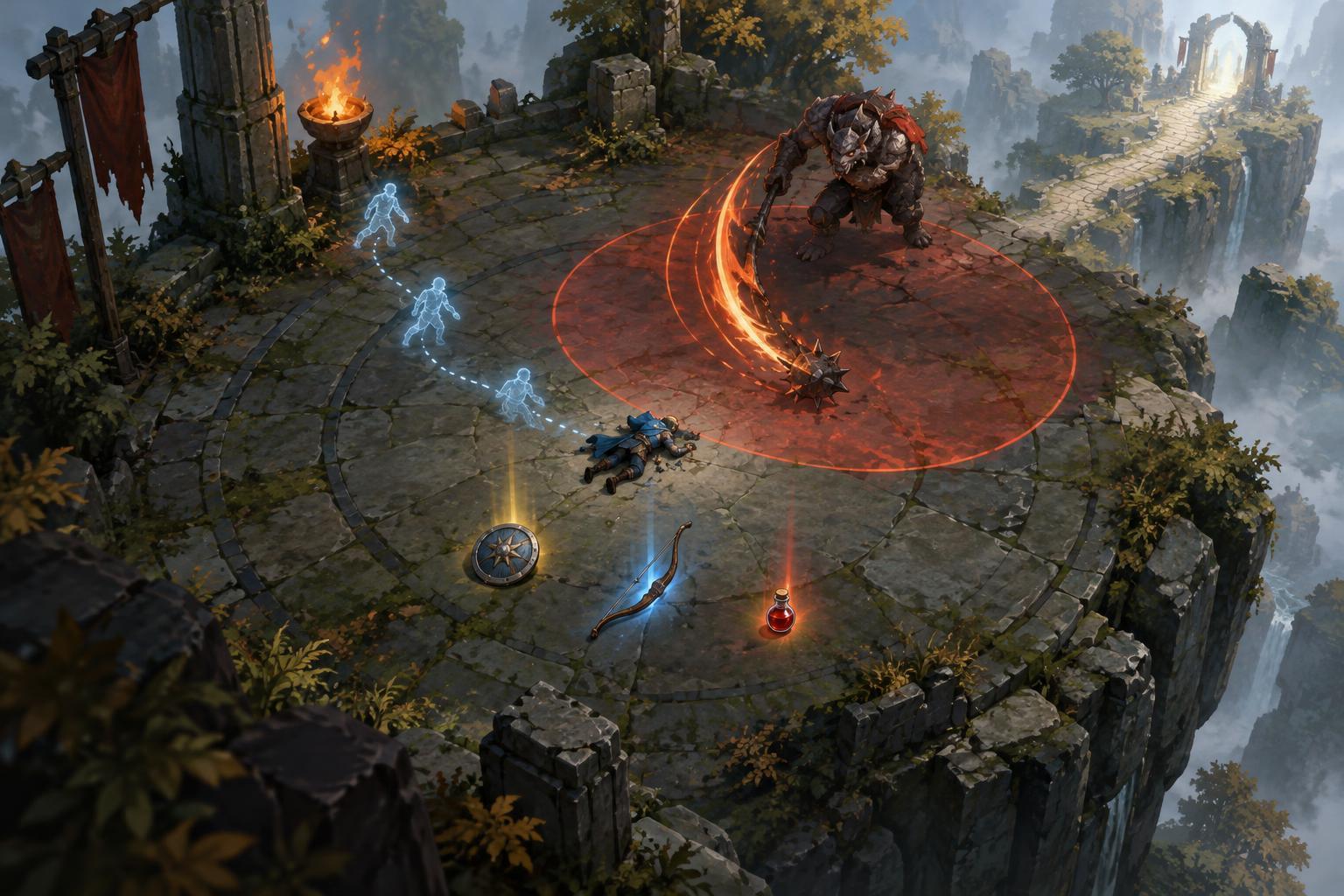
Players do not need perfect information, but they need enough to make an informed bet. A clear warning icon, a preview of the reward, or a visible change to enemy behavior can communicate what is at stake. If a challenge introduces faster enemies, reduced healing, or a strict time limit, its presentation should make that consequence legible before the player commits. Surprise can still exist within the encounter; the basic terms of the choice should not be a mystery.
Readable stakes also help players learn from failure. When an attempt goes wrong, they should be able to identify a useful cause: they entered with too little health, lacked crowd control, or spent too long pursuing the reward. If the danger was hidden or poorly signaled, failure offers less insight. Clear information turns a setback into a strategy question: what would I change next time?
Match rewards to the cost of taking the risk
A reward feels meaningful when it addresses a genuine need or opens an interesting possibility. Extra experience might accelerate a developing build; a weapon choice might give it a new direction; a score bonus might suit players chasing mastery. The reward need not always be stronger than every safe alternative. It does need to be distinct enough that a player can explain why they pursued it.
Consider the costs beyond damage. A detour can consume time, pull a player away from valuable pickups, or leave them out of position for the next wave. If those costs are substantial, a small generic reward may feel disappointing even when the challenge is beatable. Conversely, an enormous reward can make the risky route feel mandatory. A good balance preserves both decisions: taking the challenge should be appealing to some builds and situations, while skipping it remains sensible in others.
Let different builds face different risks
Optional challenges become more interesting when they test more than raw damage. An enclosed arena might favor close-range defense but trouble a mobile build. A short objective timer might reward burst damage, while an endurance objective might favor reliable recovery and positioning. These differences encourage players to evaluate the run they have, not just repeat the same choice every time.
Avoid making one build type universally responsible for handling every challenge. If all optional encounters demand fast movement, a slower defensive approach loses access to much of the game's variety. Designers can instead offer different kinds of tests or multiple ways to complete one: survive until a timer ends, defeat a target quickly, or navigate to an exit under pressure. Each route can ask for skill without demanding an identical toolset.
Respect player control and make feedback useful
A challenge is more satisfying when players can tell how their actions affected the outcome. Distinct enemy tells, visible progress toward an objective, and a clear escape route help them respond rather than guess. When a challenge ends, concise feedback can explain whether they succeeded, what they earned, and what changed in the run. That clarity is especially valuable in fast arcade games, where several effects may occur at once.
Accessibility belongs in this design conversation. If accepting a challenge depends on a brief prompt, players may need enough time to read it and a reliable way to confirm or decline. Important warnings should not rely on color alone. Where the game allows it, adjustable text size, input remapping, and effects settings can help more players engage with the same decision. The aim is not to remove the risk. It is to ensure players can perceive the choice, act on it, and understand the result.