Variety should change decisions, not hide them
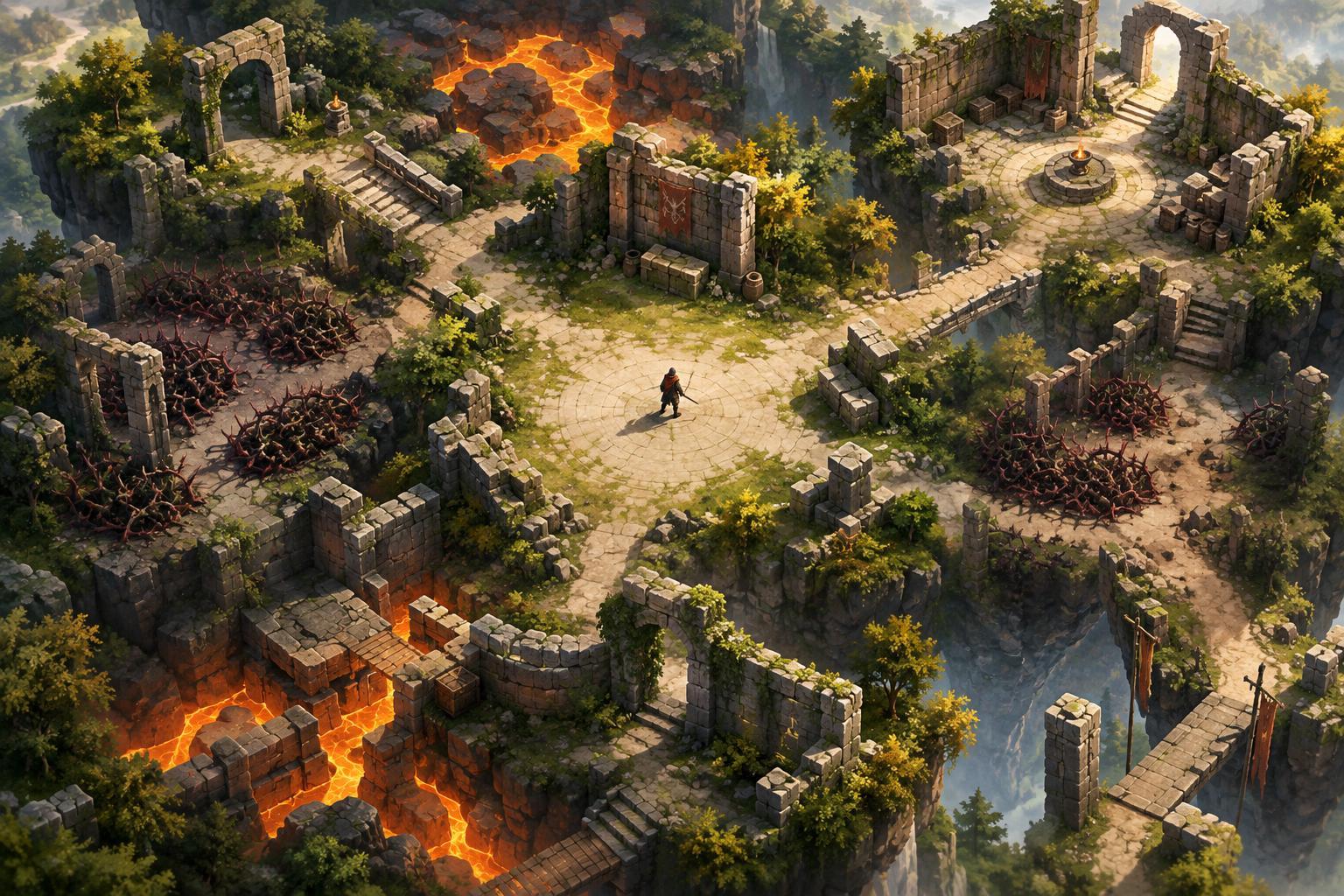
A procedural arena changes some part of its layout between runs. Walls may move, obstacles may appear in new places, or open ground may connect to different corridors. In a survival or arcade-style game, those changes can make a familiar encounter feel new: a build that worked well in a wide room may need careful positioning in a narrow lane. The goal is not to make every arena unpredictable. It is to give players a fresh problem they can understand quickly enough to act on.
Readability is the player's ability to recognize useful space while the game is in motion. They need to see where they can travel, what might trap them, and which objects matter. If a generated layout demands a long inspection before each fight, it can interrupt an otherwise fast-paced game. If it looks varied but always produces the same choices, its variety is mostly decorative. Strong procedural design sits between those extremes: the arrangement changes, while the rules for interpreting it remain dependable.
Build a reliable spatial foundation
Start with constraints that protect basic movement. A generator might require a clear route between important areas, limit the length of dead ends, or reserve enough open space near a starting position. These rules do not make every arena easy. They prevent accidental layouts from becoming the main challenge. A dead end can still create an interesting risk when it offers a reward or a defensible position; it is less satisfying when the player enters it without a reasonable way to recognize the danger.
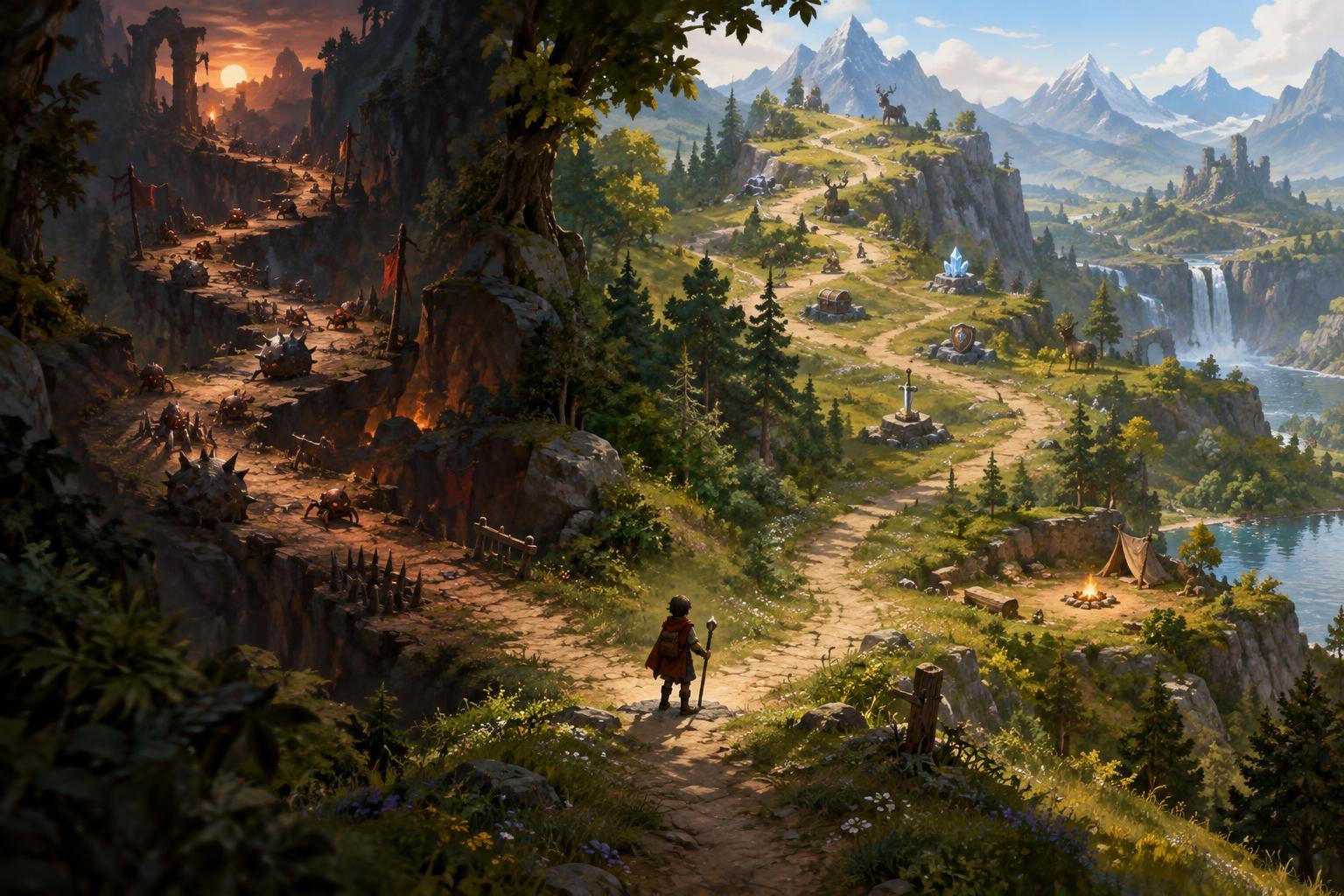
Mixing a few recognizable space types is often more useful than changing every detail at once. An arena could contain an open area for broad movement, a tighter passage that rewards careful timing, and an obstacle cluster that breaks up enemy approach paths. Players can then develop a vocabulary for the space. As those pieces connect in different ways, they create new route-planning decisions without requiring players to relearn what each piece does.
Make the important features visible
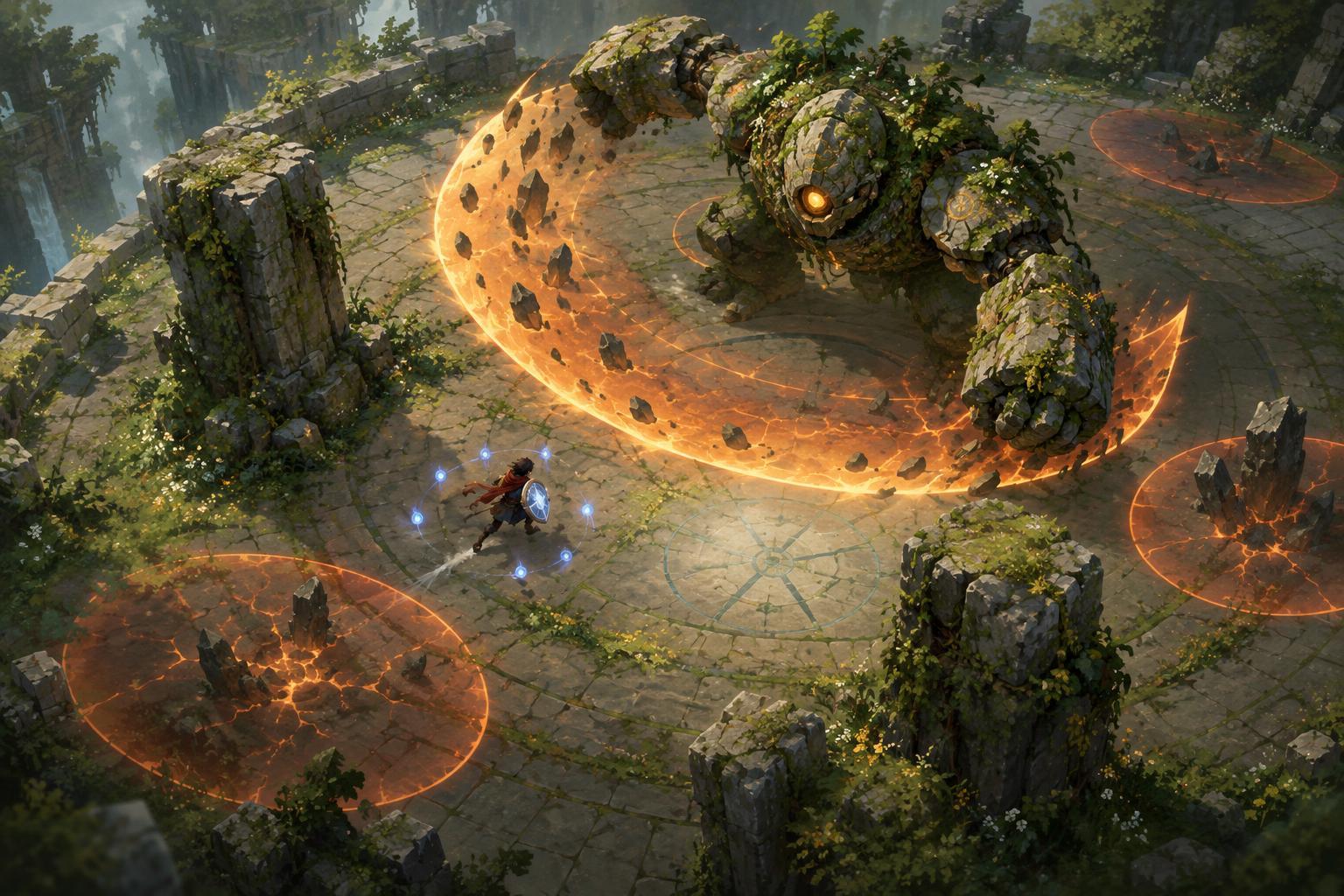
A readable layout uses a visual hierarchy. Traversable ground should be distinguishable from blocking terrain, and dangerous surfaces should not resemble harmless decoration. Distinct silhouettes, contrast and animation can help separate these roles. Color is useful, but it should not carry the whole message: shape and movement can reinforce a hazard for players who have difficulty distinguishing particular colors.
Landmarks also help players stay oriented. A large statue, an unusual floor pattern or a clearly shaped doorway can make two similar rooms feel different without adding complexity to navigation. In a crowded survival game, landmarks need to remain recognizable beneath enemies and effects. Small decorative details may disappear during combat, so the features that guide movement should be among the easiest things to spot. The same principle applies to temporary changes: if a wall closes or a hazard activates, the change should have a clear visual cue before it becomes costly.
Control randomness at the scale of the encounter
Layout generation cannot be judged in isolation from enemies, objectives and player abilities. A narrow corridor may be exciting with slow pursuers but punishing when combined with enemies that block movement. An obstacle that provides cover in one encounter may obscure threats in another. Designers can set limits on combinations rather than on individual pieces alone, reserving especially demanding arrangements for moments when the player has enough room, information or tools to respond.
Variation can also happen gradually. Early arenas might introduce one unfamiliar feature within a largely open layout. Later arenas can combine known features or place them under greater pressure. This gives players a chance to learn the meaning of each element before several elements interact. The resulting challenge comes from applying knowledge in a new situation, not guessing what the arena generator has produced.
Test whether players can recover from a mistake
A useful test is to watch what happens after a player takes a poor route. Can they identify why it was risky? Is there still a demanding but plausible way out? A readable arena does not guarantee escape, but it should make the cause of failure understandable. If players repeatedly become trapped by passages they could not see, the problem may be the layout, the camera view or the visual treatment rather than their decisions.
Test generated arenas across different builds and play styles, including players who move cautiously and those who rely on quick reactions. Look for layouts that produce interesting choices as well as layouts that technically meet the rules but feel awkward. Procedural generation benefits from this editorial pass: clear constraints establish a dependable baseline, while observation shows whether the resulting spaces are enjoyable. When players can recognize their options at a glance, variety becomes an invitation to adapt rather than another obstacle to decipher.