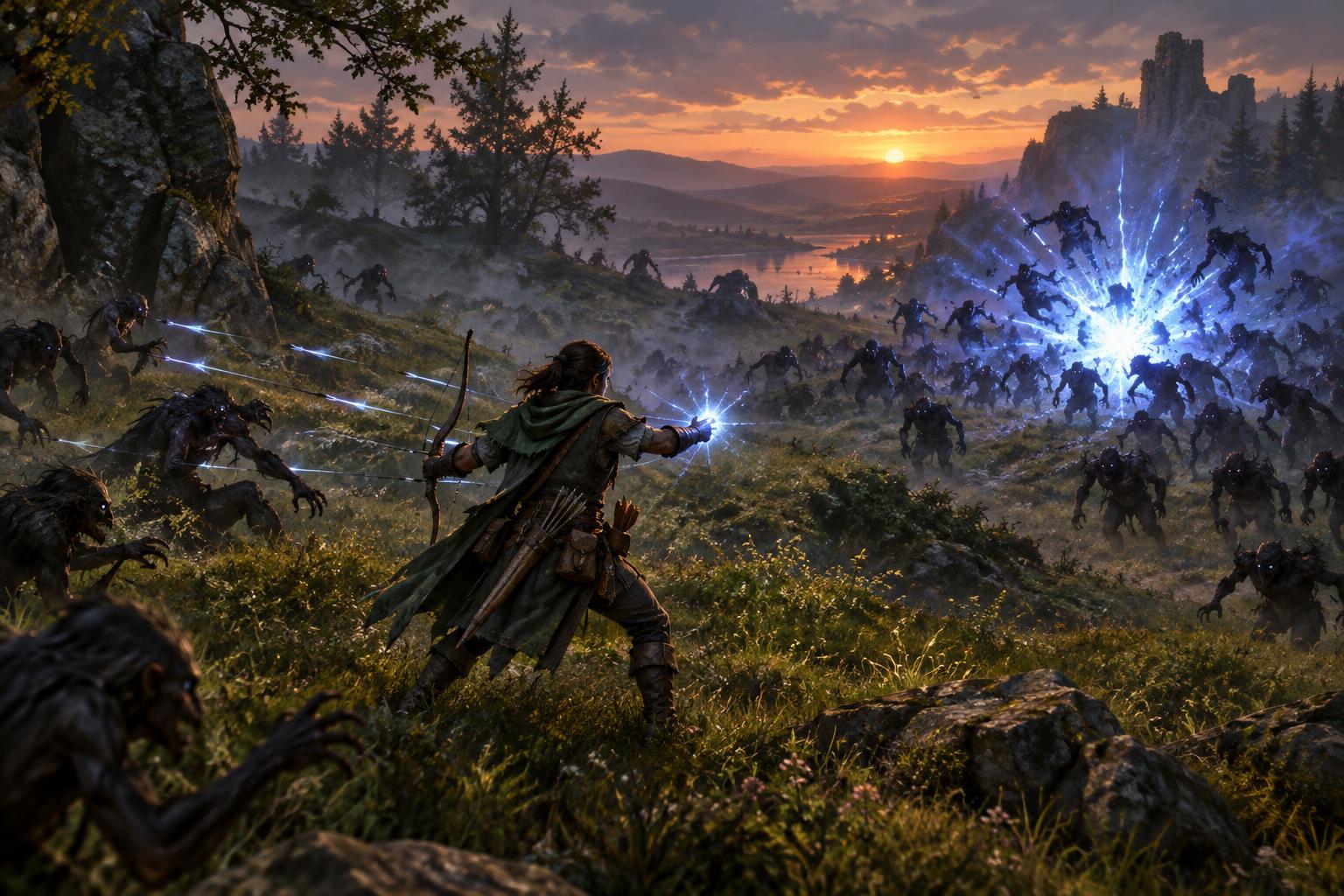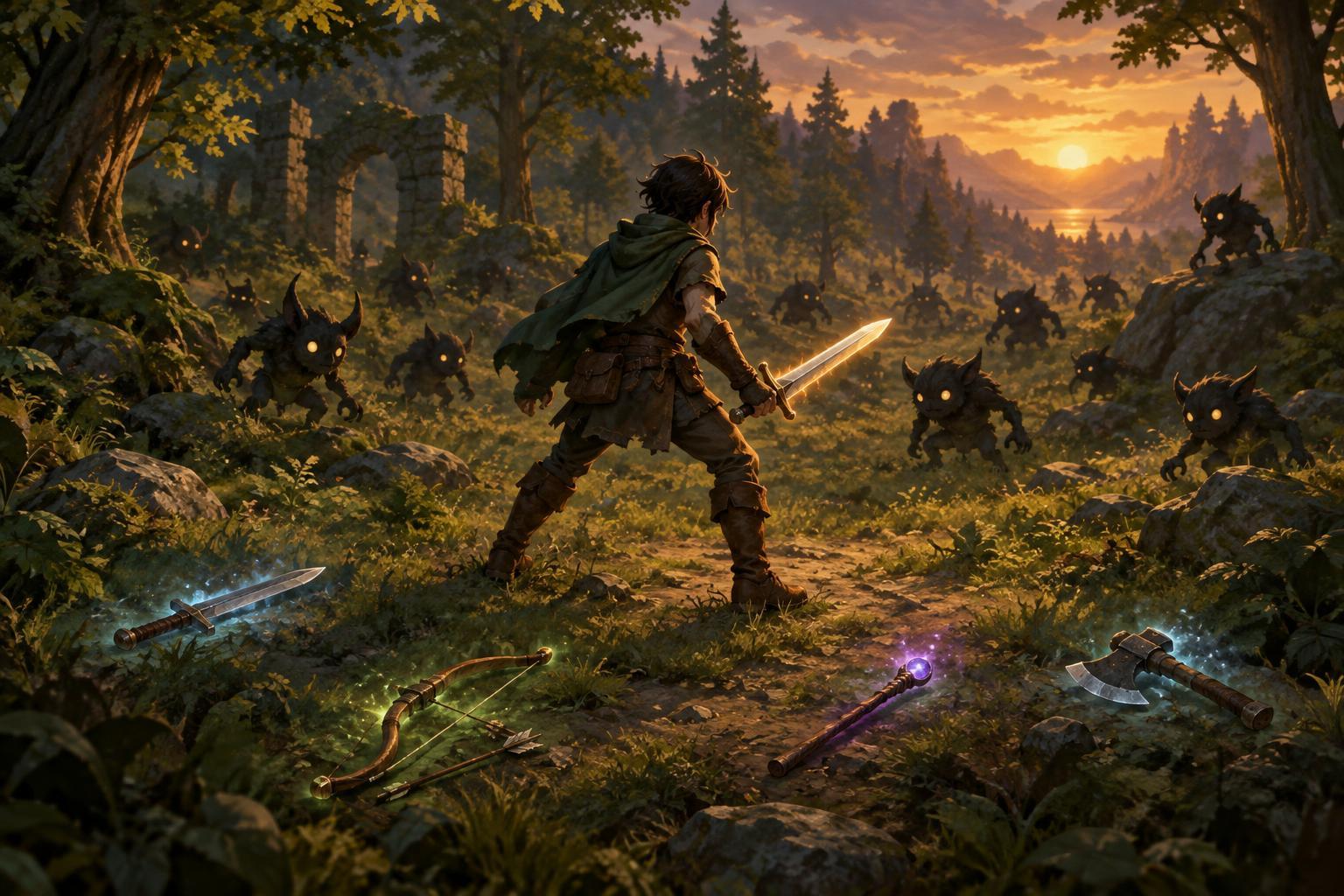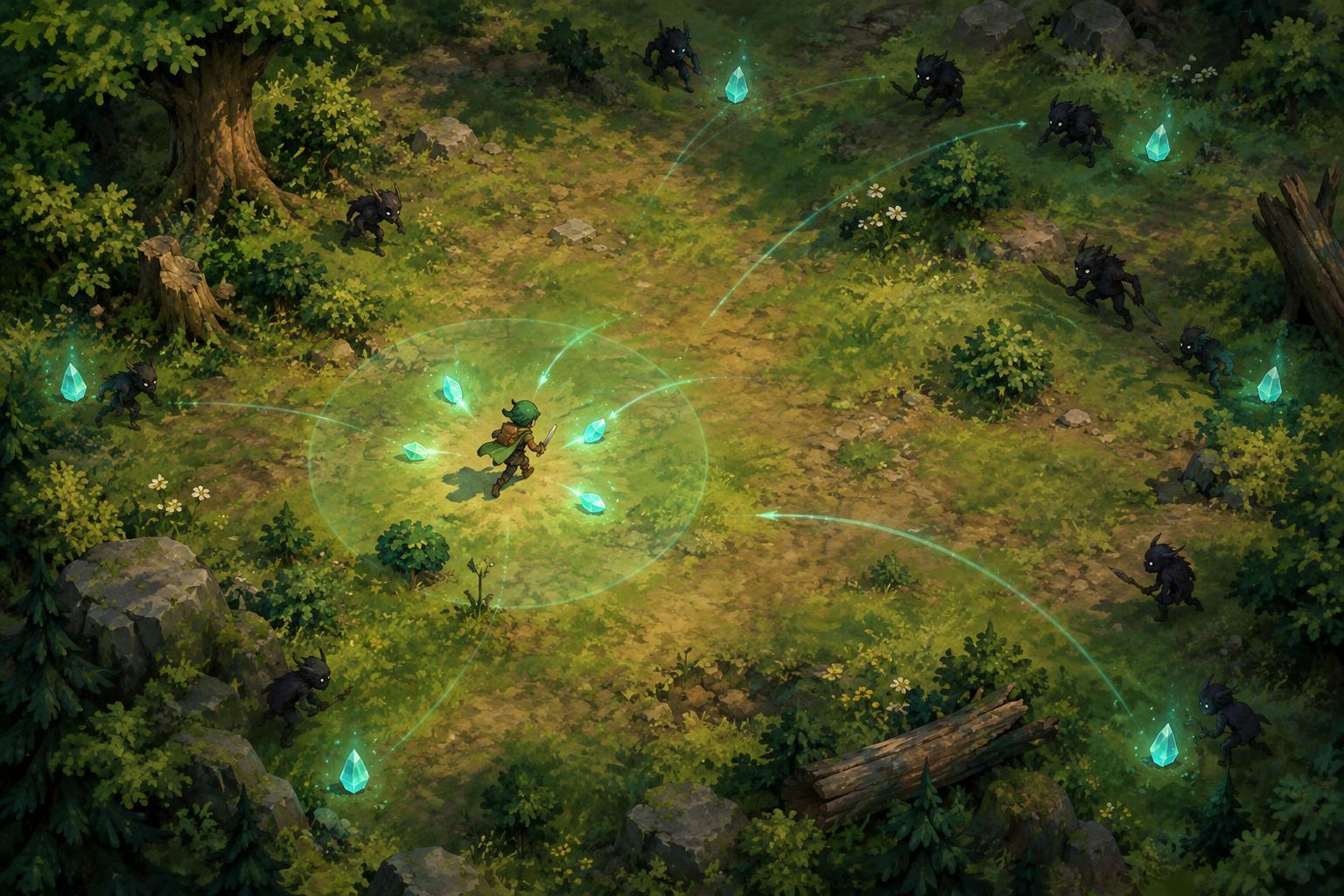
Collection is part of the combat loop
In many survival and arcade-style games, defeated enemies leave experience pickups behind. Defeating them is only half the leveling process: you still have to collect what they drop. Pickup range changes how close your character must get before those rewards are gathered. It may look like a convenience upgrade, but it can influence where you move, how much danger you accept, and when your next level arrives.
The details vary by game. Some games keep uncollected experience on the field, while others use different collection rules or limit how long rewards remain available. This independent, unofficial editorial guide focuses on the general decision rather than a particular game’s upgrade values. The useful question is not simply “Is more range good?” It is “What does more range let this build do that it cannot do safely or consistently right now?”
Why easier collection can strengthen a build
A character with little pickup range may need to cross an enemy lane to reach a cluster of experience. That detour costs time and may pull the character away from a safe route. With a wider collection area, the same character can gather rewards while continuing to dodge, circle, or keep enemies within an effective attack zone. The benefit is especially noticeable when pickups are spread across the edges of a fight.
More reliable collection can also make leveling less uneven. If experience accumulates in places you rarely revisit, an upgrade that improves collection may bring your next level forward without requiring you to defeat enemies any faster. Earlier levels can provide more choices for damage, defense, or utility before the field becomes harder to navigate. That is an indirect benefit, not a guarantee: it matters most when missed pickups, rather than slow kills, are holding the build back.
Pickup range may improve control as well as progression. Spending less attention on tiny items leaves more attention for hazards, enemy movement, and escape routes. Players who find precise collection tiring or difficult may value that steadier movement even when a direct damage upgrade would appear stronger on paper.
The opportunity cost of an early upgrade
Every build choice competes with another. Taking pickup range early might mean delaying an attack that clears space, a movement option that prevents hits, or a defensive tool that keeps the run alive. If enemies are reaching you faster than you can defeat or avoid them, collecting experience more efficiently may not solve the immediate problem. You need enough control of the field to make use of what you collect.
A practical test is to watch the ground after several fights. Are large amounts of experience sitting just outside your usual path? Do you repeatedly make risky turns to retrieve them? If so, collection may be your bottleneck. If you are already picking up most rewards during normal movement, more range could offer little immediate value. Similarly, if defeated enemies drop rewards in a tight area you naturally pass through, you may be able to postpone the upgrade.
Consider how long the benefit has left to work. Earlier collection improvements have more opportunities to affect future levels, while a late pickup upgrade may have less time to repay its cost. Late range can still be useful when the screen has become crowded and retrieving scattered rewards is newly dangerous. Judge the choice against the run in front of you, not a fixed rule that collection must always come first.
Build around movement, not just a number
Pickup range works best when it supports your movement pattern. A build that attacks while retreating can use extra range to gather rewards without reversing direction. A build that relies on staying near a particular area may benefit from collecting nearby drops without leaving its position. By contrast, a build that routinely sweeps across the whole field may already cover enough ground to collect what it needs.
Try treating collection as a route-planning tool. Move through open space, let enemies follow, and pass near reward clusters when a safe opening appears. Wider pickup range gives you more forgiving routes, but it does not make a dangerous cluster safe by itself. If reaching experience requires entering a dense group, it may be better to clear a path, wait for an opening, or leave the pickups until you can return.
After taking a collection upgrade, check whether your behavior actually changes. Are you leveling more consistently, avoiding sharp turns, or keeping a safer distance from enemies? If nothing changes, the upgrade may have exceeded what this particular run needs. Those observations are more useful than assuming that a larger collection area is always better.
A simple rule for deciding
Choose pickup range when uncollected experience is a recurring problem and your build can already survive long enough to benefit from extra levels. Prioritize immediate damage, movement, or defense when those are the obstacles stopping you from staying in the fight. Reassess as the field changes: a choice that was unnecessary early can become valuable later, and a collection-focused start still needs tools that handle enemies.
The strategic value of pickup range comes from turning defeated enemies into usable progress with fewer detours. When it lets you maintain a safer route and collect rewards you would otherwise miss, convenience becomes part of the build. When you already collect consistently, it remains convenient—but another upgrade may do more for the run.