A run ends, but what actually resets?
In a run-based game, an attempt usually begins with limited resources and ends when the player loses, wins, or chooses to stop. What happens next depends on the game’s rules. You might return to the starting screen with nothing from that attempt, spend a continue to resume, or keep unlocks that give later attempts more options. These differences shape how risky each decision feels.
Permadeath is often used to describe losing the current character or run for good. It does not always mean losing every form of progress. A game may erase your equipment and level from the attempt while preserving unlocked characters, items, or difficulty settings. When comparing games, it helps to ask a narrower question: which parts of this run disappear, and which parts remain available next time?
Permadeath makes choices consequential
With no way to resume a failed attempt, taking damage or spending a scarce resource carries weight. Players may have to decide whether to pursue a powerful but dangerous reward or protect a run that is already going well. Because the next attempt starts over, permadeath can make even a short run feel like a complete story, with its own mistakes, lucky breaks, and final outcome.
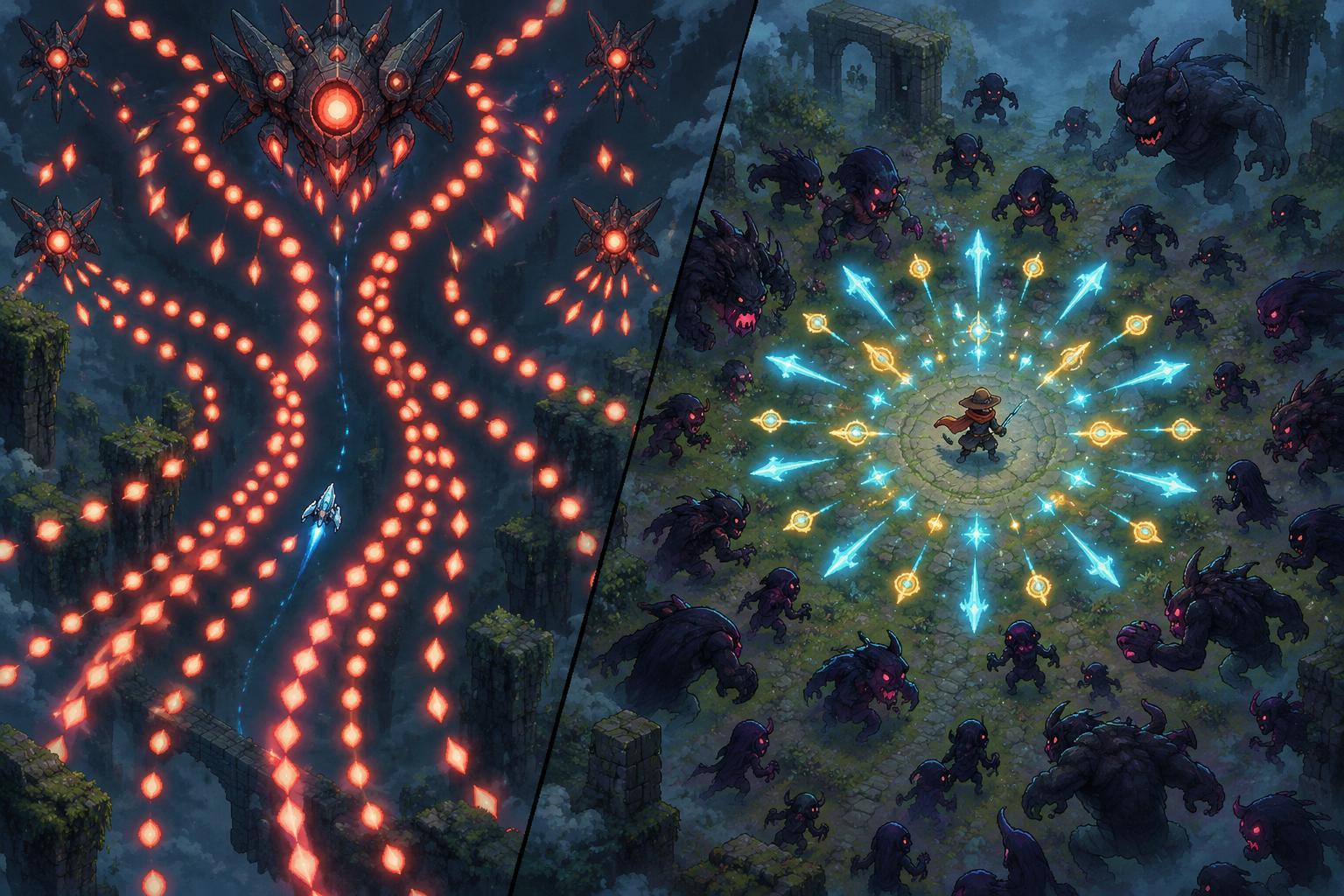
That pressure works best when players can understand enough of the rules to improve. Clear enemy signals, readable hazards, and useful feedback after a loss help turn failure into learning. Random item choices or map layouts can keep attempts varied, but they do not replace clarity. If a player cannot tell why a run ended, starting over may feel less like an invitation to adapt and more like a penalty.
Continues change the cost of failure
A continue gives the player another chance within an attempt, though the exact terms vary. It might restore health in place, restart a stage, consume a limited credit, or reduce a final score. That makes failure less likely to end the session immediately. For someone learning an unfamiliar boss or control scheme, a continue can provide more practice without repeating every earlier section.
Continues can also change the challenge. If using one has no cost, the main question may shift from “Can I survive?” to “How many tries will this take?” A limited supply, a score penalty, or a choice to retry from an earlier checkpoint can preserve tension while leaving room to learn. Neither approach is inherently better: a clean-restart mode and a continue-friendly mode can serve different moods and different players.
Progress between runs is a separate decision
Many roguelites add persistent progression alongside either permadeath or continues. A run may end, but its rewards can unlock new starting options, expand the item pool, or buy lasting upgrades. This gives an unsuccessful attempt a purpose beyond practice. It can also make later runs easier, so improvement may come from both better decisions and stronger starting tools.
Other games keep most advantages inside the run and use unlocks chiefly to add variety. In that design, a new character or item offers a different problem to solve rather than a straightforward power increase. Understanding the distinction can help set expectations. Before chasing an unlock, check whether it is likely to improve your odds, broaden your choices, or simply offer a fresh way to play.
Make the next attempt useful
After a run ends, pick one observation to carry forward. Did you spend a healing resource too early? Was a movement route blocked because you waited too long to reposition? Did a promising build lack a way to handle groups of enemies? A specific question gives the next attempt a purpose without turning every loss into a lengthy review.
It is also reasonable to use the options a game provides. A continue can help you practise a late-stage encounter; a fresh run can help you test a different opening strategy. Control adjustments or a less demanding difficulty setting may make patterns easier to read. This is independent editorial guidance about run-based game design, not a rule for any particular title. The most useful measure of an ending is whether it leaves you ready—and willing—to try again.