Treat healing as a way to buy more chances
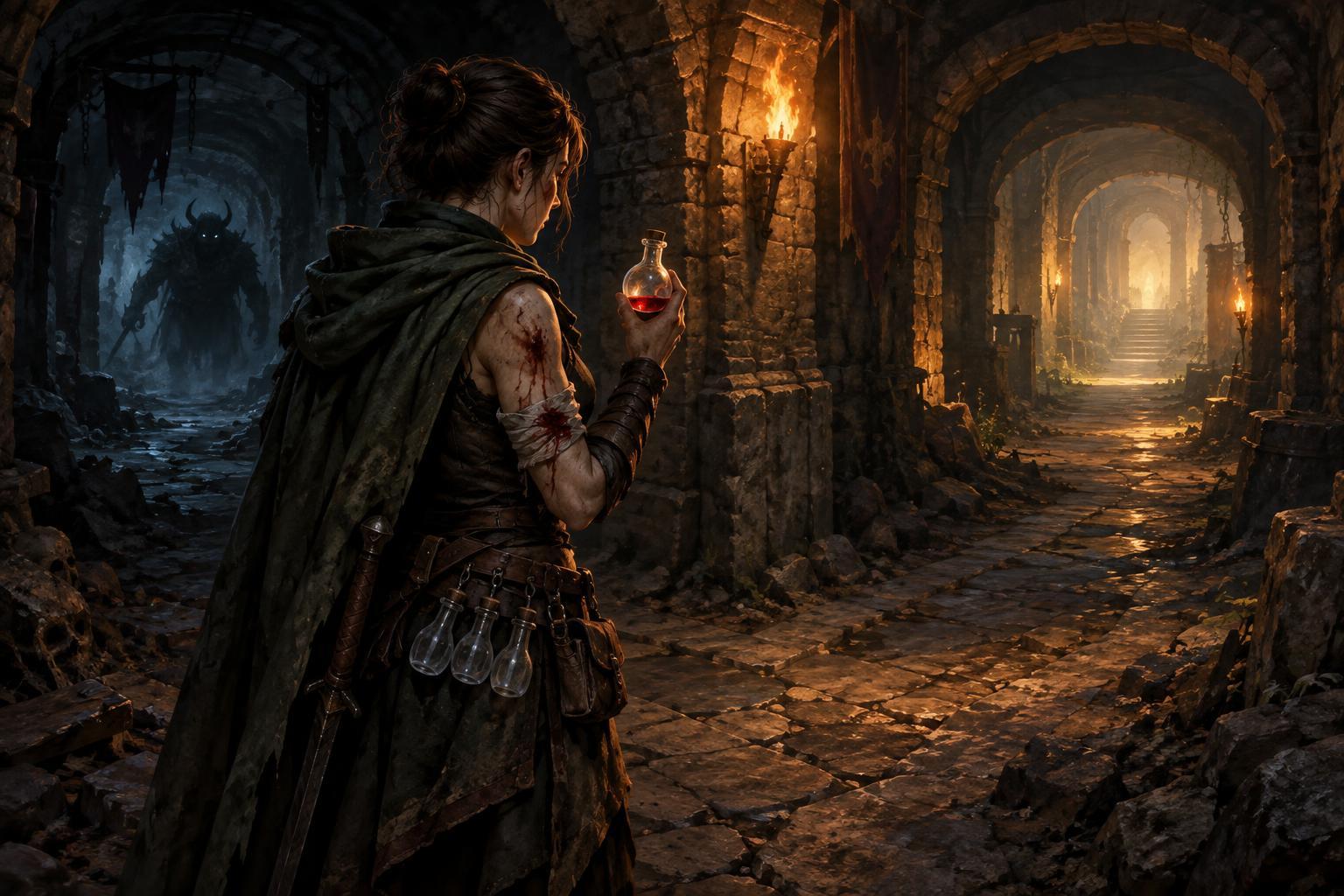
Limited-use healing creates a familiar dilemma: spend a charge to recover from a mistake, or keep it for a harder room. Neither choice is automatically correct. The useful question is what the charge lets you do next. Healing that keeps you alive through a dangerous encounter may be worth far more than healing that merely makes a safe corridor feel comfortable.
Think of health and healing items as related but different resources. Health protects you from the next hit; an unused item protects you only if you get an opportunity to activate it. If the game requires an animation, a menu action, or a quiet moment to heal, a charge in your inventory cannot always rescue you at the last second. The exact rules vary by game, so this is independent, unofficial genre guidance rather than a description of any one game's mechanics.
Decide at useful checkpoints, not after every hit
Constantly reconsidering a healing item can make a run feel more stressful than it needs to be. Instead, pause at natural checkpoints: before entering a new area, after a difficult fight, or when choosing between routes. Ask three questions. How many hits can you plausibly survive? Is there a safe chance to heal later? What do you know about the next encounter? The answers give you a clearer basis for a decision than the amount of health missing by itself.
A practical rule is to heal before your margin for error becomes uncomfortably small. That margin depends on your build and your familiarity with the enemies ahead. A slow, durable character may be able to carry lower health safely through familiar rooms. A fragile character facing unfamiliar attacks may need a larger buffer. Avoid treating either a fixed health percentage or a fixed number of charges as a rule that applies to every run.
Spend for real danger, not for a perfect health bar
Healing is easiest to justify when it changes what you can survive. If one likely hit would end the run and a charge would let you absorb that hit, using it may protect all the progress you have already made. If the next area is comparatively safe and you can avoid damage reliably, holding the charge may leave you better prepared for an unknown boss or hazardous route.
On the other hand, waiting until you are one mistake from defeat can waste the item. Some games punish standing still, restrict healing during combat, or have enemies that deal damage in quick succession. In those situations, heal during a reliable opening rather than gambling on finding one when the screen becomes crowded. The goal is not to finish every section at full health. It is to keep enough room to react while retaining resources for later threats.
Let your route and build shape the plan
A healing decision should account for what your build does well. Strong crowd control might make ordinary rooms manageable even at low health, while weak single-target damage could make the next elite encounter unusually risky. Mobility, defensive effects, and recovery on defeating enemies can also change how much value you get from a consumable. Consider the threats your build struggles with rather than judging its strength only by how quickly it clears easy rooms.
Route choices matter too. A branch with a possible reward may be tempting, but do not spend a healing charge on the assumption that the reward will replace it. If a safer path is available, compare the likely benefit of the riskier route with the health it might cost. When a game shows upcoming encounters, use that information; when it does not, keep a modest reserve for uncertainty without treating every unknown room as the worst possible outcome.
Review the decision, not just the result
A run that ends with unused healing items offers a useful lesson: you may have waited too long, lacked a safe opening, or simply met a threat you could not anticipate. Likewise, surviving after an early heal does not prove that spending it was necessary. Judge each choice by what you reasonably knew at the time, not only by whether the run succeeded.
After a run, identify one moment when healing would have changed your options. Perhaps you could have healed before a boss, or perhaps an early charge was spent to erase minor damage in an easy area. Use that observation to adjust your next run rather than building a rigid rule. Good healing management is a repeatable habit of assessing danger, creating a workable safety margin, and using the resources you brought while they can still help.