A loss should answer a question
In a survival or arcade-style game, defeat often arrives quickly. The screen fills with enemies, a health bar disappears, and the player is back at the start. That short loop can be satisfying when each attempt reveals something useful. It becomes frustrating when the player cannot tell whether they moved poorly, missed a warning, chose an unsuitable build or simply met a challenge they did not yet understand.
Informative defeat does not require a game to explain every mistake. It requires enough evidence for a player to form a reasonable next plan: watch the edge of the arena, save an escape move, seek more crowd control or reconsider an upgrade. This is independent editorial analysis of game design, not official guidance for any particular game.
Show danger before it becomes damage
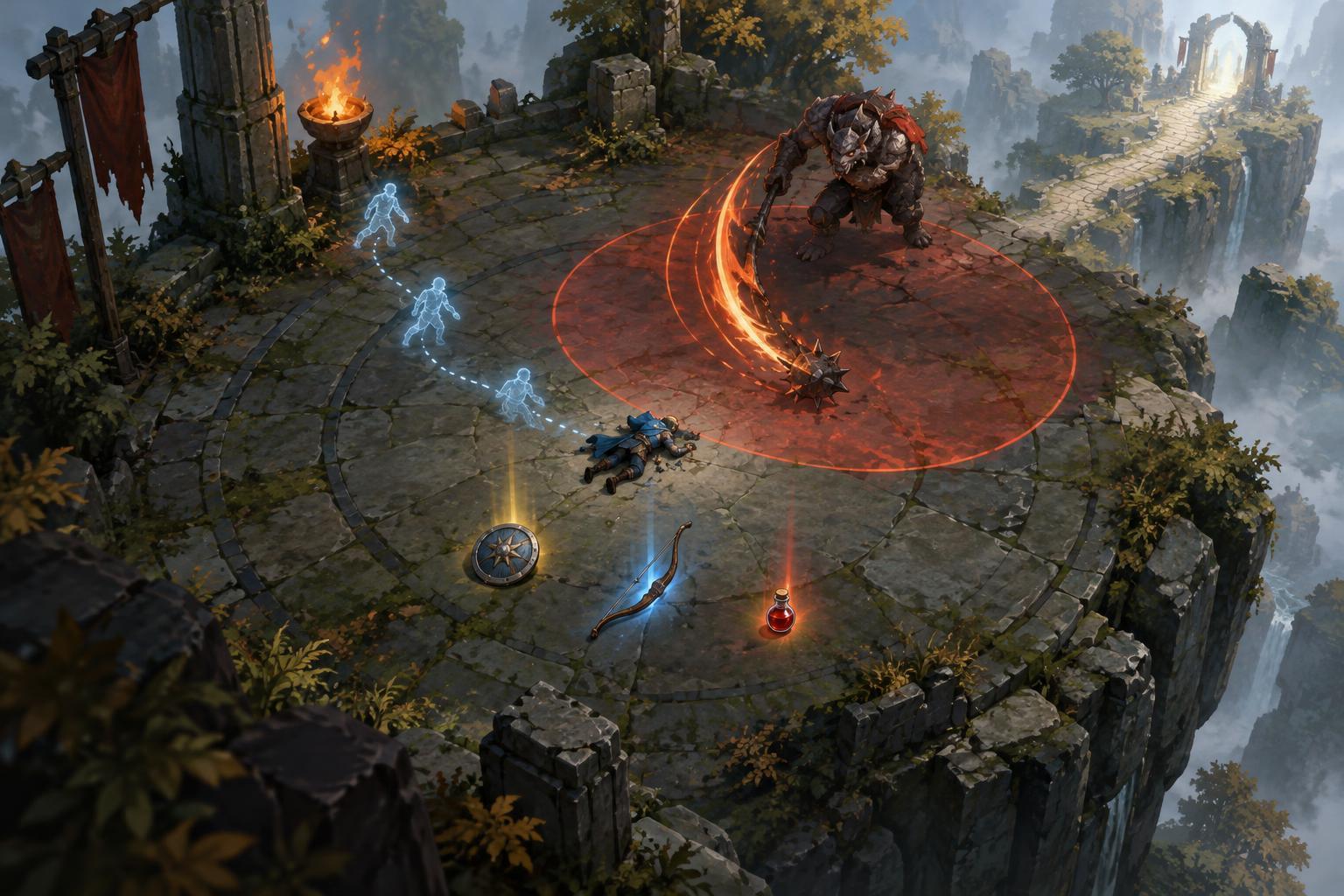
The most useful feedback begins before a hit lands. An enemy might pause before charging, a projectile might follow a visible path, or an area attack might mark the ground briefly. These cues give players a chance to notice a threat and respond. If the warning is consistent, they can connect their decision to its result: standing still was risky, but moving sideways created an opening.
Clarity matters especially when many effects overlap. A dramatic flash may look exciting yet hide the projectile that caused the final hit. Designers can help by keeping dangerous shapes distinct from decorative effects, maintaining visible character outlines and making major attacks recognizable even amid a crowded screen. The goal is not to remove surprise. It is to let players understand a threat once they have encountered it.
Make the final moments legible
A defeat screen can say more than “game over” without becoming a detailed report. Identifying the attack that dealt the final blow is useful, but it may not explain the broader failure. A player who was trapped by a dense wave before that attack arrived may need to think about positioning rather than the last enemy touched. Good feedback helps distinguish the immediate cause from the conditions that made it likely.
A short replay, a freeze-frame or a simple timeline of recent damage can provide context when the pace is too fast to process in real time. These tools work best when they remain optional and easy to leave. Players who already know what happened should be able to restart promptly; players who are uncertain should have a way to inspect the moment without guessing from a crowded end screen.
Connect build choices to outcomes
Roguelite runs often ask players to make decisions long before they know whether those decisions will work. A late defeat might reflect weak damage against sturdy targets, too little space to maneuver or a build that depended on a rare combination. Because several explanations can fit the same result, a post-run summary should provide clues rather than declare a single correct build.
Useful summaries show information a player can act on: which abilities were chosen, how those abilities changed, when health was repeatedly lost and whether a particular threat caused trouble across the run. Comparisons should be presented carefully. An ability dealing little damage is not necessarily a poor choice if it created room to escape. Giving players context helps them test an idea on the next attempt instead of treating one number as a verdict.
Keep learning accessible and the next attempt inviting
Feedback is less helpful if a player cannot perceive it. Color alone may not distinguish a warning from a harmless effect, and a brief sound cue may be missed by someone playing without audio. Pairing signals through shape, motion, sound and readable text gives more players a fair chance to understand what happened. Adjustable effect intensity, text size or game speed can also make crowded encounters easier to read where those options suit the game.
The best defeat feedback respects the rhythm of play. It offers a clear clue, leaves room for interpretation and makes restarting simple. After a loss, a player might decide to circle an enemy group earlier or choose an upgrade that helps maintain space. That small, testable intention is the design payoff: defeat still costs the run, but it gives the next one a purpose.