Learn what the meters actually do
Hunger and thirst are not interchangeable timers. In one survival game, an empty meter may drain health; in another, it may reduce stamina, slow movement, or stop recovery. Before planning a long trip, check when penalties begin and whether eating or drinking restores the meter immediately. A warning icon, a change in movement, or a pause in regeneration may tell you more than the meter’s color alone.
Pay attention to how quickly each need changes during ordinary play. Travel, combat, sprinting, heat, and rest may affect consumption differently, depending on the game. A short walk away from a safe base is a useful test: note your supplies and meters before leaving, then compare them when you return. You do not need a perfect calculation. You need a rough sense of which resource will limit your next trip first.
Secure water and food in that order when it makes sense
Water is often the more urgent search target because some games make it harder to carry, purify, or replace on the move. That is a starting assumption, not a universal rule. If drinking is easy but food requires risky hunting, food may be the real bottleneck. Prioritize the supply whose shortage would end your trip soonest, rather than following a fixed rule about which meter matters more.
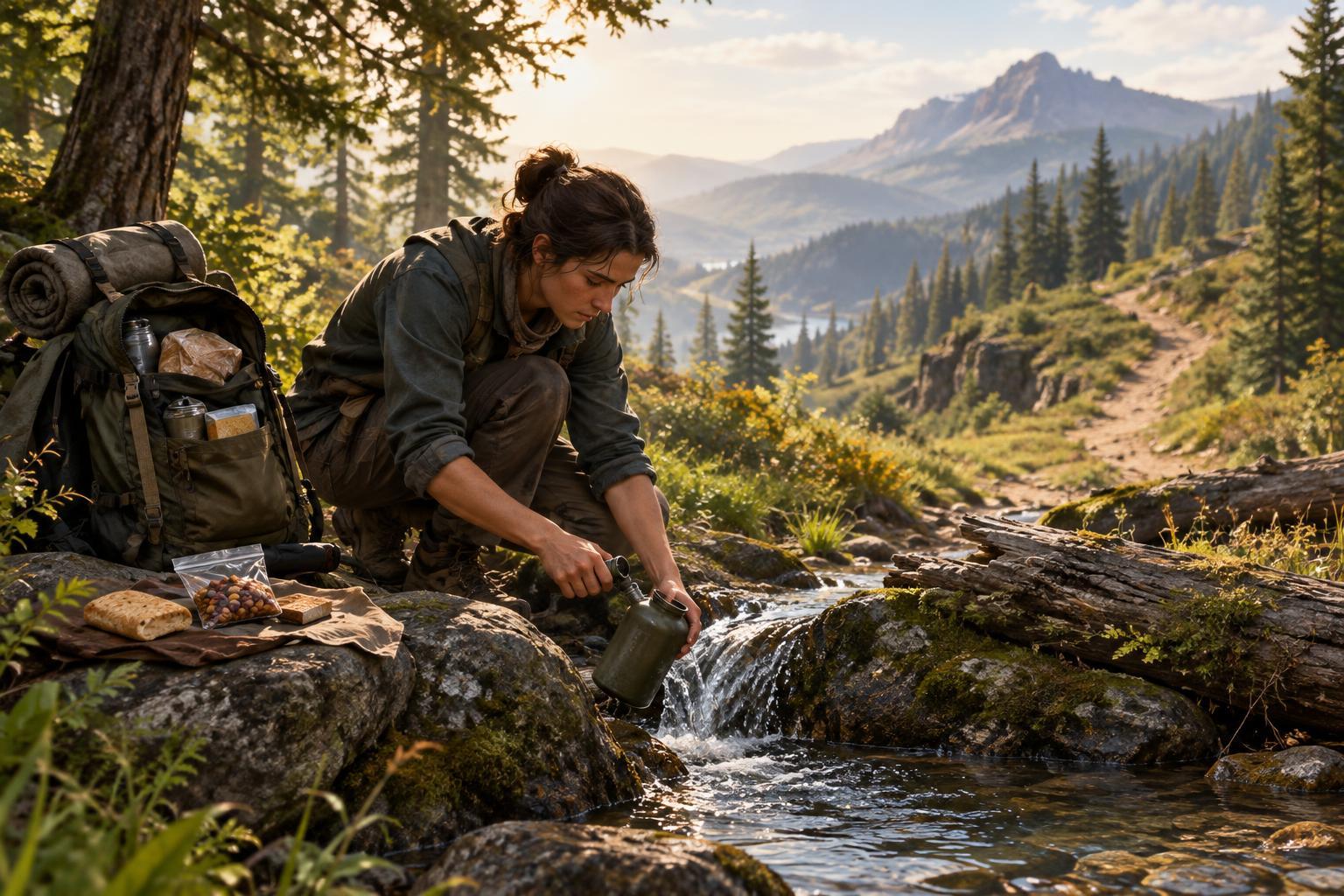
Think in terms of a repeatable supply loop. Identify a source, a way to make its output safe if the game requires it, and a route back to storage or shelter. Do the same for food: a dependable gathering area can be more valuable than a rare, high-value meal found far away. Early on, consistency usually helps more than maximum yield. A modest source you can reach safely makes later exploration easier to plan.
Carry a reserve, not your entire pantry
Leaving with exactly enough food and water for the expected route leaves little room for mistakes. Detours, injuries, nightfall, or a missed landmark can extend the journey. Set aside a return reserve before you leave, and treat it as unavailable until you turn back. If a game has weight or inventory limits, this reserve may need to be small; the aim is to protect your return trip without crowding out essential tools.
Storage matters as much as carrying capacity. Keep a portion of reliable supplies at your home base or another familiar stopping point, rather than consuming everything after a successful haul. Check whether food spoils, water containers can be refilled, or prepared meals provide benefits beyond filling a meter. If supplies decay, storing more is not always better. Match what you gather to what you can use or preserve.
A practical packing check is simple: What will you consume on the way out? What will you need to get back? What is your fallback if the planned source is empty or inaccessible? If you cannot answer the last question, shorten the trip or bring a little more.
Judge trips by their total cost
An expedition is worthwhile only if its likely reward justifies the supplies and risks it uses. A distant food source may look generous, but the journey can consume much of what you collect. Consider travel time, danger, tool wear, inventory space, and the possibility that you will need to retreat. Nearby resources with lower yields may support a steadier early routine.
Avoid letting a low meter make every decision for you. Sometimes the safer choice is to return to a known source rather than press toward an unknown one. Conversely, eating the last portable meal at base may be wasteful if a nearby renewable source can meet the immediate need. Use your best supplies where their portability matters: during travel, emergencies, or activities that prevent easy gathering.
Adjust the plan as your options improve
Early survival is usually about reliability. Later, containers, cooking stations, preservation tools, farming, or map knowledge may change the balance. Revisit your supply plan whenever you gain a new way to collect, carry, or store resources. A route that was too costly at the start may become comfortable once you can refill along the way.
Different games reward different habits, so treat this as a decision framework rather than a recipe. Watch which meter limits you, build a dependable source for it, protect enough supplies to return safely, and compare what a trip gains with what it consumes. Once those basics are under control, hunger and thirst become useful planning signals instead of last-minute emergencies.