Learn what the map shows before relying on it
In a survival arena, the main screen demands constant attention. You are watching enemies, open lanes, hazards and the space around your character. A minimap gives you a second view: a simplified picture of where you are and where you might want to go. Used well, it supports quick decisions rather than replacing your view of the action.
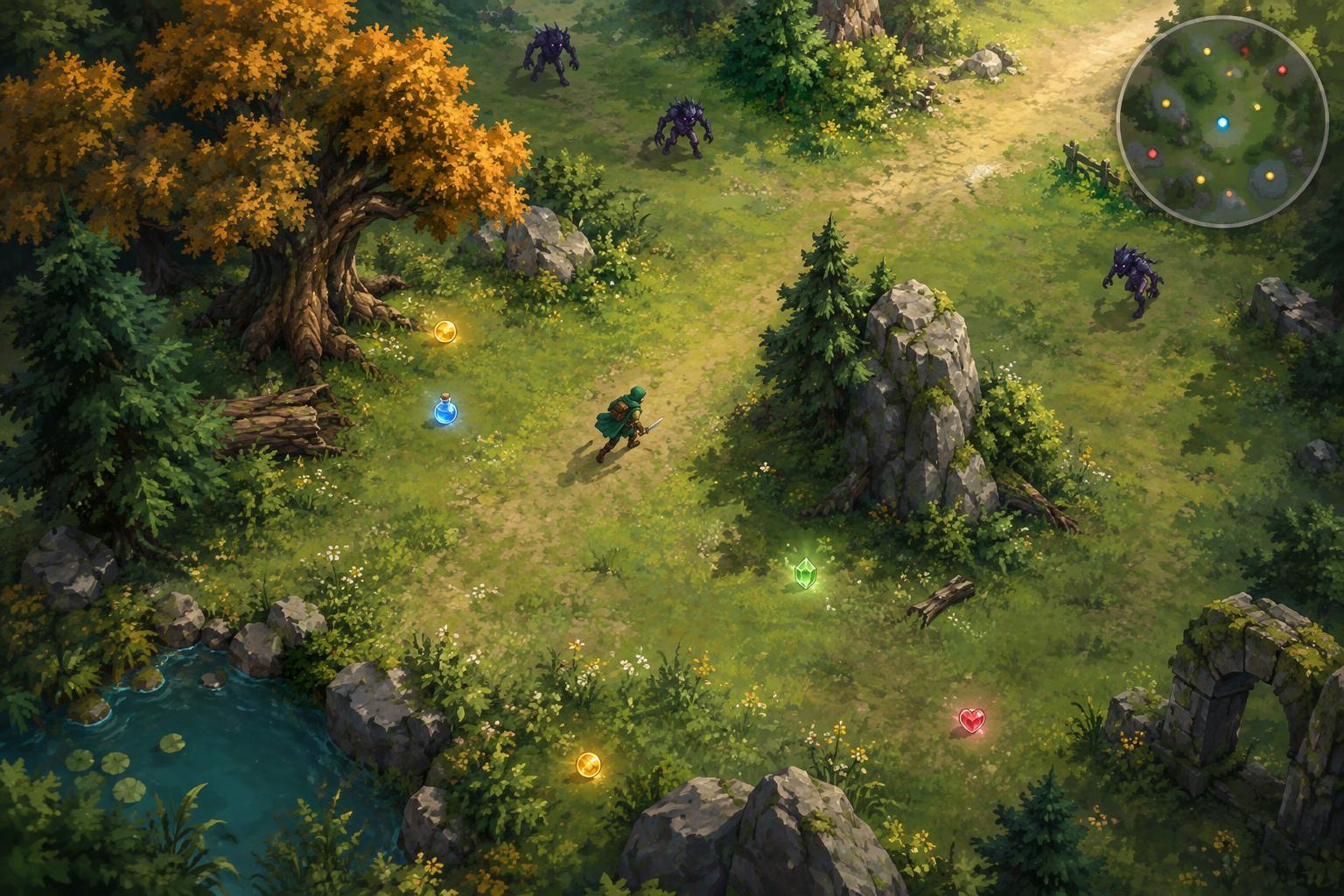
Map features vary by game. Some minimaps mark pickups as soon as they appear; others show only explored areas, major landmarks or your current position. Early in a run, pause in a relatively safe moment and identify the player marker, map boundaries and any pickup symbols. Notice whether the map rotates with your character or keeps north at the top. That small distinction matters when you turn quickly and need to translate a map direction into movement.
Turn pickup icons into useful priorities
Not every visible pickup deserves an immediate detour. Before changing course, ask what the item would do for this run. A nearby healing pickup may be valuable when you have little room for error, while an experience pickup might be worth collecting before a difficult stretch. If you are healthy and already moving through a safe area, a distant item may be less useful than keeping a clear path ahead.
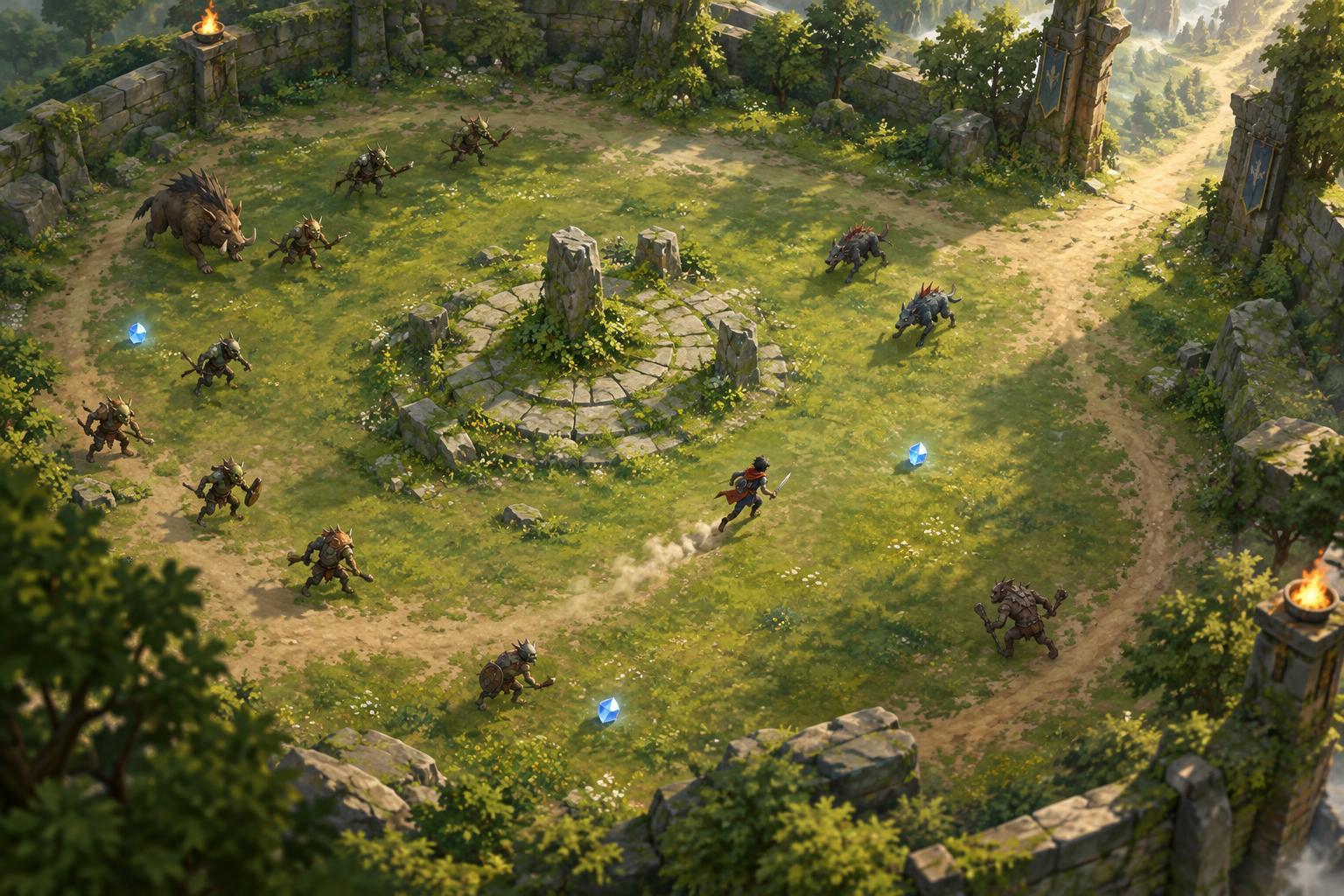
Distance on the minimap is only part of the cost. A pickup across the arena may require you to cross a dense group or pass through a narrow gap. Compare the likely benefit with the route you must take, then look for a way to approach from open space. If an item can wait, you may be able to collect it on a later pass. Whether that works depends on how the particular game handles dropped items, so learn its rules rather than assuming every marker will remain.
Navigate with landmarks, not constant map-watching
Choose a simple reference point to keep yourself oriented: a corner, a wall, a distinctive obstacle or the edge of an unexplored area. Glance at the minimap to decide on a general direction, then return your eyes to your character and steer using the arena itself. For example, instead of trying to walk directly onto a pickup icon, you might move toward the eastern wall, follow it until the icon is nearby, and then look for a safe opening.
This approach is especially helpful when the screen becomes crowded. Frequent, brief glances can confirm that you are still heading the right way without making you miss an enemy closing in. If you get turned around, first find your player marker and one familiar landmark. Rebuild your sense of direction from those two points; there is no need to solve the entire map at once.
Plan a route that preserves an escape lane
A useful route reaches a pickup without trapping you beside it. Before committing, check both the minimap and the play area. Where will you go after collecting the item? Can you keep moving through open ground, or will you have to reverse through the enemies following you? A curved approach often leaves more options than a straight rush into a corner.
Try to think one turn ahead. If several pickups lie along the same side of the arena, you may be able to collect them in a broad loop instead of making separate trips through the center. When a crowd blocks the route, circle into space and reconsider rather than forcing the shortest line. The minimap can suggest a destination, but the immediate view should decide whether the next few steps are safe.
Build a map routine that fits your play style
A simple routine is to scan the minimap at natural breaks: after clearing a pocket of space, when choosing between two open directions, or when you notice a pickup marker. Identify one goal, choose a landmark on the way and keep moving. Scan again when the route changes. This keeps the map useful without turning every movement into a navigation task.
If small icons, colors or a rotating display are hard to read, check the game's settings for map size, contrast, icon or orientation options. Availability differs between games. You can also rely more on visible landmarks and make fewer, more deliberate map checks. This is independent, unofficial editorial guidance for survival-arena games, not a description of one game's exact map rules. The best habit is to learn what your current game communicates, then use that information without losing sight of the arena around you.