Read movement before reacting
In an arena survival game, a crowded screen can make every enemy look like the same threat. Yet enemies often fall into a few useful behavior patterns: some follow your position, some commit to a sudden burst of movement, and others attack from a distance. Recognizing the pattern matters more than memorizing every enemy’s appearance. It helps you decide whether to keep moving, step aside or change your route.
This is independent, unofficial editorial guidance rather than a guide to any one game. Specific enemies may combine behaviors or break the usual pattern. When you meet an unfamiliar one, watch what it does over several moments: Does it turn as you turn? Does it pause before accelerating? Does it stay back while an attack travels toward you? Those observations give you a starting point for a safer response.
Chasers follow your path
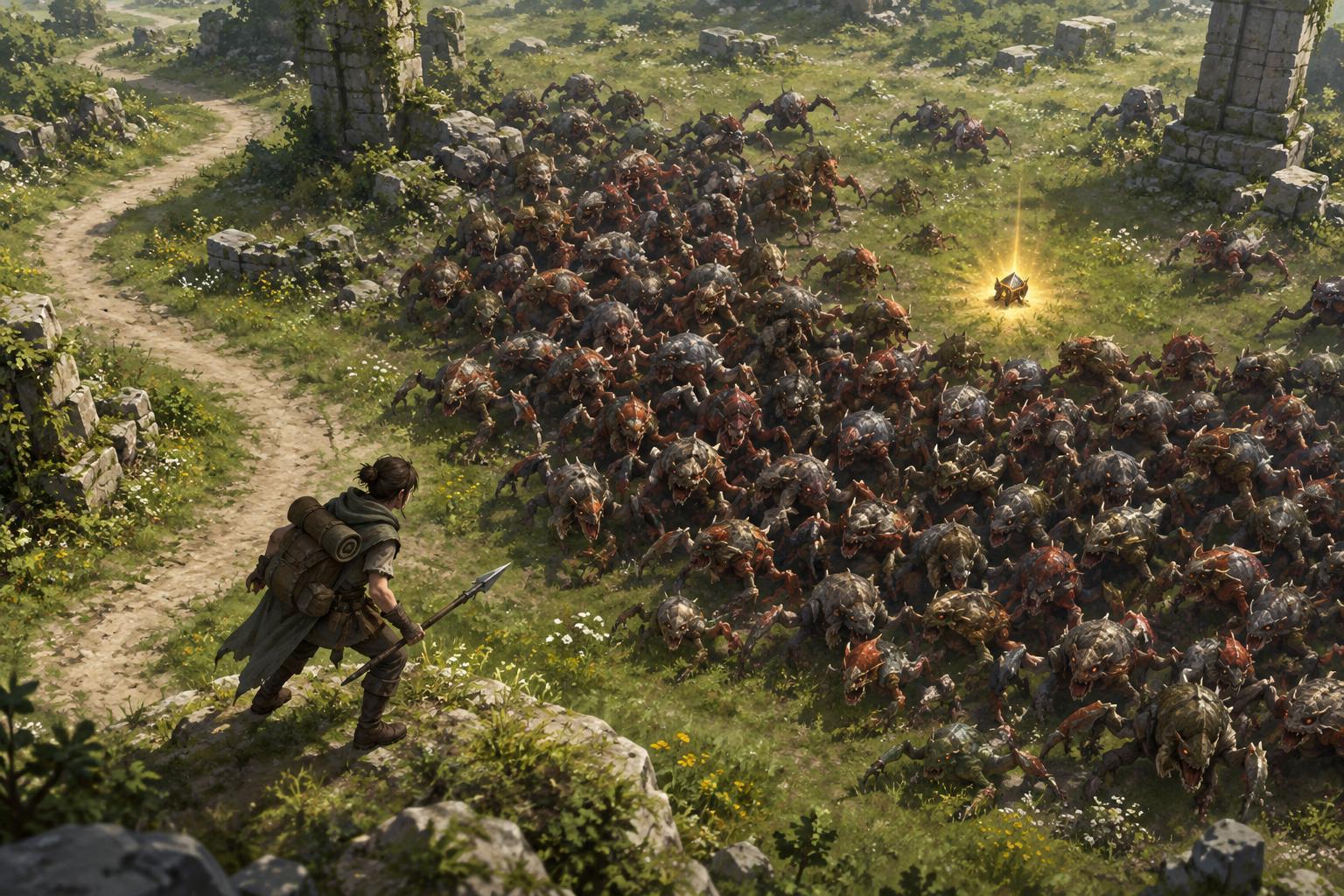
A chasing enemy closes distance by moving toward your current position. Its clearest cue is continuous course correction. If you change direction and it gradually bends toward you, you are probably dealing with a chaser. Chasers can seem harmless when they are slow or far away, but several following the same route can form a dense group behind you.
Against chasers, think about where your movement leads them. A steady, open path can draw them into a predictable cluster, while repeated turns in a tight space may bring that cluster across your escape route. Leave room around obstacles and avoid running directly into an untouched group just to get away from the one behind you. If the game has attacks that cover an area, a compact trail may be easier to manage, but do not assume your damage will clear it before you turn back.
Watch for enemies that only appear to chase. Some track you until they reach a certain distance, then stop or switch attacks. Treat a change in speed, posture or spacing as a reason to reassess rather than continue on autopilot.
Chargers commit to a burst
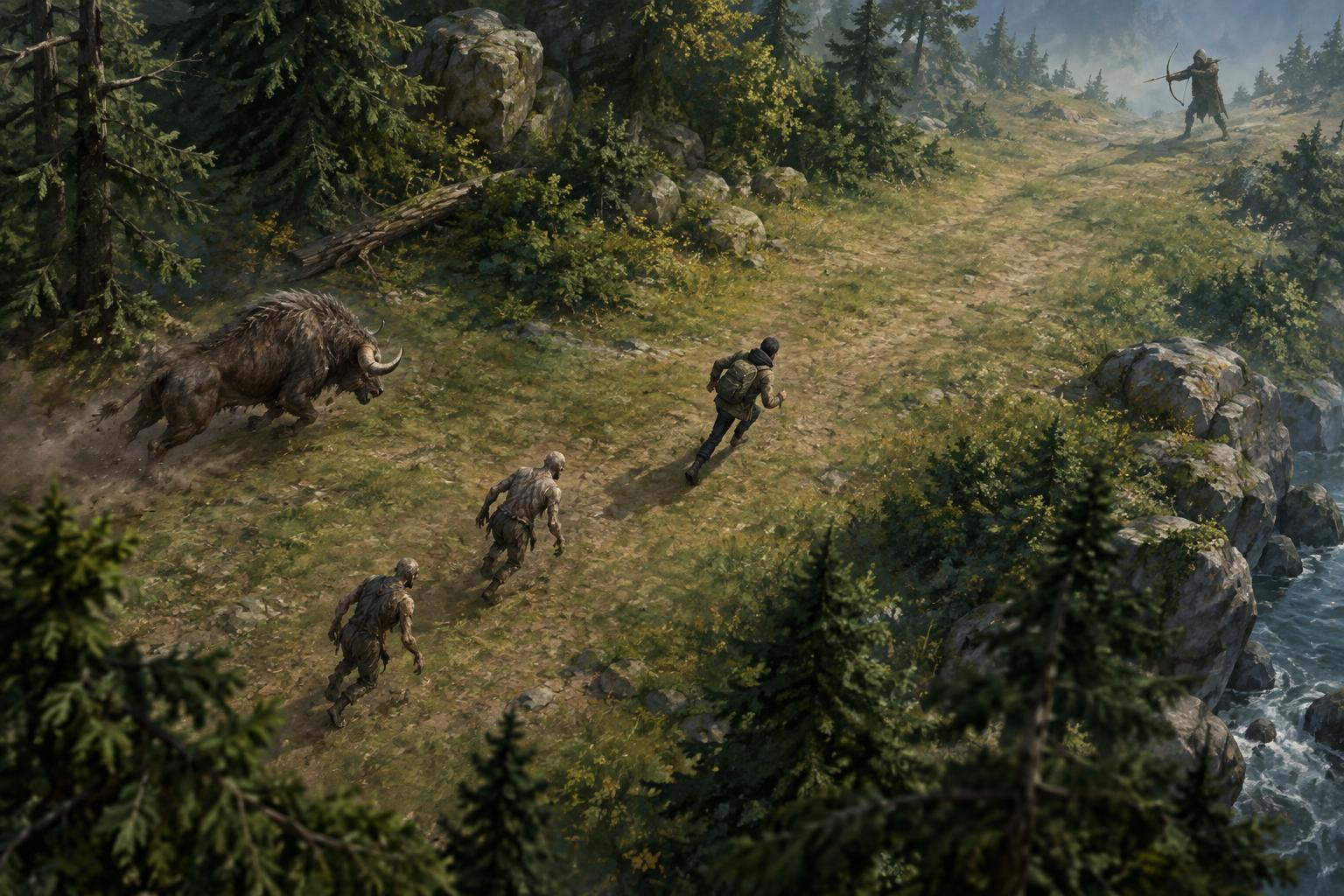
Charging enemies are defined by a sudden, directed movement. They may stop, wind up, face a particular direction or move differently just before the burst. The key question is when their direction becomes committed. If a charge continues toward the spot where you stood a moment ago, a measured sidestep after the commitment may work better than fleeing in a straight line.
Try to give a charger space to miss without forcing yourself into another enemy. Running away along its line of travel can keep you in danger longer, especially if it moves faster than you. Moving across that line is often useful, but timing and collision rules vary by game. Early in a run, observe a charge from a safe distance if you can: note the wind-up, the direction of travel and whether the enemy pauses afterward.
Do not treat every fast enemy as a charger. An enemy that accelerates while continuing to steer behaves more like a rapid chaser. The distinction changes your response: you can sidestep a committed line, but an enemy that keeps tracking may require a longer route around it.
Ranged enemies threaten the space ahead
Ranged enemies can be recognized by what they do when you stay away. They may hold their position, keep a preferred distance or pause to launch an attack. Look for visible projectiles, aiming motions or repeated attacks aimed at your location. The immediate danger is not always the enemy itself; it may be the space you are about to enter.
When facing a ranged attacker, avoid staring only at your character. Glance along your intended path for incoming attacks, then choose a route that leaves room to adjust. Changing direction can help against attacks aimed at your earlier position, but sharp turns can also carry you into a projectile you had already avoided. If cover, obstacles or gaps exist, learn whether they block attacks before relying on them.
Closing in on a ranged enemy is not automatically the best choice. Consider what stands between you and it, whether nearby chasers will follow you into a narrow lane, and whether your own attacks can reach it from a safer position.
Handle mixed groups one decision at a time
The hardest situations combine all three behaviors. A practical order is to check for an immediate charge or incoming attack, then look for an open route through the chasers. You do not need to defeat every visible enemy before moving. Your first goal is to preserve space for the next decision.
If the screen becomes difficult to read, simplify the task. Watch one likely charger for its wind-up, keep the edge of a chasing group in view, and scan your planned route for projectiles. In games that offer visual settings or control options, choose cues and inputs that make these checks more comfortable. Practice identifying one behavior at a time during quieter moments; that habit makes a crowded encounter easier to interpret without demanding a perfect reaction to everything at once.