Recognize the shift before the screen fills
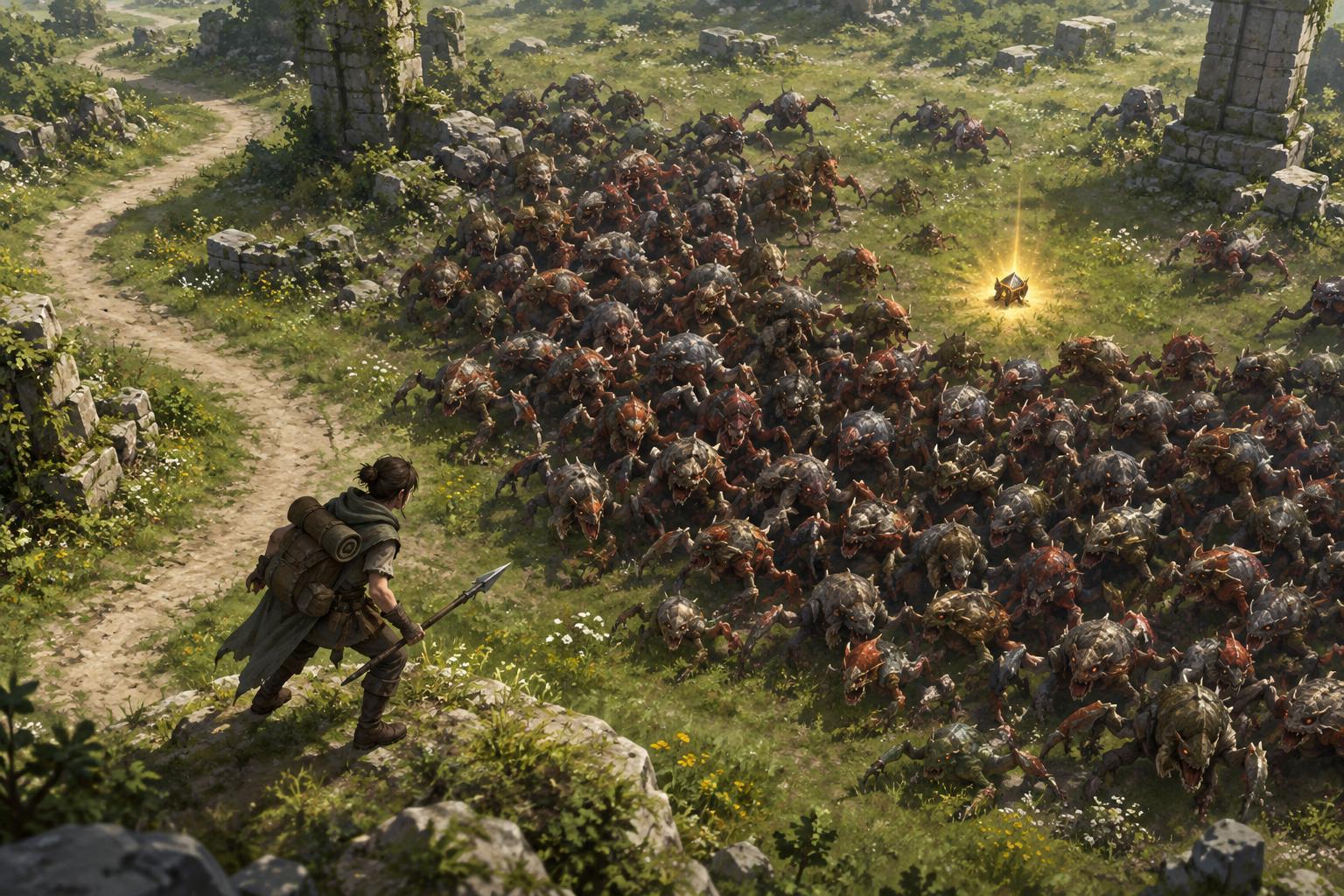
In many timed survival games, a build that feels comfortable early can struggle once enemies arrive faster than it clears them. The important change is not simply that there are more targets. Crowds leave fewer safe paths, make pickups harder to reach and give small positioning mistakes bigger consequences. Preparing for that change is easier than trying to repair a failing build while surrounded.
This is independent, unofficial genre guidance rather than a rule set for any particular game. As a run develops, watch for signs that your margin for error is shrinking: enemies staying on screen longer, gaps closing before you can cross them, or frequent detours just to collect upgrades. Those signs can matter more than a timer because enemy patterns and available tools vary between games.
Build for reliable clearing, not just impressive hits
A powerful attack is useful only if it reaches the threats that are restricting your movement. When choosing upgrades, consider how consistently your build deals damage across a crowd. Area coverage, attack frequency, reach and effects that interrupt or slow enemies may help keep routes open, depending on the game. A large single-target hit can still be valuable, but it may not solve a crowd that approaches from several directions.
Try to identify your build's weakest situation before committing further upgrades. Does it clear enemies in front of you but leave your sides exposed? Does it handle ordinary groups yet stall against tougher targets that block a lane? Choose improvements that address the problem you actually encounter. If upgrade choices are random, keep more than one workable path in mind rather than relying on a single combination appearing.
Protect room to move
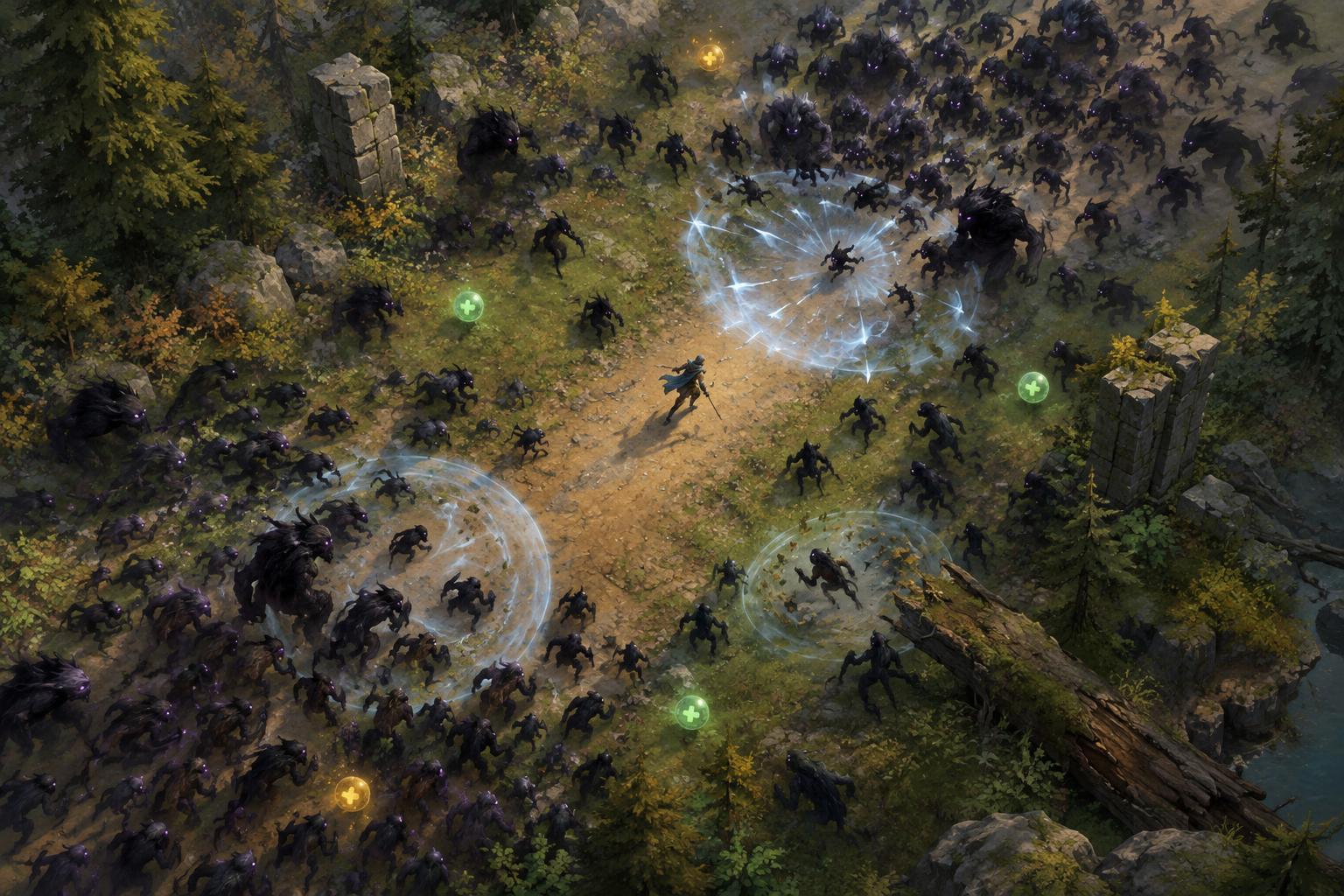
Movement is a resource. An open lane gives you time to dodge, collect an item or reposition when a new group arrives. Avoid drifting toward a wall or corner without a clear way back out. Even if the edge briefly limits the directions enemies can approach from, it can also leave you with fewer escape options when a dense group closes in.
Short, deliberate adjustments are often easier to control than a long dash through an unexamined crowd. Look ahead to where a gap will be after you move, not just where it is now. If enemies follow your position, you may be able to guide them toward one side and circle into the space they leave behind. This takes practice and may not work against every movement pattern, so keep checking your route rather than following a fixed loop blindly.
Treat pickups and recovery as decisions
Experience, currency, healing and other pickups can tempt you into unsafe paths. Before crossing a packed area, ask what the pickup will change immediately. An upgrade that improves clearing may justify a measured risk; a small reward may be better left until the crowd moves or thins. Some games allow uncollected items to remain accessible, while others do not, so learn the relevant rules without assuming every pickup must be collected at once.
If your game offers limited-use defensive tools, save them for moments when they create a genuine exit or prevent a likely loss. Do not wait so long that you can no longer reach the opening they provide. Likewise, after taking damage, focus first on finding a controllable position. Chasing healing through an even denser group can turn one mistake into several.
Review the first point where control slipped
A failed late run can still tell you what to change. Instead of judging only the final moments, recall when you first had to abandon your intended route. Were enemies surviving too long, was one side of your build unprotected, or did you enter a cramped area for a pickup? Each cause suggests a different adjustment for the next attempt.
Change one or two decisions at a time. You might prioritize wider coverage, begin repositioning earlier or leave risky pickups alone until a path opens. That makes it easier to tell what helped. The goal is not to eliminate every crowded moment; it is to enter those moments with enough clearing power, space and flexibility to make a useful choice.