Read the gap beyond its entrance
In a survival game, an opening between enemies can look wider than it really is. Enemies keep moving while you approach, and the space behind the gap may already be filling. Before entering, look past the nearest pair of enemies. Is there room to turn once you get through? Does the route lead toward open ground, or into another cluster?
Treat a gap as a short route rather than a doorway. Its entrance, middle and exit all matter. A narrow opening with clear space beyond it may be safer than a wide opening that ends at a wall or a dense group. Exact movement and collision rules vary by game, so use this as a way to assess the screen rather than as a fixed rule for every encounter.
Keep enough space to change your mind
The easiest gap to use is often the one you notice early. When you stay near the edge of a swarm instead of drifting into its center, you can see openings develop and choose among them. Make small positioning adjustments while there is still room to reverse direction. Waiting until enemies nearly touch your character can turn a manageable choice into a forced sprint.
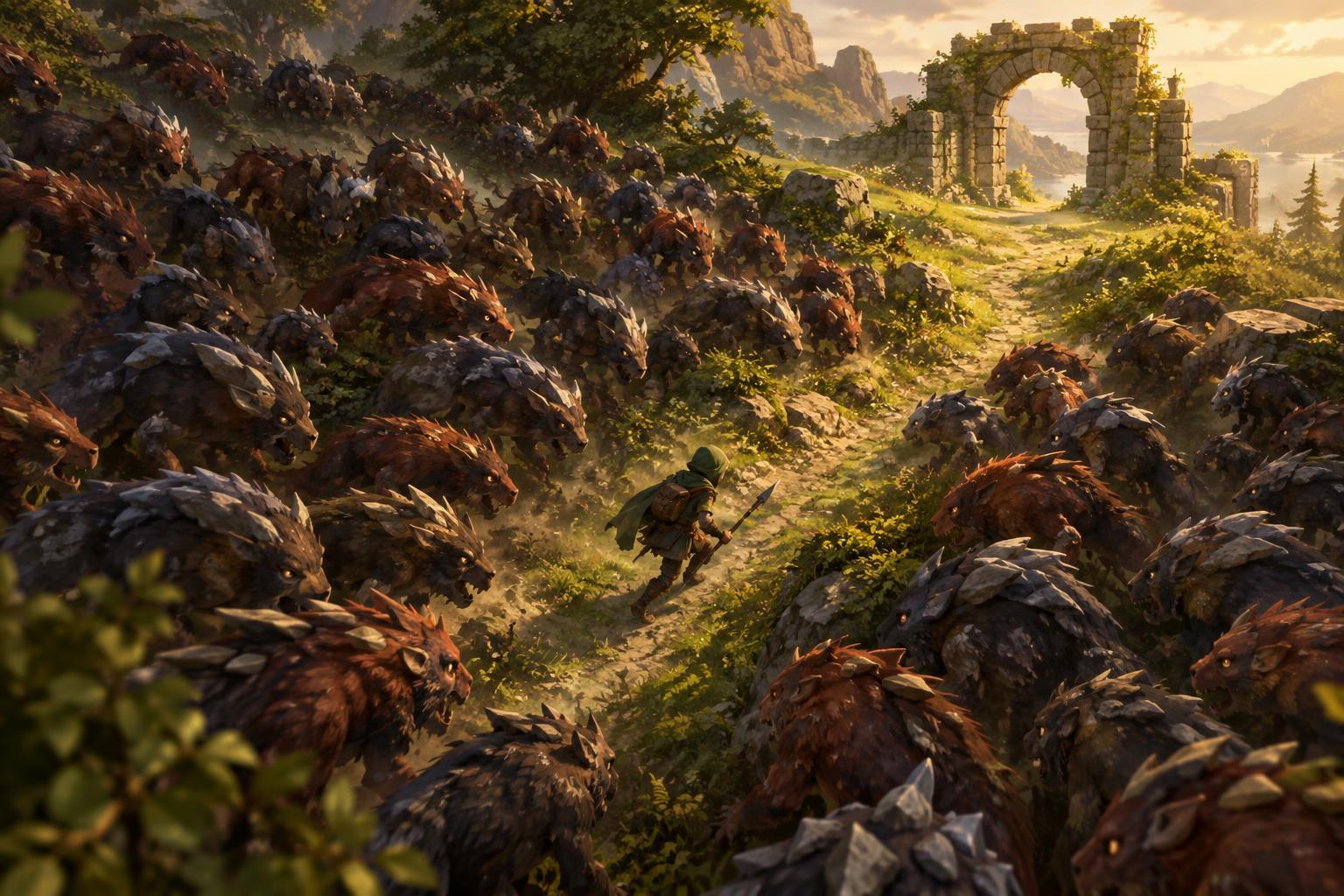
Watch the shape of the swarm as well as your immediate surroundings. A broad arc of enemies may leave one side open now but gradually curl around behind you. Moving along the outside of that arc can preserve an escape lane. Cutting across its center may shorten the journey, but it also places enemies on more sides of you. If a gap starts closing before you reach it, abandon it early rather than trying to squeeze through on momentum alone.
Cross with a destination, not just a direction
Once you commit to an opening, aim for the space beyond it. Steering back and forth inside a narrow lane can waste the short window when that lane is clear. A simple plan is to approach from an angle, pass the nearest enemies, then continue far enough to regain turning room. You do not need to travel in a perfectly straight line, but each correction should help you reach a safer position.
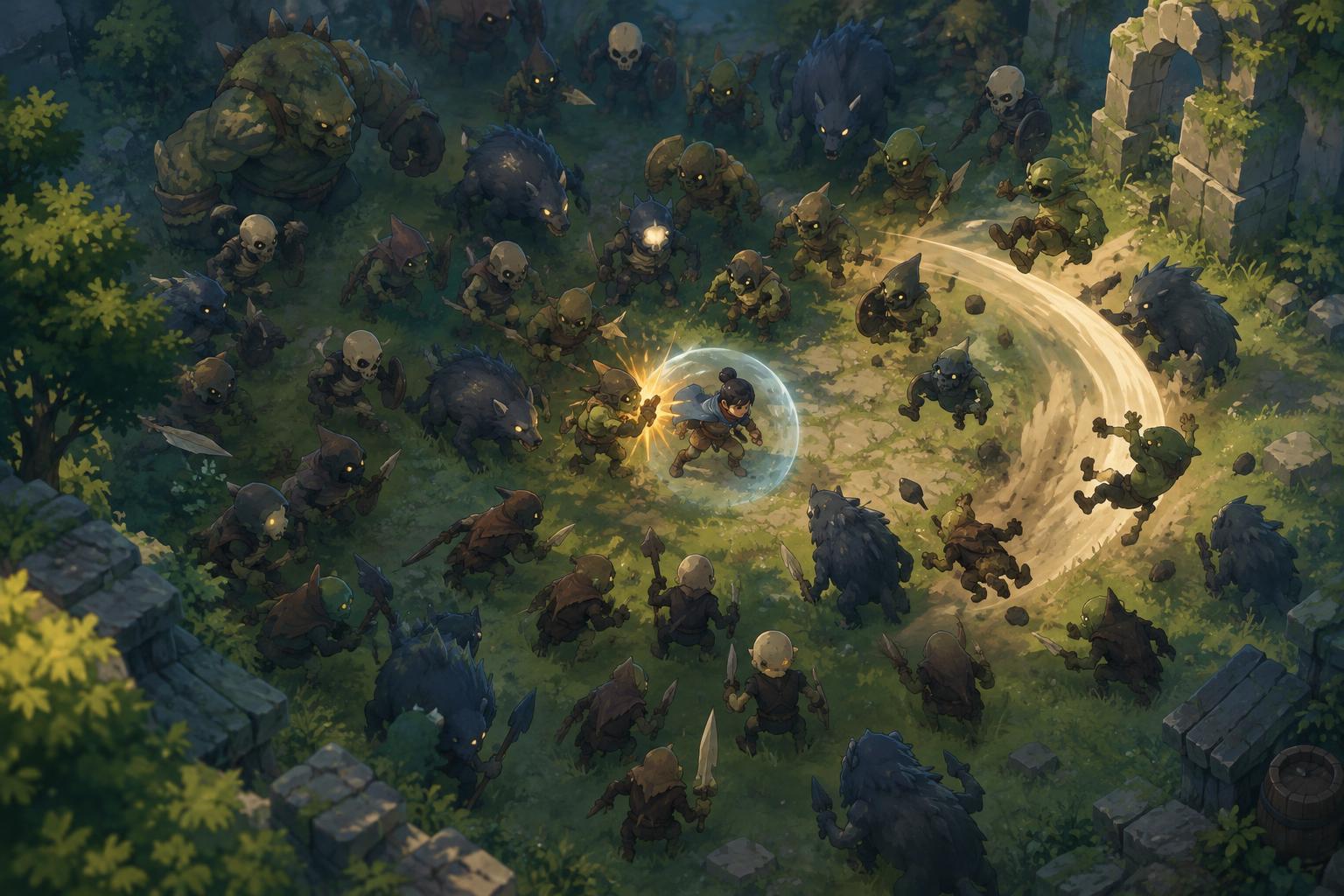
Pay attention to how your attacks affect that plan. If your damage is strongest in front of you, facing the approaching group may help maintain the lane. If attacks fire automatically or cover an area around you, your safest route may depend more on where enemies have already thinned out. Do not assume that a promising build can clear a blocked exit in time. Move according to the space you can see, not the space you hope your next attack will create.
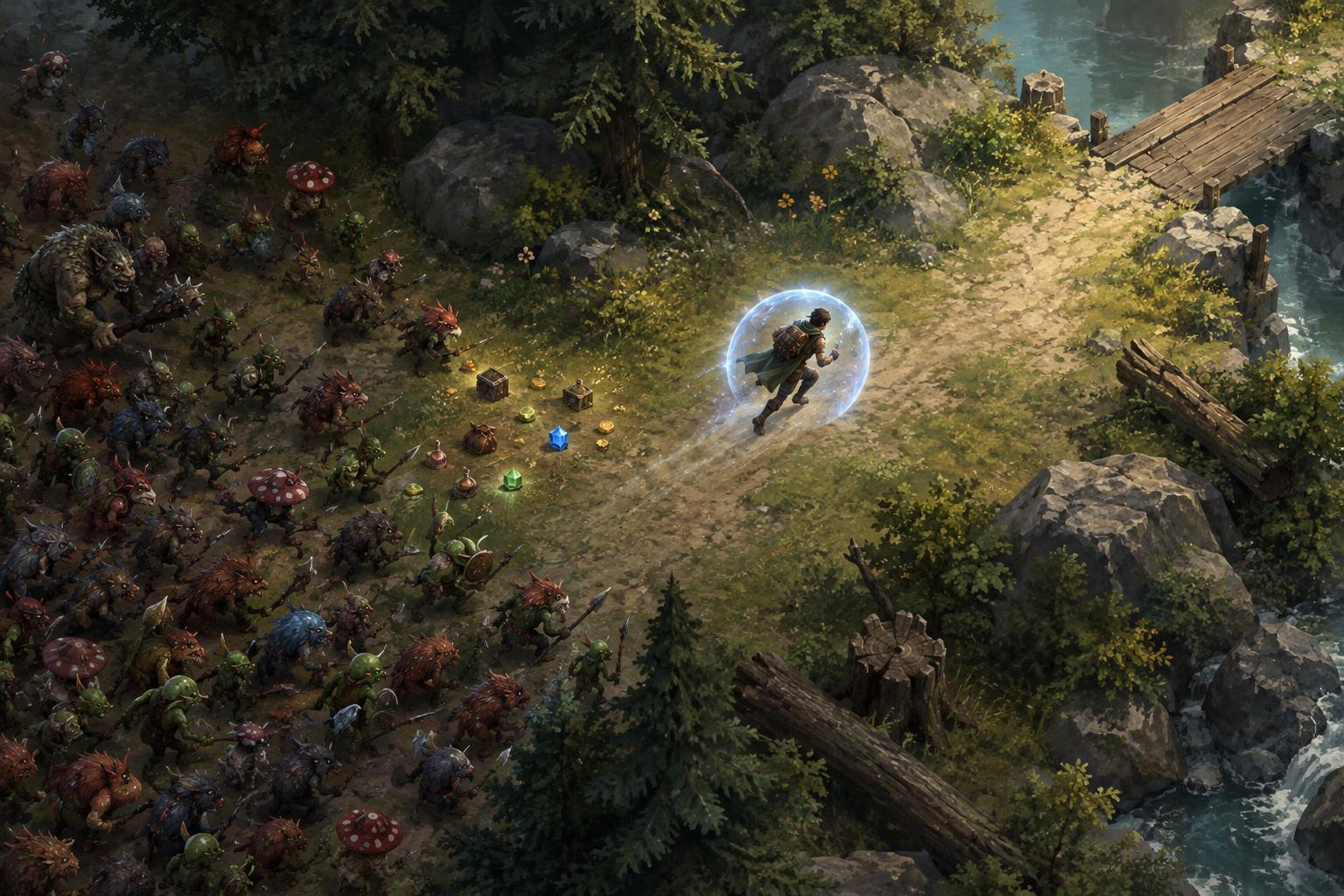
Pickups can complicate the decision. Experience, currency or temporary bonuses may sit inside the swarm, but reaching them is not always worth giving up your escape route. If collecting an item would require a sharp turn into closing enemies, consider circling back after the group shifts.
Avoid the patterns that cause a surround
A surround often begins with repeated small turns. You dodge one enemy, then another, until your path folds back toward the group following you. Try to notice when you are tracing a tight loop. Widen it before enemies from the front and rear meet. Open space is a resource: spending a little of it to make a broad turn can prevent a much harder escape later.
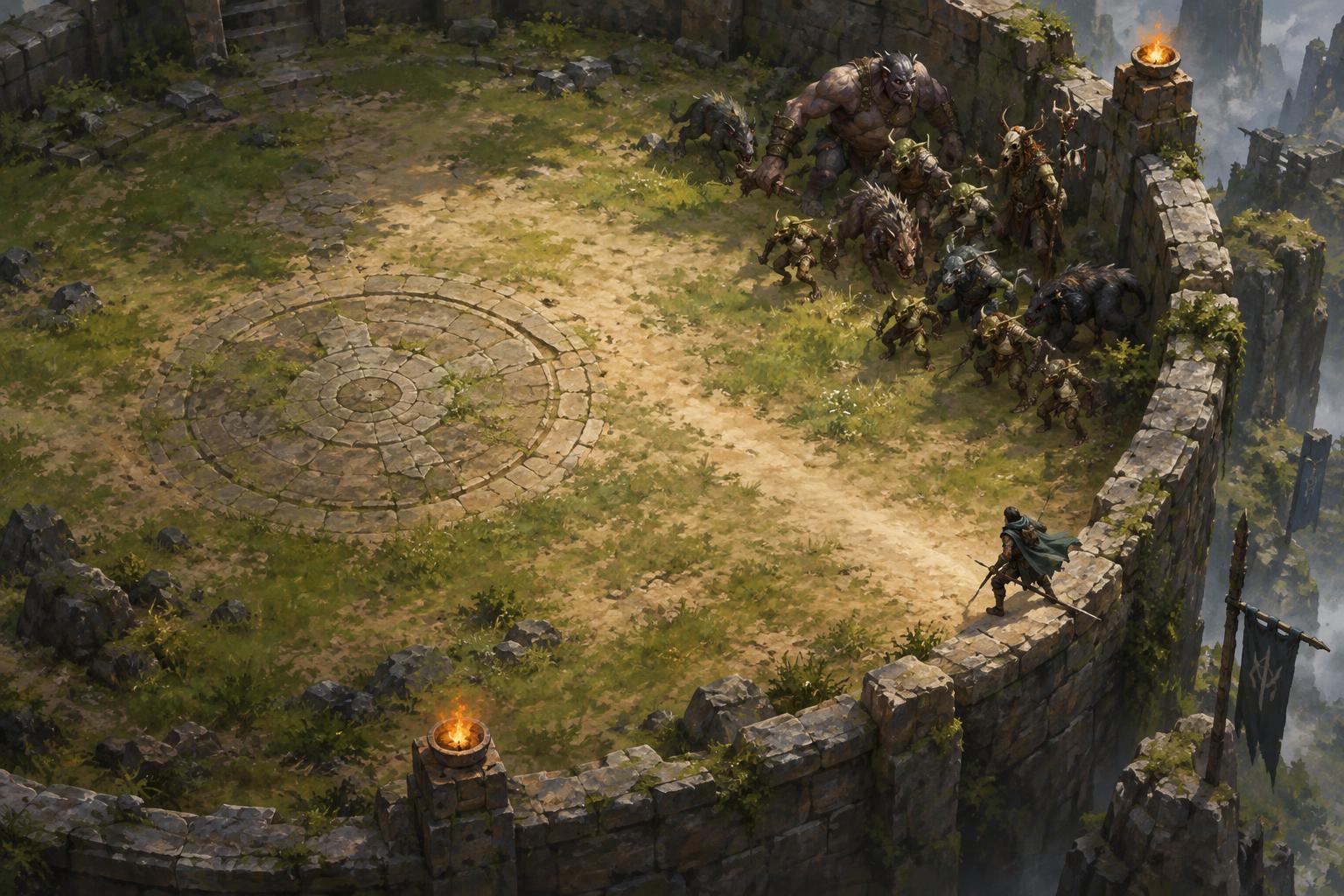
Boundaries deserve special care. A wall or screen edge removes possible directions of travel, even when it appears to protect one side. If enemies are closing behind you, move away from the boundary while an opening still exists. Likewise, be cautious about running between two groups that are converging. The gap between them can disappear faster than a gap within one group moving in a similar direction.
Recover when a gap closes
Sometimes the route you chose stops being viable. The safest response is usually to reassess rather than make several frantic turns. Look for the side with fewer enemies, the clearest exit and enough room to keep moving afterward. If the game provides a dash, knockback effect or other escape tool, use it with a destination in mind. Spending it merely to enter another crowded spot delays the problem instead of solving it.
After an escape, rebuild space before chasing the next reward or target. Moving toward open ground gives you time to read the swarm again and identify a better crossing. This is independent editorial guidance, not an official guide to a particular game: enemy speed, damage and collision behavior can change the best choice. The transferable habit is to judge a gap by where it lets you go next.