Movement speed is a positioning tool
In survival and arcade-style games, movement speed is easy to mistake for a simple escape stat. Its greater value is control over where a fight happens. When you can move a little faster than the threats following you, you have more opportunities to choose a route, pass through a gap and reach an open area before enemies close it off.
That does not mean faster is always safer. Moving without a plan can carry you into a new group of enemies or leave you trapped against a wall. Think of speed as extra time to make positioning decisions, not permission to ignore the map. Before committing to a direction, look for an open lane and a second way out.
Kite enemies into a shape you can manage
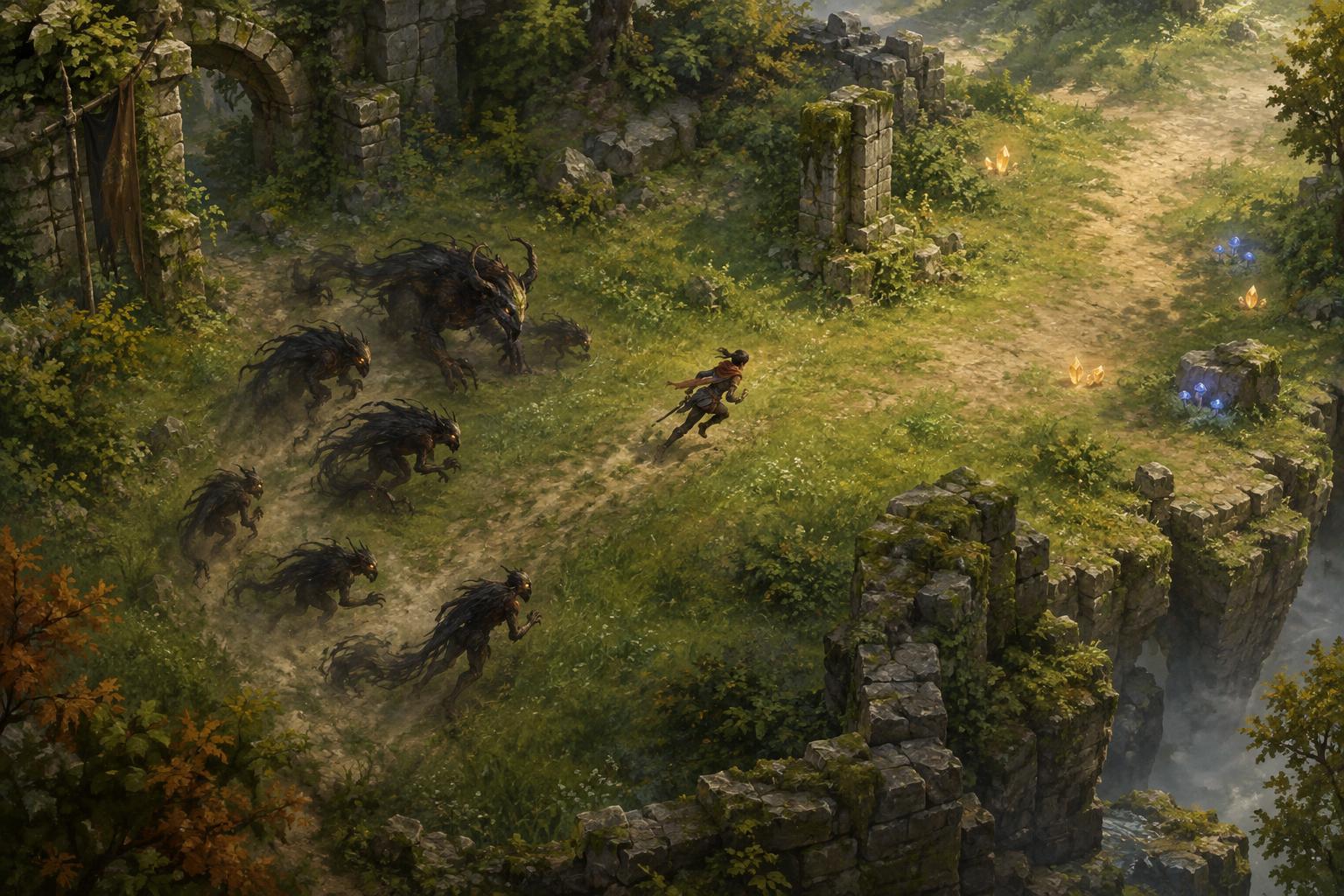
Kiting means moving while keeping enemies at a workable distance. A useful pattern is to guide pursuers along a broad curve rather than weaving sharply back and forth. Enemies approaching from similar directions may form a more predictable group, making it easier to judge openings. Wide turns also help preserve space; tight circles can let slower pursuers cut across your path.
Try to avoid running straight through the middle of a crowd just because a gap appears briefly. Follow the outside edge of the group and turn only when you can see where the next few steps lead. If enemies gather behind you, a controlled change of direction may open access to an area you previously left. The goal is not to outrun everything indefinitely, but to keep a usable path between yourself and danger.
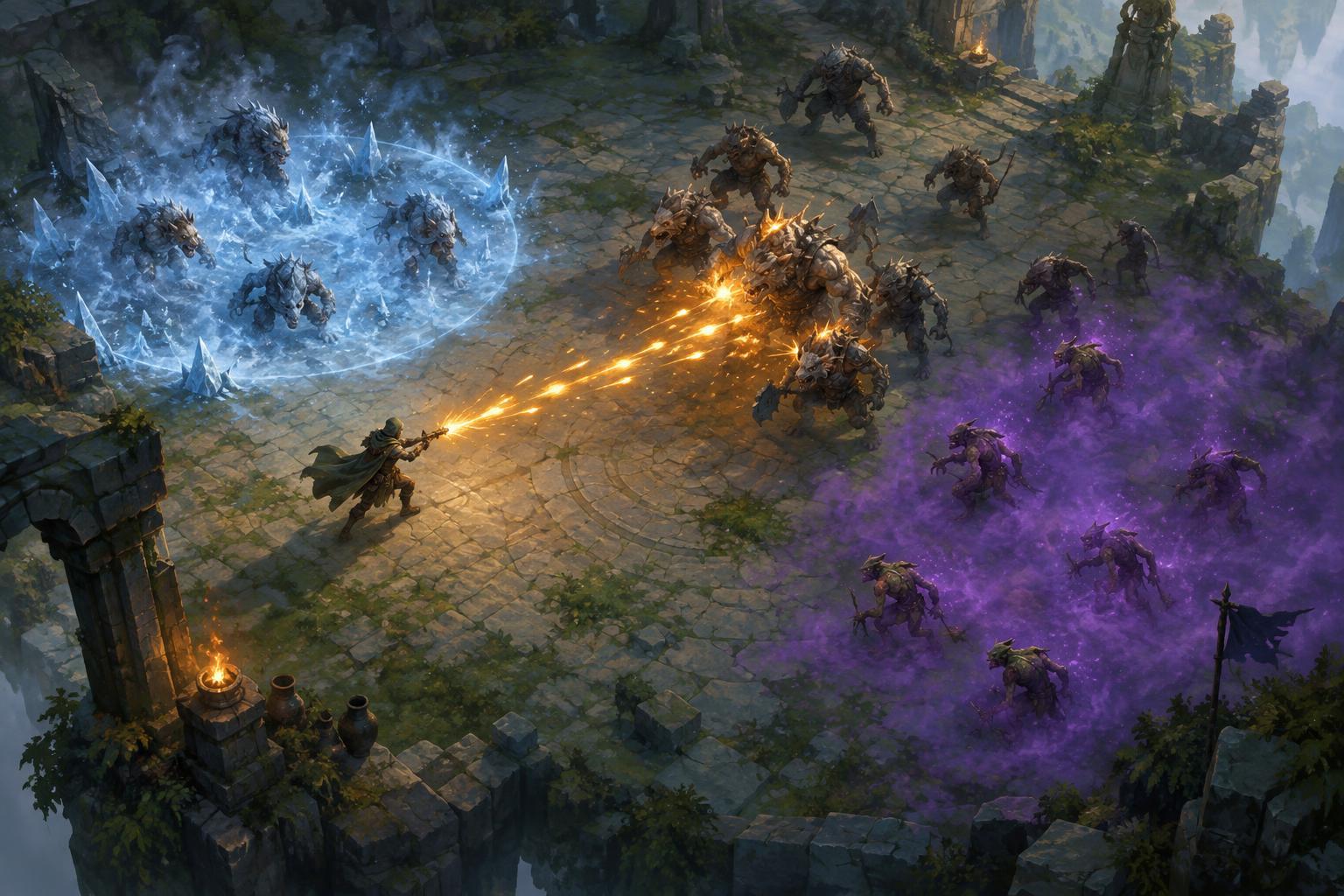
Your attacks affect the route. A build that deals damage in a narrow direction may work best when enemies trail behind or approach from one side. An attack that covers a broad area may give you more freedom to turn. Adjust your movement to the damage your build can deliver rather than copying the same path every run.
Use speed to protect space, not just health
Positioning includes what you will need next: room to turn, a path toward useful pickups and distance from obstacles. Speed helps you reach those opportunities before they disappear. When collecting dropped resources, approach from an open side if possible. Diving into a dense group for one pickup may cost more space than it gains.
Watch the edges of the play area. A wall or corner removes possible escape directions, so extra speed may not help once you are pinned. Move away from boundaries early enough to make a gradual turn. If the game has obstacles, treat them as features that change routes rather than assuming they will always protect you; their effect depends on how enemies and attacks behave.
It can help to choose a loose destination before you start moving. You might aim for open ground, then a pickup cluster, then another open lane. This keeps your route purposeful without locking you into a path that becomes unsafe.
Decide when a speed upgrade fits your build
A movement-speed upgrade competes with damage, area coverage, durability and other improvements. Consider what is causing your current failures. If enemies frequently catch you during turns or you cannot reach open lanes in time, speed may address the problem directly. If you can already maintain distance but cannot clear pursuers, more speed might only postpone the same crowded situation.
Small speed gains can be easier to use than a sudden large change. Faster movement can make it harder to stop near a pickup or steer through a narrow opening, especially with sensitive controls. After an upgrade, take a moment to recalibrate your turns. The best amount of speed is one you can use reliably alongside your attacks.
Build a repeatable movement habit
For a simple practice routine, scan for an open lane, lead nearby enemies in one broad direction and check your exit before turning. When the route narrows, change course early rather than waiting until you must make a sharp dodge. If you lose track of the crowd, prioritize reaching visible open space over collecting every pickup.
This approach can also make play more manageable when precise, rapid inputs are difficult. Favor wide routes, predictable turns and build choices that give you time to react. Game-specific movement and enemy behavior vary, so treat these habits as a starting point to adapt. Speed supports good positioning when each extra step leads somewhere useful.