Difficulty is more than a stronger enemy
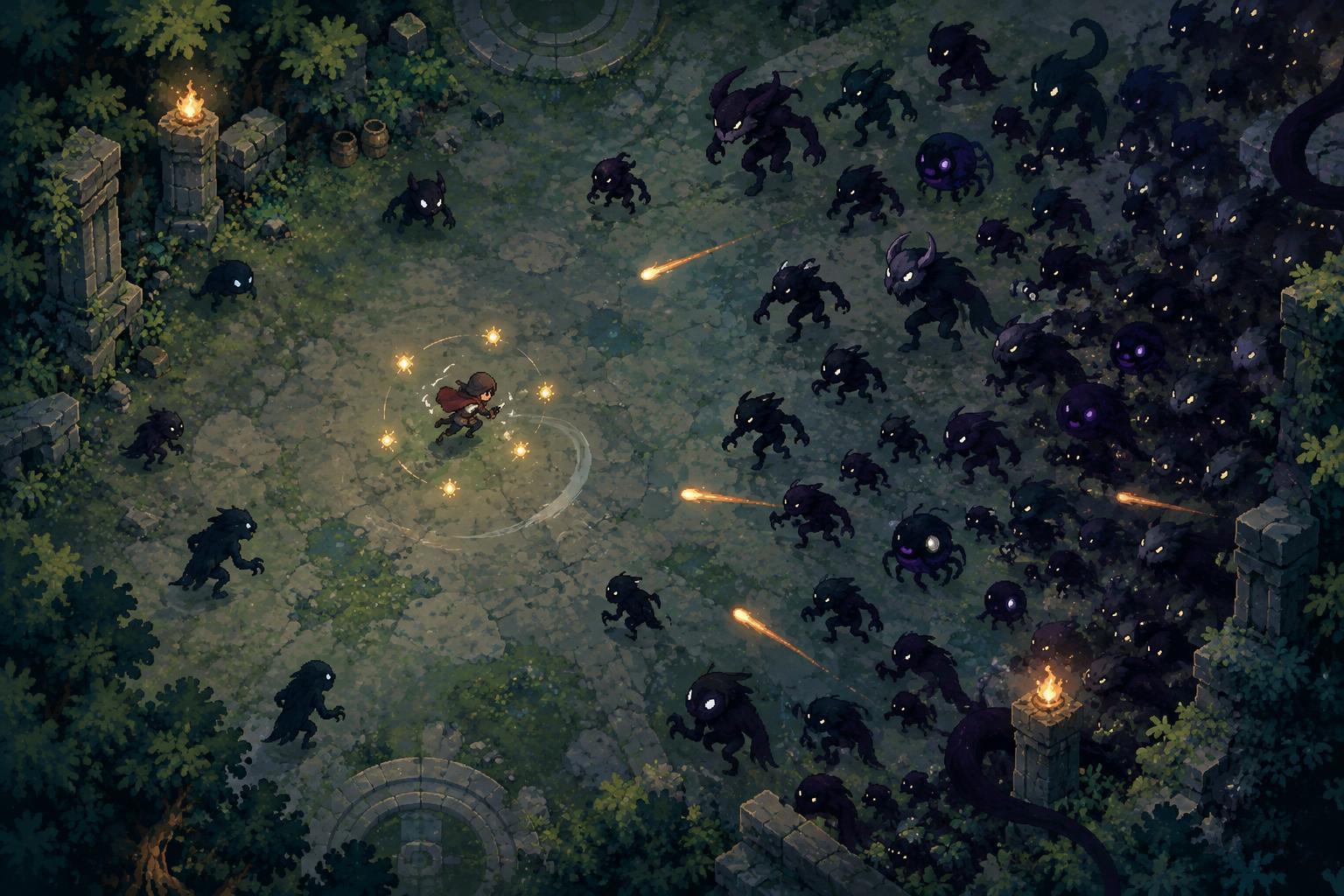
In an arcade survival run, the opening minutes may feel manageable: a few enemies approach, and there is room to move around them. Later, the screen can feel dangerous even if each individual enemy is still easy to defeat. The difference is often pressure. More threats arrive together, they approach from awkward directions, or they occupy the space you need for an escape.
This independent editorial guide looks at common patterns across arcade-style survival games, not the rules of any one title. When a run suddenly feels harder, try to identify what changed. Did enemies become tougher, or did you lose room to move? That distinction helps you choose a response instead of assuming you simply need to deal more damage.
Watch how much space the enemies control
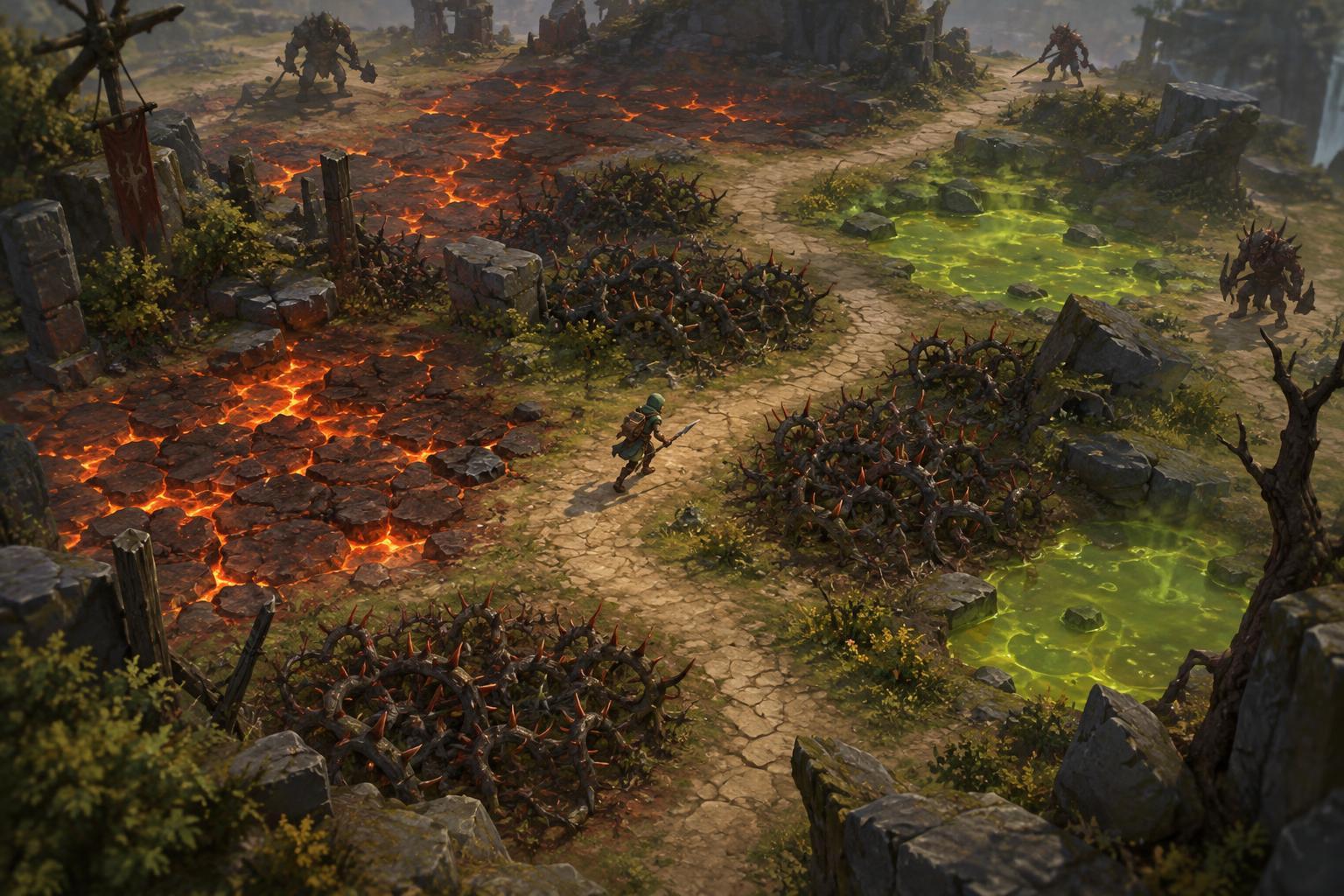
Enemy density can turn a comfortable arena into a narrow set of paths. A small group lets you step aside and circle back for pickups. A continuous stream may make that same trip risky because the space behind you fills before you return. In games with walls or obstacles, a crowd can also block a passage without any enemy behaving differently.
Make a habit of looking toward your next open area, not only at the closest threat. If you see a gap closing, move while it is still wide enough to use comfortably. Crossing early may feel less urgent than attacking, but it can preserve your options. If the arena permits it, staying away from corners gives you more directions in which to recover from a mistake.
Notice changes in the pace of decisions
A difficulty ramp can shorten the time available to choose. Faster enemies, more frequent projectiles or overlapping attack patterns may demand several movement decisions in quick succession. Even when your character has enough power to defeat nearby enemies, an attack may not protect you if you move into a new hazard while concentrating on the old one.
When the pace rises, simplify your immediate goal. Instead of trying to collect every reward, look for a safe route and take pickups that lie along it. Give priority to threats that restrict movement or create hazards at a distance. If you need to change direction, do it before you reach the edge of the arena. These habits reduce the number of last-second choices you have to make.
Match upgrades to the pressure you face
Upgrade choices can change how a rising difficulty curve feels. More damage may shorten fights, but it may not solve a problem caused by enemies reaching you from several sides. An option that covers a wider area, interrupts threats or helps you reposition might make the next stretch easier to navigate. The useful choice depends on the game’s mechanics and what your current setup already does well.
At each choice, ask a concrete question: What is most likely to end this run soon? If enemies survive too long and form a crowd, improving your ability to clear them could help. If you defeat them quickly but keep getting trapped, consider an option that improves coverage or mobility, if one is available. Avoid judging an upgrade only by how impressive it looks when the screen is calm.
Review the point where a run changed
After a failed run, you do not need to reconstruct every mistake. Find the first moment when you began giving up space or reacting late. Perhaps you crossed the arena for an optional pickup, stayed near a wall too long, or chose an upgrade that left a clear weakness. That moment is more useful to examine than the final hit, which may have been difficult to avoid by then.
On your next attempt, change one habit and see whether it gives you more room or time at that point. You might leave a crowded area earlier or take a safer route toward rewards. Difficulty ramps vary between games and runs, so no single response always works. Learning to recognize the kind of pressure you face makes each attempt more informative.