A near miss is a promise
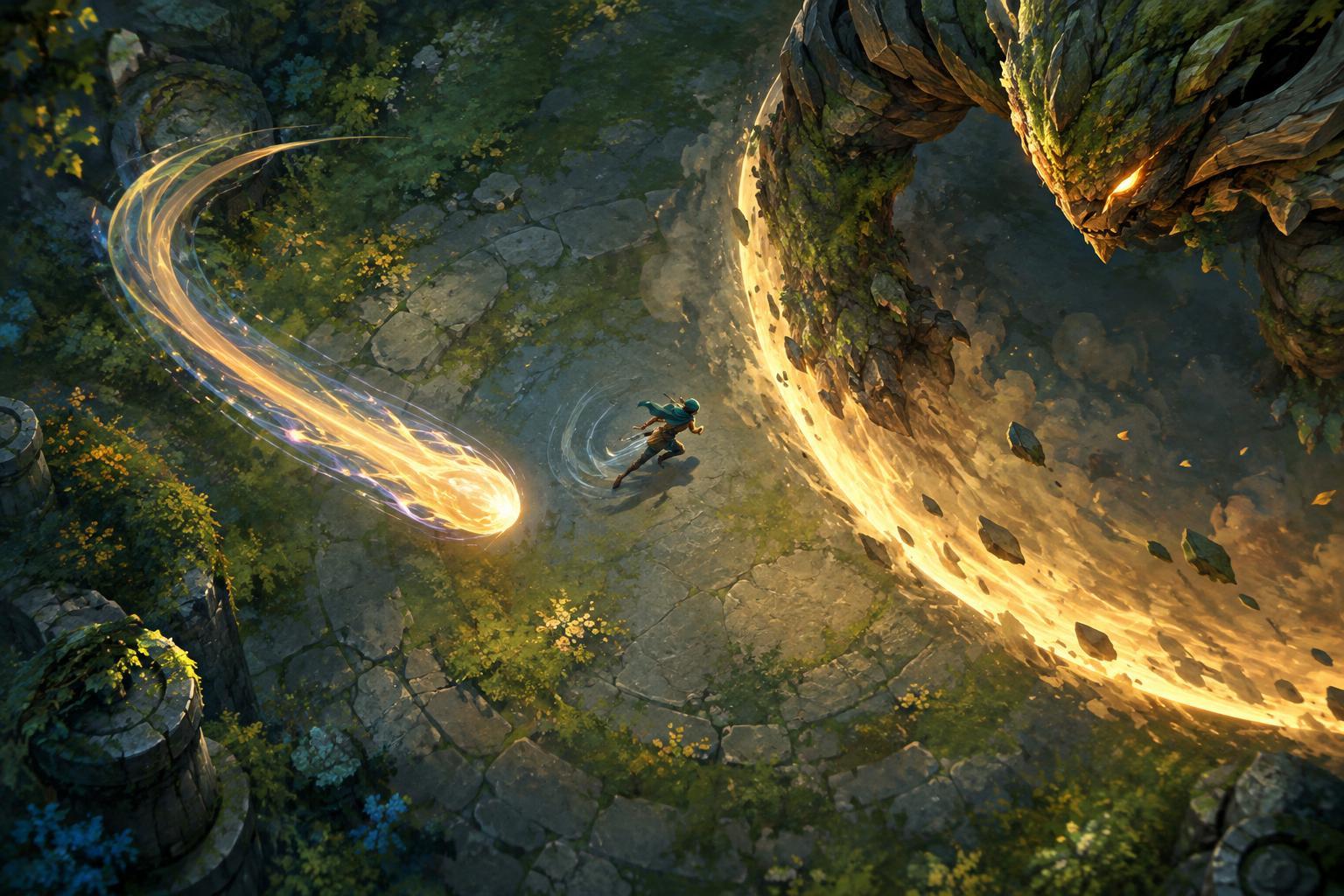
In a crowded survival game, a player may steer through a gap between enemies with only a few visible pixels to spare. If they emerge unharmed, they learn something about how much space their character occupies. If the same-looking gap causes damage a moment later, that lesson stops being useful. Near misses are exciting because players believe they can judge the risk.
A hitbox is the area a game uses to detect a collision. It does not have to match every edge of a character’s artwork: hair, a cloak, a weapon, or a glow may extend beyond the area that takes damage. That difference can help movement feel forgiving. The important design question is whether players can form a reliable mental picture of the space they need.
This is independent editorial discussion of game design, not an official guide to any particular game. Different games can choose different collision rules, but each benefits when its rules are learnable.
Make the visible threat match the real threat
Players usually judge danger from what they see, not from invisible collision shapes. A wide enemy sprite with a narrow damaging center may be generous, but players might avoid it more than necessary. A small-looking projectile with a large damaging area creates the opposite problem: a dodge that appears successful can still fail.
Silhouettes, shadows, and effects can help communicate boundaries. If a spinning enemy has decorative sparks, the sparks should look different from the part that hurts. If a floor hazard deals damage only within a marked circle, the circle should remain readable under enemies and other visual effects. Consistency matters more than perfect geometric precision: similar-looking threats should generally behave in similar ways.
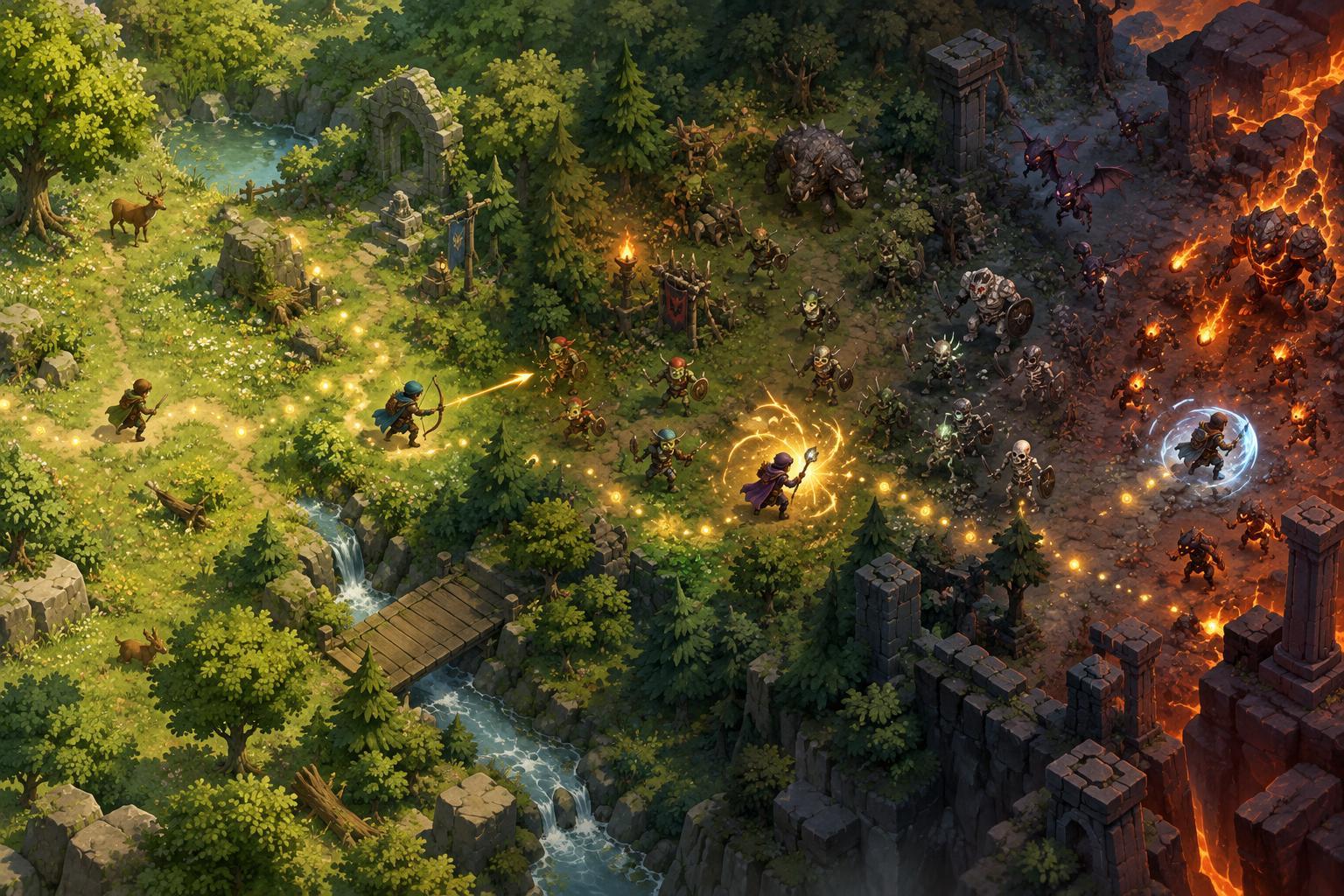
Clear art cannot fix every crowded moment. When the screen fills with objects, strong contrast and restrained effects can preserve the information players need most: where they are, what is approaching, and where they can move next.
Use one collision language across the game
A game may have separate rules for touching an enemy, crossing a projectile, collecting an item, and moving along a wall. Those rules need not use identical hitboxes, but they should feel deliberate. A forgiving pickup radius helps players gather rewards without steering over each icon. A compact player damage area can make weaving through crowds satisfying. Neither choice feels arbitrary if it behaves the same way throughout a run.
Problems arise when apparent exceptions have no visible explanation. If one enemy damages on contact while a similar-looking enemy does not, give players a way to tell them apart. If a dash temporarily prevents damage, provide a clear cue for when that protection starts and ends. If knockback pushes the player through enemies, decide how collisions behave during that movement and apply the rule predictably.
Temporary protection after a hit can also prevent several contacts from draining health at once. Its duration is a design choice, but its presence should be legible. A brief flash or other distinct cue can tell players when they are safe and when careful movement matters again.
Test what players infer, not just what the code detects
Collision tests should include ordinary play, not only checks that a hitbox functions as programmed. Watch what happens at the edges: grazing a slow enemy, slipping between two threats, moving behind a large sprite, or changing direction beside a wall. If players repeatedly call a collision surprising, the issue may be the visual message rather than the underlying detection.
It helps to ask what a player could reasonably have known before taking damage. Was the dangerous area visible? Did it resemble earlier threats? Could they see their character beneath the effects? A technically consistent rule may still need a clearer cue if players cannot perceive it at game speed.
Control methods matter here too. A gap that feels manageable with precise pointer movement may be harder to navigate with a stick or keyboard. Designers can check whether collision margins remain understandable across supported controls and whether visual settings keep important boundaries visible. The aim is not to remove every difficult dodge; it is to let players recognize which dodges are difficult.
Fairness creates room for mastery
Survival and arcade games often become more intense as threats multiply. That escalation works best when the underlying collision rules remain dependable. Players can then improve by learning enemy paths, timing their movement, and planning escape routes rather than guessing which apparent near miss will count as a hit.
A good collision system does more than detect contact. It teaches its own boundaries through repeated, readable outcomes. When a risky move succeeds or fails for a reason the player can understand, even a narrow escape feels earned.