The camera changes the job your movement has to do
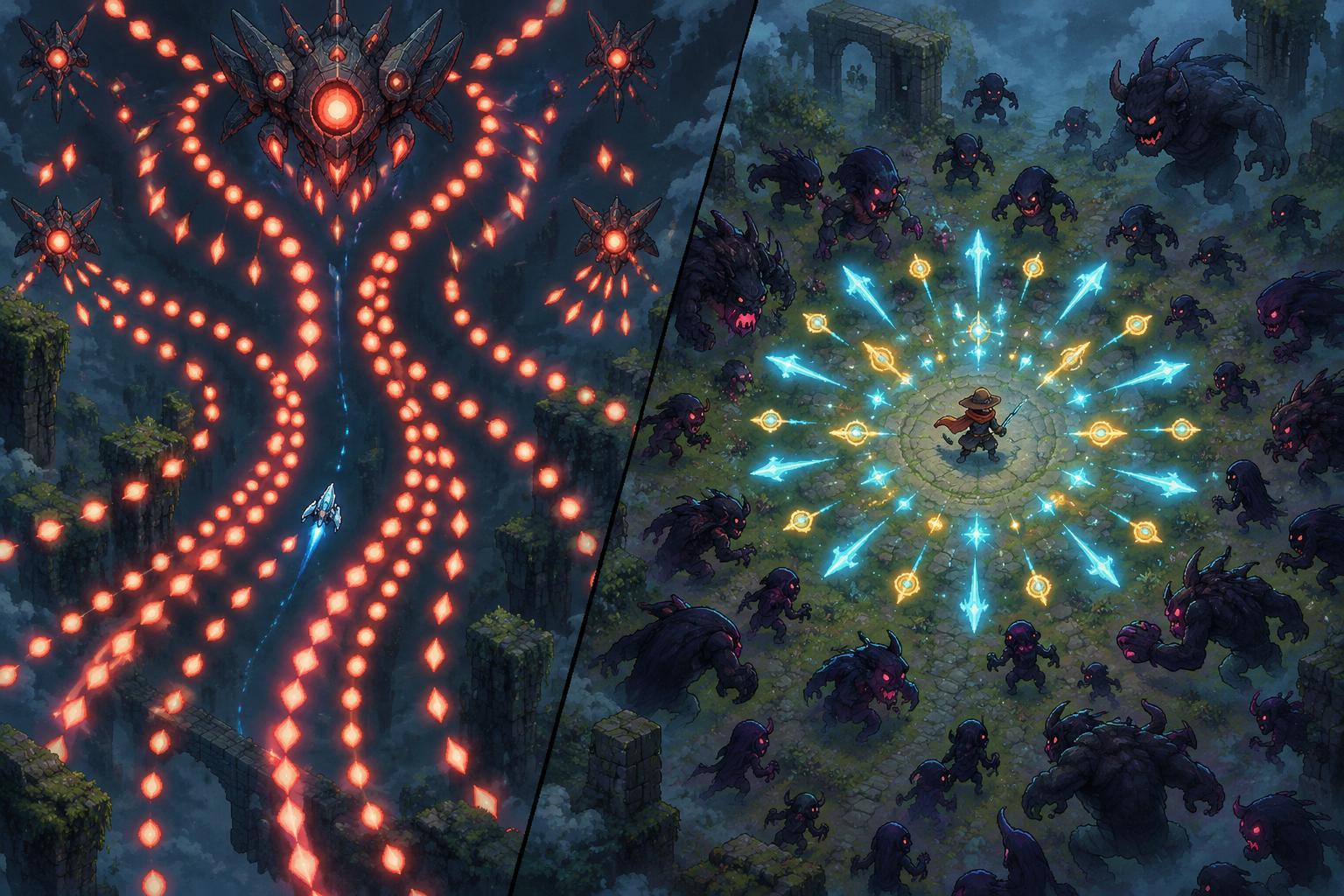
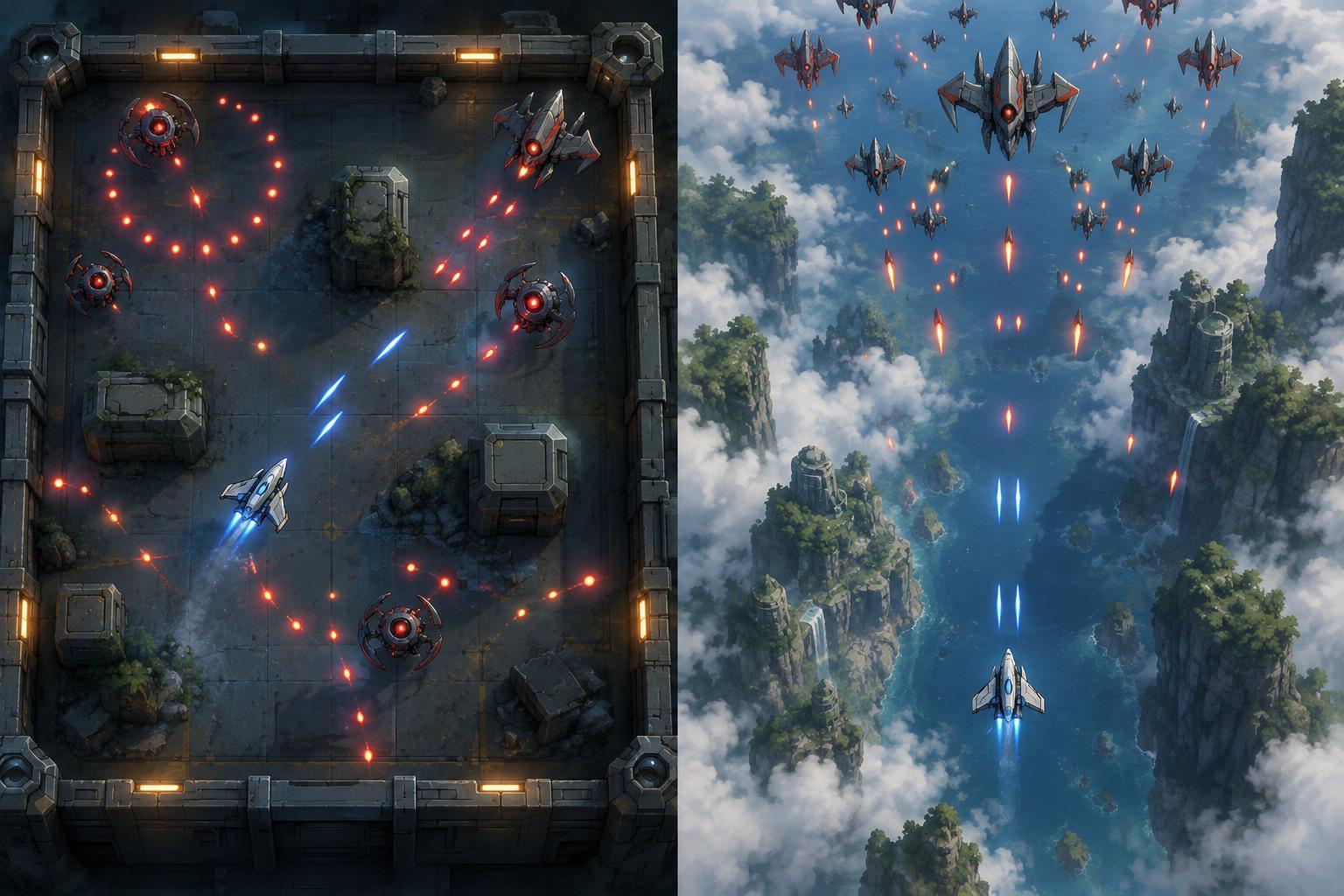
In a fixed-screen arena, the visible playfield stays in place while you move through it. You can usually cross familiar ground, circle threats, and return to an opening you noticed earlier. In a scrolling shoot-’em-up, the camera advances through a stage, bringing new enemies and obstacles into view while older ones leave. Both styles reward quick reactions, but they ask different questions: Where can I make room? And what is about to enter my path?
These are design patterns rather than strict genre rules. Some arena games expand beyond one screen, and some shoot-’em-ups pause their scrolling or revisit an area. Even so, watching what the camera does is a useful first step when learning a new game. It tells you whether a safe position is likely to remain useful or disappear as the stage moves on.
Fixed arenas reward space management
In a fixed arena, movement often shapes the threats around you. If enemies follow your position, a broad loop may draw them into a group and leave open space elsewhere. Cutting straight through the middle can shorten your route, but it may also put threats on every side. The useful habit is to look beyond your next dodge: notice which part of the arena will still be open after you move.
The edge can simplify a decision because fewer directions are available for enemies to approach from, but it also removes an escape route. Corners are especially risky when a crowd closes in. Rather than treating the perimeter as permanently safe or unsafe, use it deliberately. Move toward it when it gives you room to steer a group, and move away before that group blocks your return.
If a game has pickups, hazards, or temporary effects, you may be able to plan a route back to them. Resist turning around for every reward immediately. A pickup is only useful if you can reach it without losing the space you need to survive. In an auto-attacking arena game, this can matter as much as aiming: your path determines which targets enter your attack range and whether you have room to keep moving.
Scrolling stages reward anticipation
In a scrolling shoot-’em-up, the screen continually introduces new information. A gap that looks safe now may lead into an obstacle or an enemy entering from ahead. Movement therefore involves reading the next few moments of the stage, not only escaping the nearest projectile. Keep enough distance from the screen boundary in the direction of travel to see and respond to what appears, unless the game gives you a clear reason to move there.
Small adjustments can be more useful than wide sweeps. Moving only as far as needed to clear a hazard preserves room for the next dodge and makes your position easier to track. This does not mean staying still: a stage may require crossing the screen to avoid a barrier, collect an item, or line up a shot. The key is to make that crossing early enough that you are not forced to rush through incoming fire.
Some scrolling games make enemy entrances or obstacle layouts predictable through repeated play. When you recognize a sequence, prepare a route before it arrives rather than relying on a last-second reaction. If the game is unfamiliar, use quieter moments to return to a position with several possible exits. A position with choices is often better than one that is safe for only an instant.
Adjust your practice and builds to match
To practice an arena game, try one run in which you pay attention to the shape of open space rather than to every individual enemy. Notice when you reverse direction, when you get trapped, and whether a wider turn would have kept a path clear. In a scrolling game, pay attention to where new threats first appear. Ask whether your position gave you time to react and whether a smaller dodge would have left more room afterward.
Movement also changes the value of upgrades. In an arena, an attack that covers your sides or rear may help while you circle, while a short-range attack may require careful approaches. In a scrolling stage, forward coverage can help clear a route, but it may be less useful against threats that enter from other directions. Speed is similarly conditional: more speed can help you cross a dangerous area, yet it can make precise corrections harder if controls are sensitive.
The best movement plan is not a fixed pattern. It is a way to preserve options. In an arena, ask where you can steer the crowd next. In a scrolling stage, ask what the screen is bringing toward you. That shift in attention makes each style easier to read, even when the action becomes hectic.