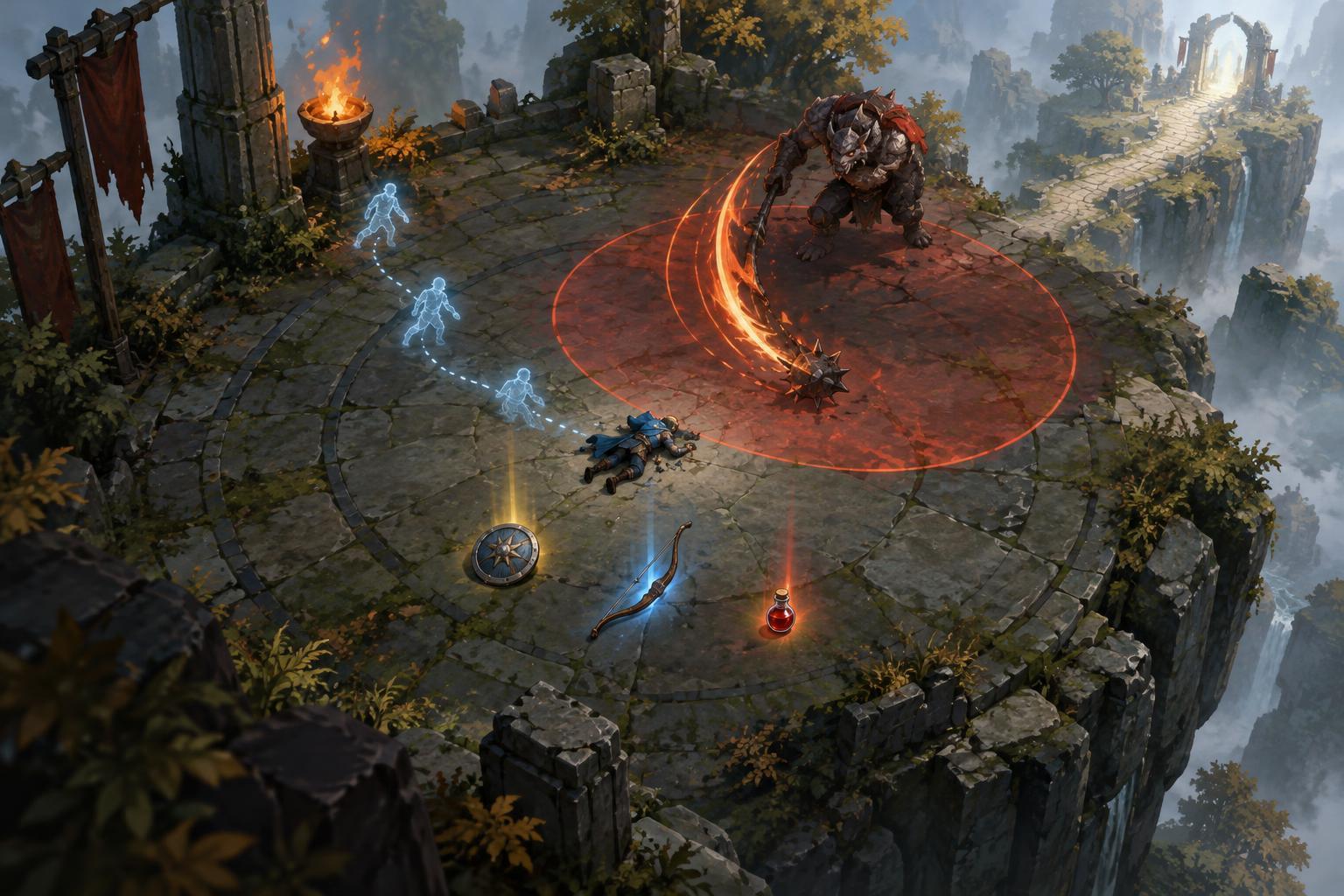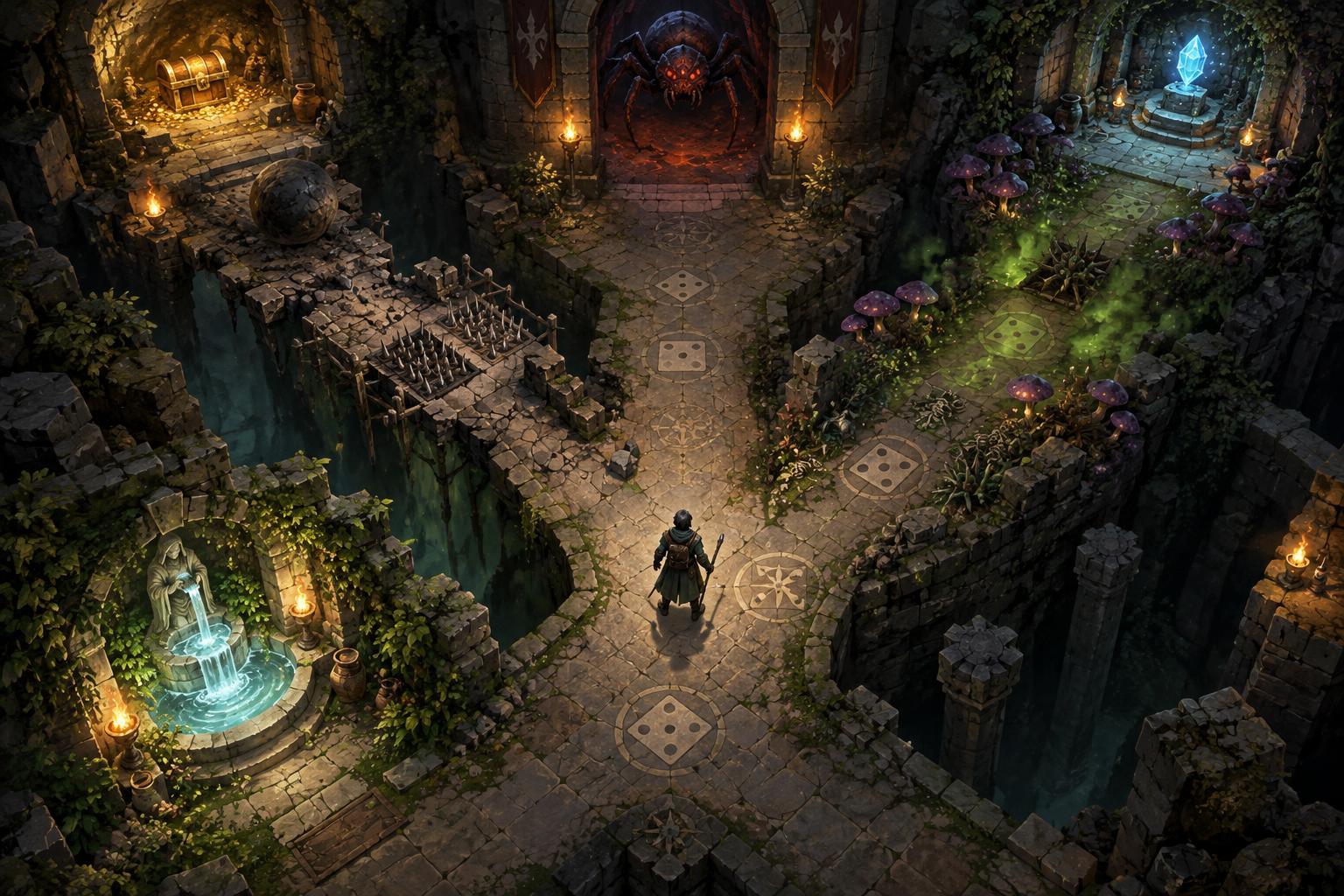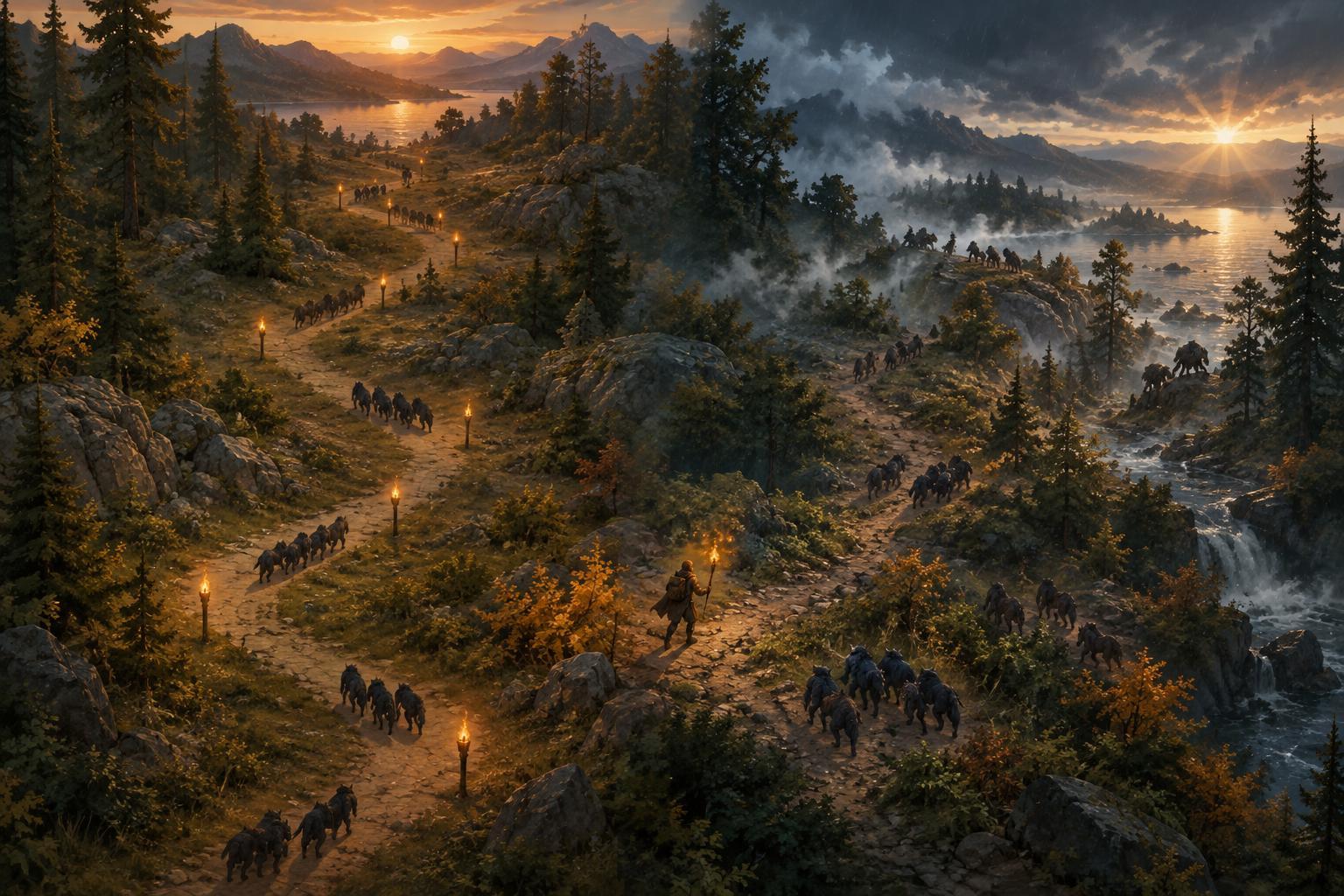
What a difficulty curve controls
In a survival game, difficulty is more than the amount of damage an enemy deals. It includes how quickly threats appear, how much space players have to move, how scarce recovery options become, and whether new enemy behaviors arrive before players can comfortably handle the old ones. The difficulty curve describes how those pressures change over a run.
A fixed curve follows a predetermined progression. For example, a game might introduce faster enemies after a set amount of time, regardless of the player’s health or equipment. An adaptive system changes some pressures in response to the run. It might reduce the intensity of the next encounter after repeated failures or add tougher threats when a build clears enemies with little effort. Games can also combine the two: a predictable sequence of stages with limited adjustments inside each stage.
Why fixed curves are satisfying to learn
A fixed curve gives players a stable problem to solve. If a difficult wave always arrives at roughly the same point, they can plan around it: save a resource, choose an upgrade earlier, or take a safer route. Failure provides useful information because the next attempt offers a comparable test. This is especially valuable in roguelites, where learning how to prepare can be as rewarding as improving moment-to-moment movement.
Predictability also makes build comparisons clearer. A player testing two weapons can more easily judge their strengths when both face similar pressures. The trade-off is that a single curve cannot suit every run equally. Random rewards may leave one build struggling and another far ahead of the intended pace. Once experienced players memorize every major threat, the run may feel less surprising, even if its execution remains demanding.
What adaptive difficulty can improve—and obscure
Adaptive difficulty can smooth out unusually harsh or easy runs. If a player has poor luck with early rewards, modest adjustments can leave room to recover rather than making the remaining minutes feel inevitable. If a powerful build removes all resistance, the game can introduce enough pressure to keep positioning and resource choices meaningful. This can support a wider range of skill levels without asking everyone to select a difficulty setting in advance.
The risk is that players may struggle to understand what their choices accomplished. If buying an upgrade quietly causes enemies to gain matching strength, the upgrade can feel pointless. If the game becomes easier immediately after a mistake, a player may feel that success was granted rather than earned. Adaptation works best when it preserves a visible connection between cause and effect. It can adjust pacing without erasing the advantages of good preparation or the consequences of risky play.
Fairness depends on what players can read
Neither fixed nor adaptive difficulty guarantees fairness. A fixed spike can feel arbitrary if the game gives no warning that an unfamiliar threat is about to appear. An adaptive spike can feel arbitrary if players cannot tell why the battlefield suddenly became crowded. In both cases, readable cues matter: a change in enemy mix, a clear stage transition, or enough time to recognize a new attack pattern can help players respond deliberately.
Designers also need to consider which variables are being adjusted. Changing the number of enemies may be easier to understand than secretly changing their movement speed or damage. Holding core rules steady helps players build reliable instincts. Where possible, adaptive systems can operate within boundaries: maintain the main milestones, then vary the intensity between them. Players can still plan for the next major challenge while encountering some uncertainty on the way there.
Choosing a curve for the experience
A game centered on mastery may benefit from a mostly fixed curve. Repeated attempts then become a process of recognizing patterns and refining a plan. A game centered on improvisation may benefit from more adaptation, especially when random items and encounters can create large differences between runs. The useful question is not which system is more sophisticated, but what the player should learn from a failure—and whether the next run lets them apply that lesson.
A practical middle ground is to keep important events predictable while allowing small, bounded adjustments to moment-to-moment pressure. That approach protects the satisfaction of preparation without letting every run settle into the same rhythm. Whatever the system, its goal should be consistent: make survival uncertain enough to demand decisions, but understandable enough that players can see how their decisions matter.