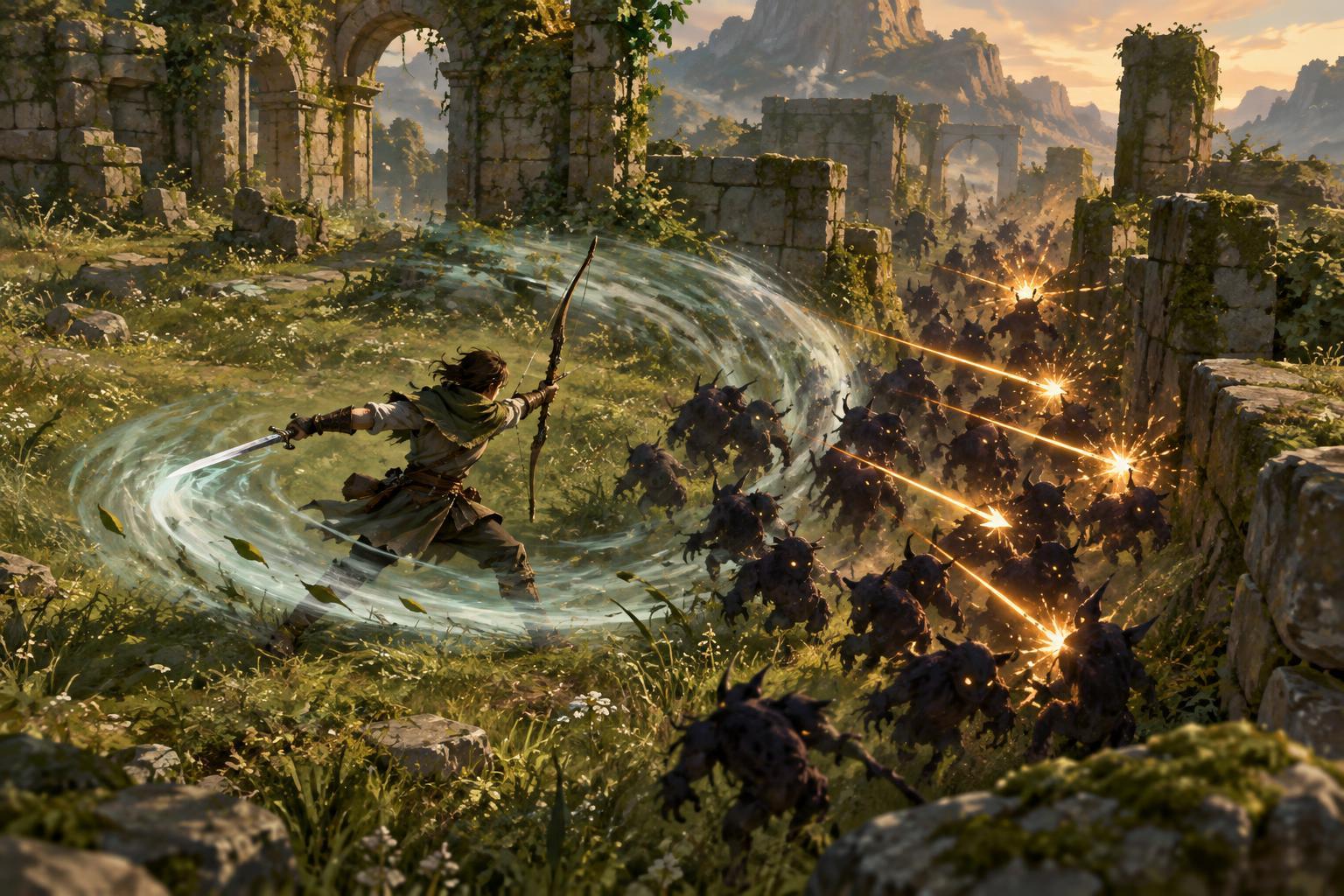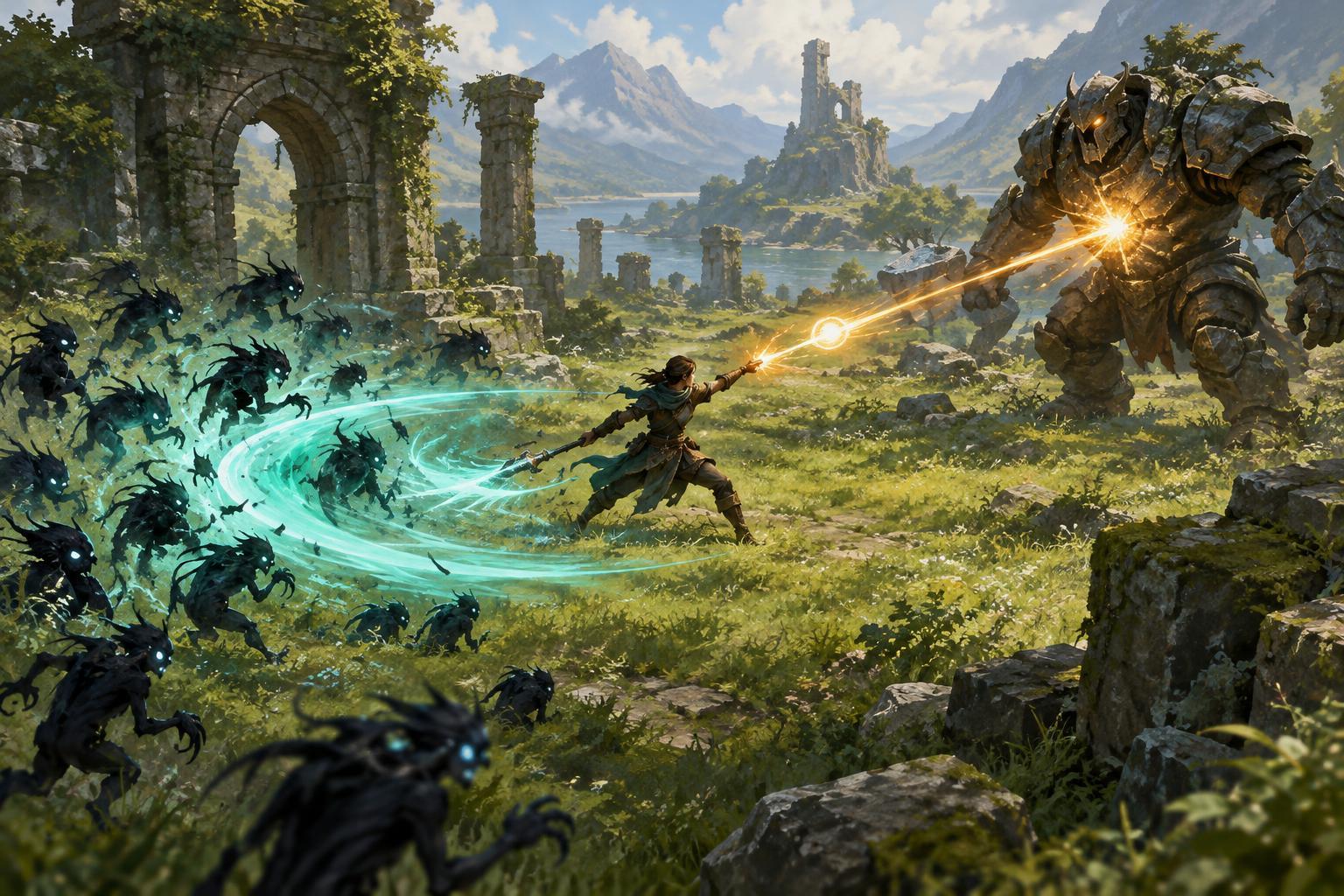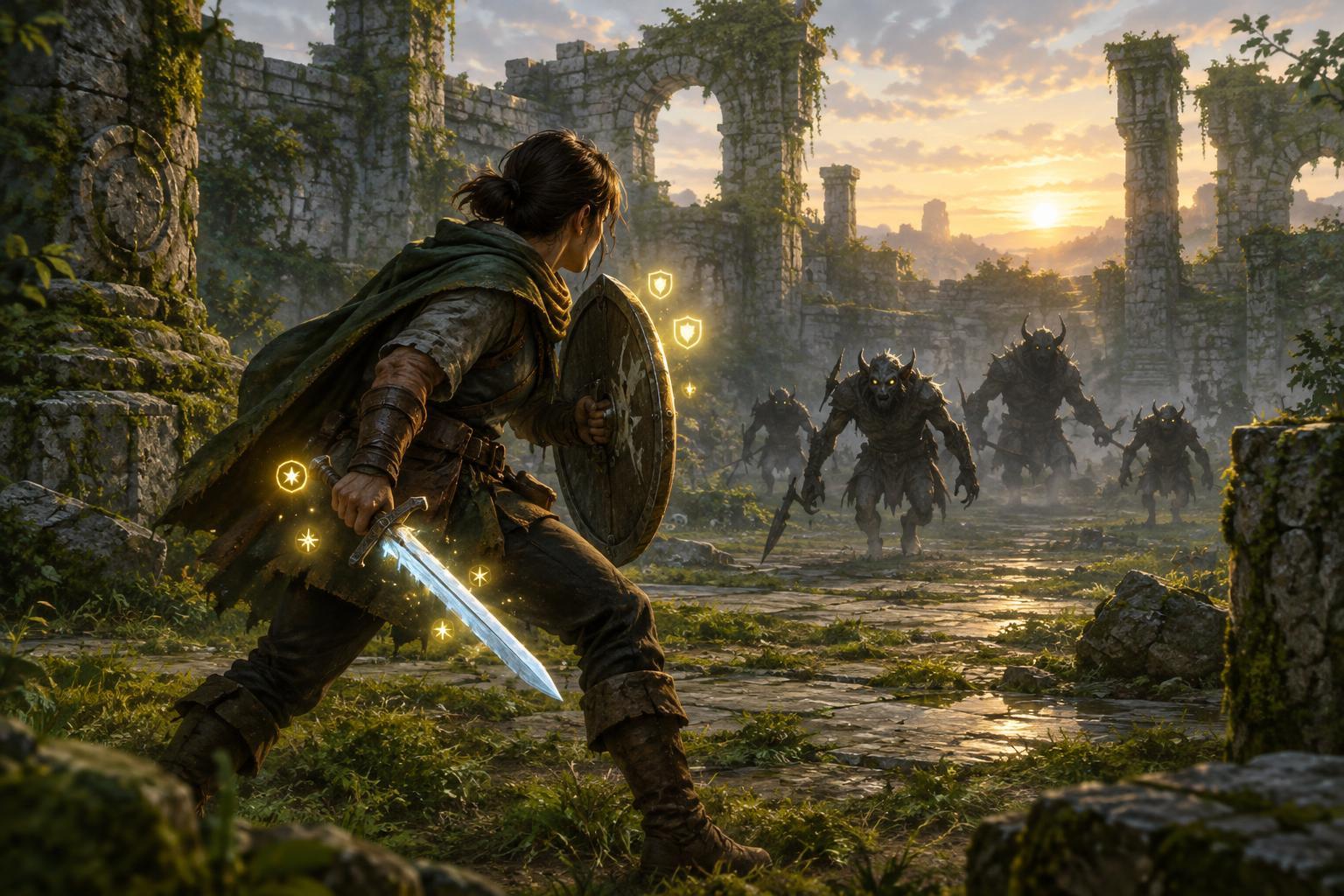
Start with the problem in front of you
Early upgrade choices can feel like a choice between attacking and staying alive. In practice, the two are connected. More damage can clear enemies before they reach you, while enough defense gives you time to collect rewards and improve your attacks. The goal is not a fixed ratio of offensive to defensive upgrades. It is to solve the threat that is currently limiting your run.
Watch what happens between upgrade choices. Are enemies staying on screen long enough to surround you? Are you clearing them comfortably but losing health to occasional contact? Is your movement restricted because you must chase experience or other pickups? Each pattern points to a different priority. This independent editorial guide discusses general survival and roguelite mechanics; individual games may reward different choices.
Establish reliable damage before chasing a perfect build
A dependable early attack usually matters more than an elaborate plan for a late-game combination. Look for upgrades that help you defeat nearby enemies consistently. Depending on the game, that might mean improving attack frequency, adding a second way to hit enemies, increasing useful range, or raising damage per hit. Favor an option that addresses what you can see on screen rather than one that only looks impressive in a completed build.
Damage has a practical threshold: can you create space when enemies approach? If you cannot, a small defensive bonus may only delay the moment you are overwhelmed. Strengthen your ability to clear a path first. Conversely, if enemies already fall quickly, another modest damage increase may do less for you than an upgrade that prevents a costly hit. Treat damage as a tool for controlling space, not simply as a number to maximize.
Buy defense when it protects your momentum
Defense becomes valuable when it lets you keep playing aggressively enough to gather resources. Extra health, armor, recovery, movement speed, or a protective effect can each serve that purpose, but they solve different problems. Health gives room for mistakes. Damage reduction may help with repeated small hits. Movement speed can help you avoid contact altogether, though it takes practice to use well. Choose the form of protection that matches how you are taking damage.
Avoid waiting until a run is nearly lost before considering defense. If you repeatedly take hits while crossing toward pickups, a defensive choice can preserve both health and progress. But do not take every defensive option just because it feels safe. If enemies are piling up faster than you can defeat them, your immediate need may still be better clearing power. A useful defensive upgrade should help you maintain access to space and rewards, not merely extend a losing position.
Use a simple check at each upgrade
Before selecting an upgrade, ask three questions. First, can I defeat the enemies nearest to me quickly enough to move where I want? Second, can I collect rewards without regularly losing health? Third, does this choice improve my next few minutes, or only a distant build I may never reach? These questions keep early decisions grounded in the run rather than in an idealized final loadout.
If clearing is weak, prioritize a reliable offensive improvement. If clearing is adequate but contact damage is common, add protection or mobility. If both feel comfortable, consider an upgrade that supports your build’s longer-term direction. You can also reconsider after each noticeable change in enemy pressure. An upgrade that was unnecessary a moment ago may become important when the screen grows more crowded.
Leave room to adapt
Random upgrade offerings are part of many roguelites. You may not see the exact option you hoped for, so think in terms of roles rather than a rigid shopping list. An attack that covers your blind side might substitute for more raw damage. Movement might reduce the need for health. A defensive effect that creates breathing room might help you collect the resources needed for your next offensive upgrade.
A balanced opening does not mean alternating damage and defense every time. It means building enough clearing power to keep moving, then adding protection when it preserves that advantage. Pay attention to why a run ends or stalls, and use that observation to adjust your next opening. Over time, that habit is more useful than memorizing a universal upgrade order.