Think one move beyond the dodge
When a screen fills with projectiles, the nearest gap can look like the only thing that matters. But surviving the next second is different from surviving the next wave. A dodge toward a wall may clear an immediate attack while leaving you no room to respond when the pattern changes. The better question is not just “Where is it safe now?” but “Where can I move after that?”
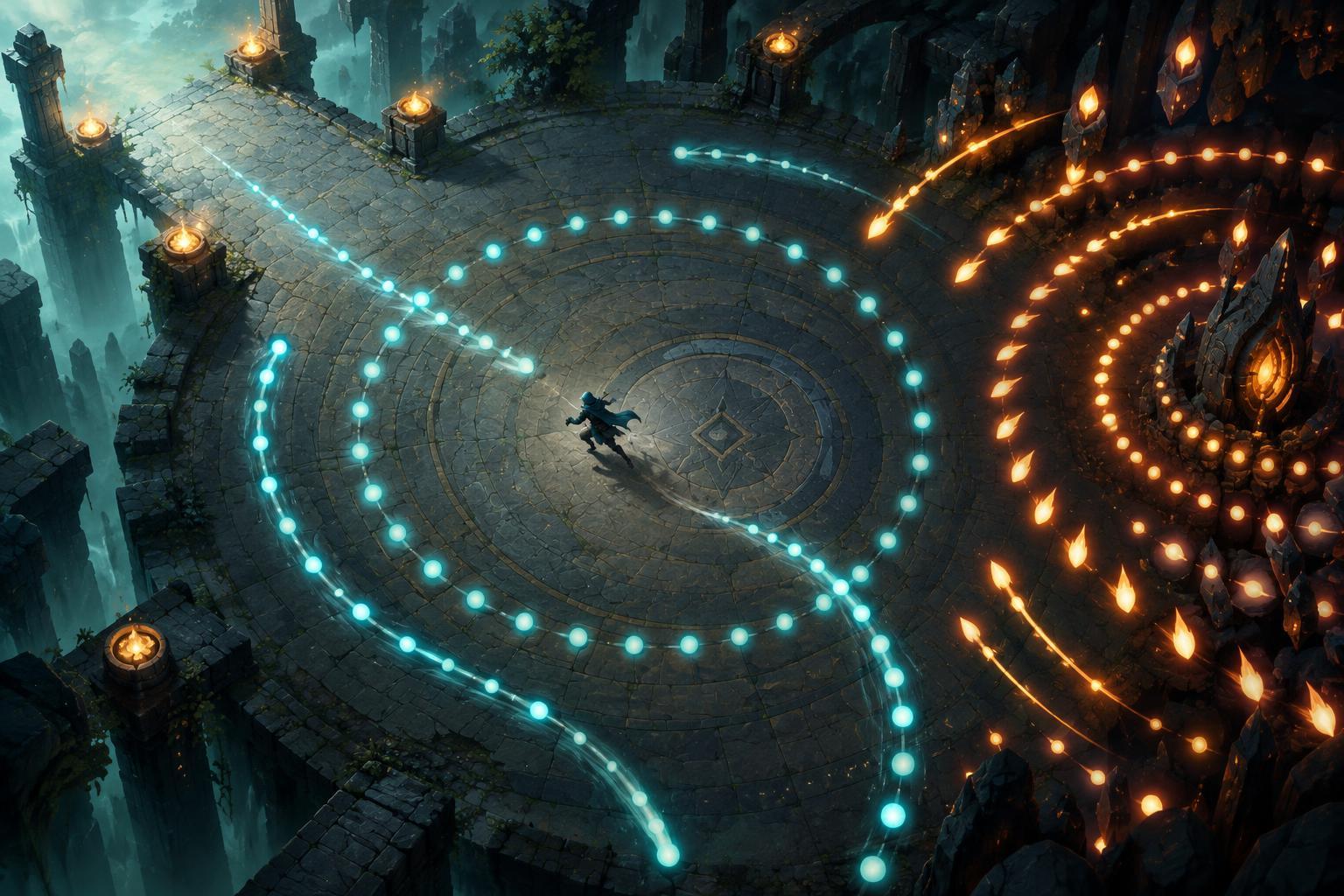
Treat open space as a resource. Before committing to a direction, glance at the area beyond your destination. Is there enough room to turn, or are enemies and projectiles closing it off? A slightly tighter gap leading toward the center of an arena may be preferable to a wide gap that ends in a corner. You do not need to stay in the exact middle; you need access to more than one exit.
Read the shape of a pattern
Instead of tracking every projectile separately, look for the pattern they form. A fan spreads outward, creating gaps that widen with distance. A straight volley leaves lanes between its lines. A rotating stream sweeps across the arena, so a spot that is safe now may not remain safe. Naming the shape in your head helps you choose a response without trying to follow every moving object.
Pay attention to where the attack originated and whether it is aimed at your current position. If an enemy fires toward you, moving steadily in one direction may cause later shots to trail behind you. Reversing direction too soon can carry you back into them. If shots follow a fixed sequence instead, watch the rhythm and cross a lane after it passes rather than racing ahead of it.
Visual clutter can make exact paths hard to judge. In that case, look for the clearest corridor and the edge of the advancing pattern. Move through a gap when you can see where it leads. If you cannot, a brief pause or a small sidestep may reveal a better route than a long dash made on instinct.
Use small movements to keep your options open
Large movements are useful when you must leave a dangerous area, but they can also carry you across several projectile lanes. Try making the smallest movement that clears the current threat. This keeps you near a position you understand and gives you time to reassess. Against regularly spaced shots, a short step into a gap may be safer than running across the full arena.
When space allows, move along a gentle arc rather than heading straight for a wall. Curving around the edge of a pattern can preserve room on your outside while letting projectiles pass behind you. If you must travel near a boundary, leave yourself a planned turn: approach it at an angle, watch for the next opening, and move away before enemies or shots seal the route.
Movement abilities such as dashes, shields or brief invulnerability effects vary by game. Learn what each one actually does before relying on it. A dash that crosses danger may be an escape tool; one that only moves quickly can still end in an unsafe spot. Save a reliable defensive option for moments when an ordinary step no longer reaches a clear lane, rather than using it automatically whenever shots appear.
Recover early and practise deliberately
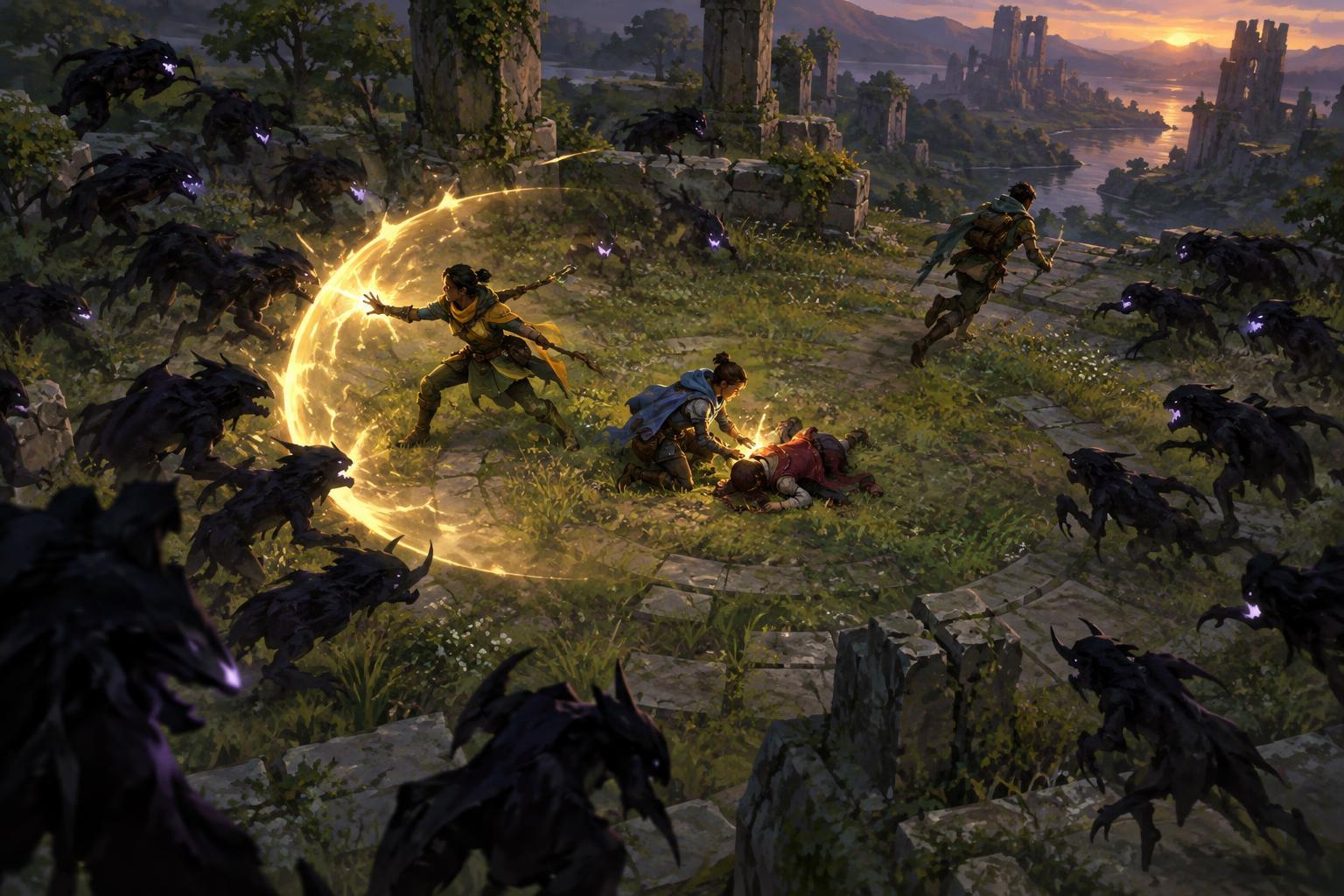
If you notice you are being pushed toward a corner, change course before you reach it. Look for a gap across the incoming pattern while there is still room to line up with it. Waiting until the boundary stops your movement turns a manageable crossing into a last-second escape. Sometimes taking a modest risk to regain open space is better than remaining in a position where several threats will arrive together.
You can practise this skill without treating every run as a test of reflexes. For a few encounters, focus on ending each attack with two possible directions to move. Notice which dodges leave you facing a wall and which ones give you space for the next pattern. If a game offers adjustable speed, contrast, control remapping or other accessibility options, use the settings that make incoming attacks easier for you to read and respond to.
Good dodging is less about constant motion than about maintaining choices. Read the pattern, move only as far as needed, and check where your next exit will be. Those habits apply across many projectile-heavy arcade games and roguelites, even when their enemies, abilities and arenas differ.