Start with the decision each enemy creates
A crowded survival arena leaves little time to study individual opponents. The player is often moving continuously, watching attack cooldowns and choosing a route through a shifting mass. In that setting, an enemy earns its place by changing a decision. Does it make the player turn away, hold a lane, cross open ground or spend damage on a particular target? If two enemies produce the same response, different artwork alone may not make them feel distinct.
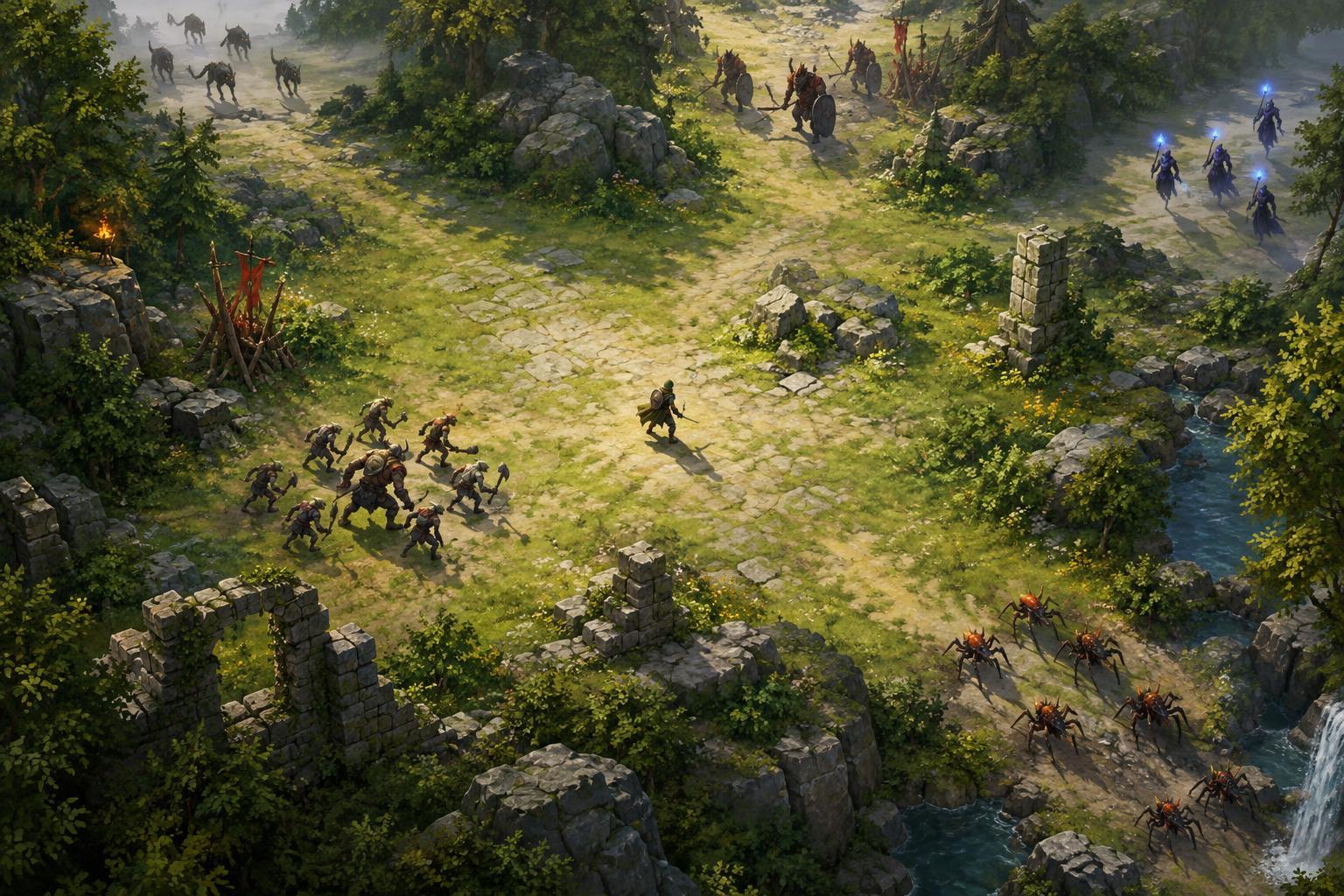
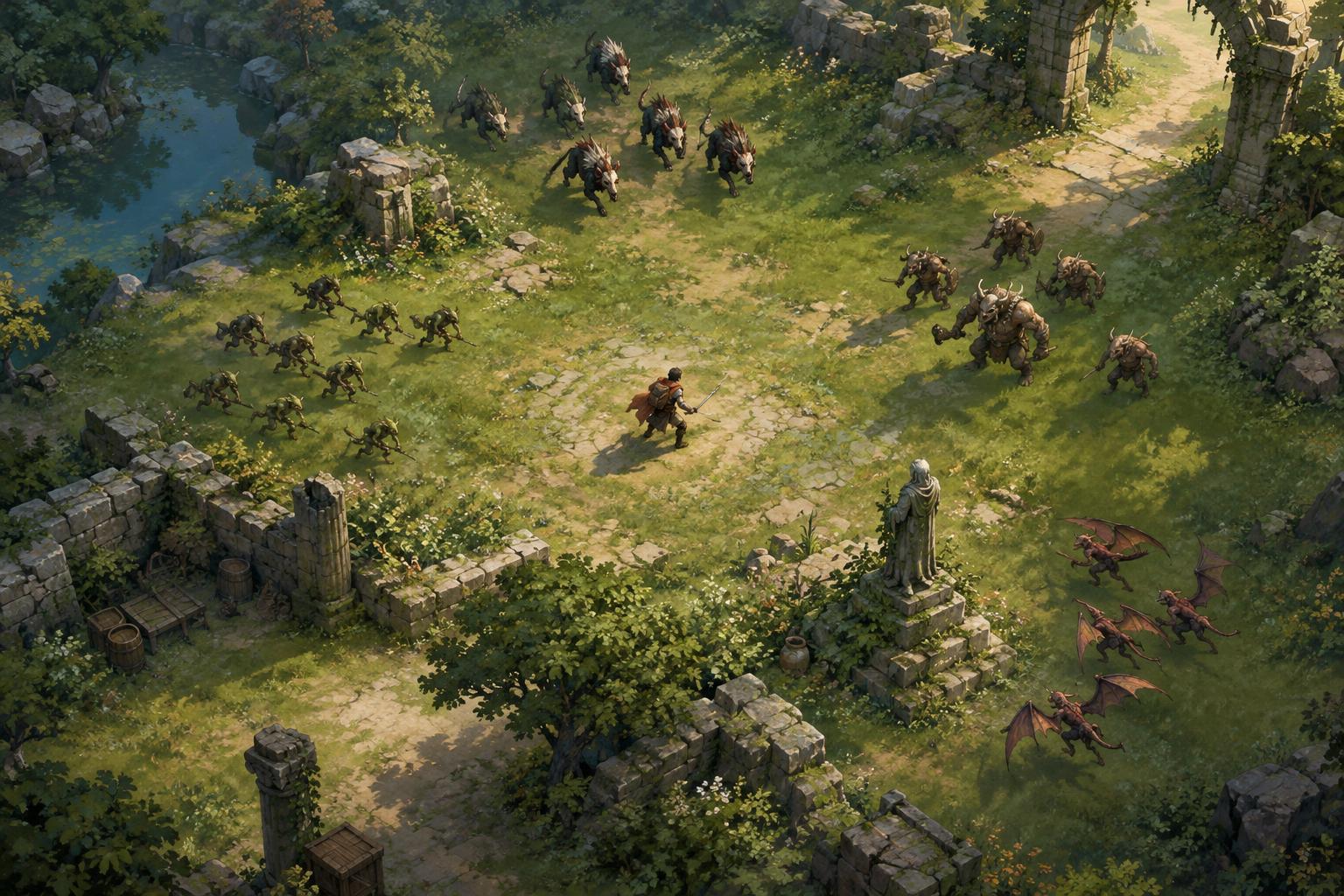
Begin with a small set of roles rather than a long list of creatures. A pursuer steadily closes distance and keeps movement relevant. A blocker is slow but difficult to pass, shaping routes through the arena. A flanker approaches from an angle that punishes predictable circling. A ranged attacker creates a place the player may want to leave. These are starting points, not fixed rules: one enemy can serve more than one role, but its main purpose should be easy to describe.
For each design, write a simple test: “When this appears, the player notices X and may choose Y.” If the choice is unclear, consider changing its movement, attack pattern or timing before increasing its damage.
Make roles readable at a glance
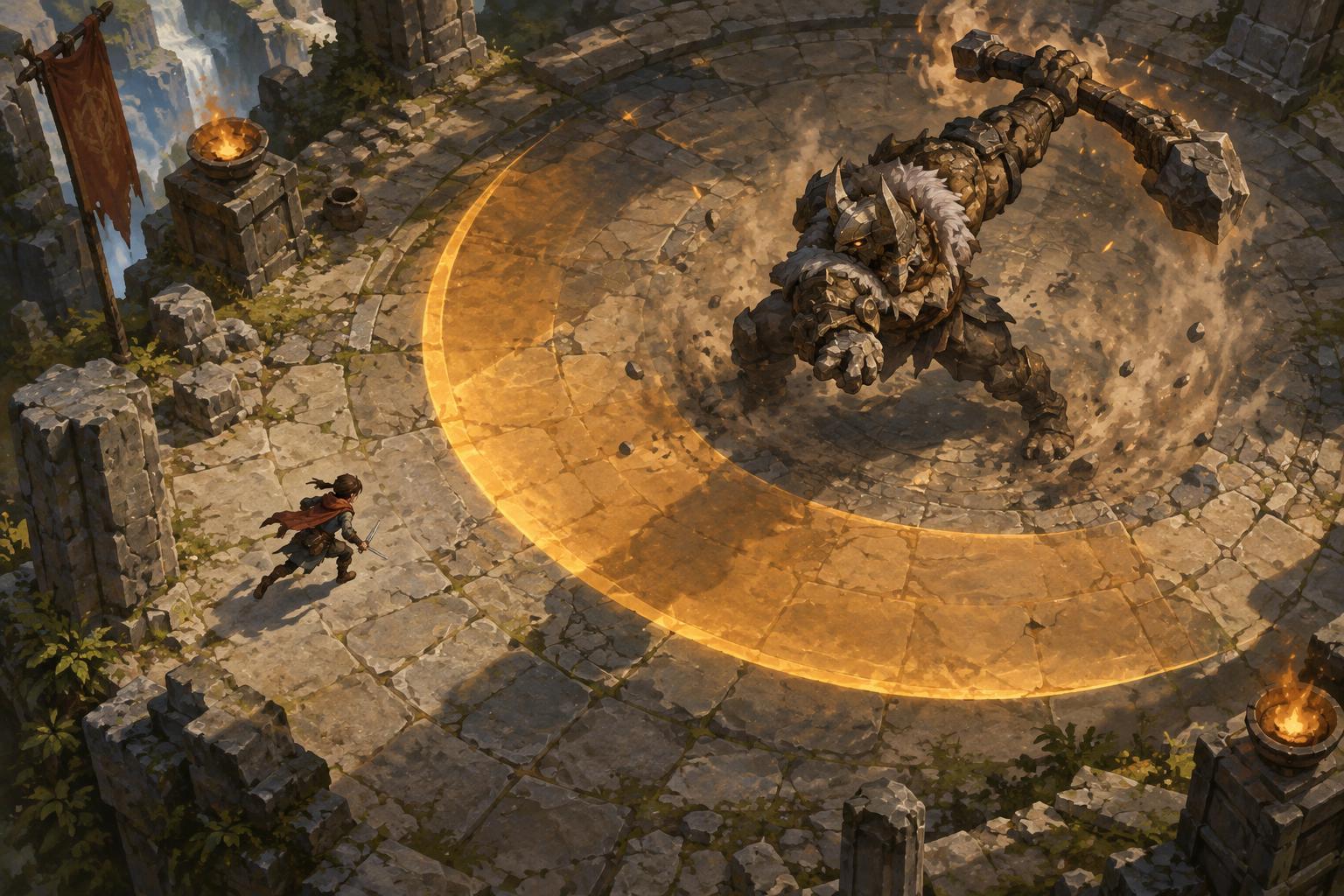
Distinct behavior helps only if players can recognize it in time to respond. In a dense wave, a tiny animation or subtle color shift may disappear behind effects and other bodies. Give important roles a strong silhouette, a consistent movement pattern or a clear wind-up. A charging enemy might pause and face its intended direction; a ranged enemy might establish a visible firing lane before attacking.
Readability also depends on contrast. If every enemy flashes, lunges and fills the screen with effects, none of those signals stands out. Reserve the strongest visual and audio cues for threats that demand an immediate choice. Keep ordinary pursuers relatively simple so they provide a stable backdrop against which unusual behavior is easier to spot.
Signals should communicate something useful, not merely decorate an attack. A warning is most helpful when it indicates where danger will occur and leaves room for a response. Test it under the busiest conditions the game permits, including overlapping enemies and player effects. If a threat is clear only in an empty arena, its role may need a bolder signal or a less punishing consequence.
Build waves from complementary pressures
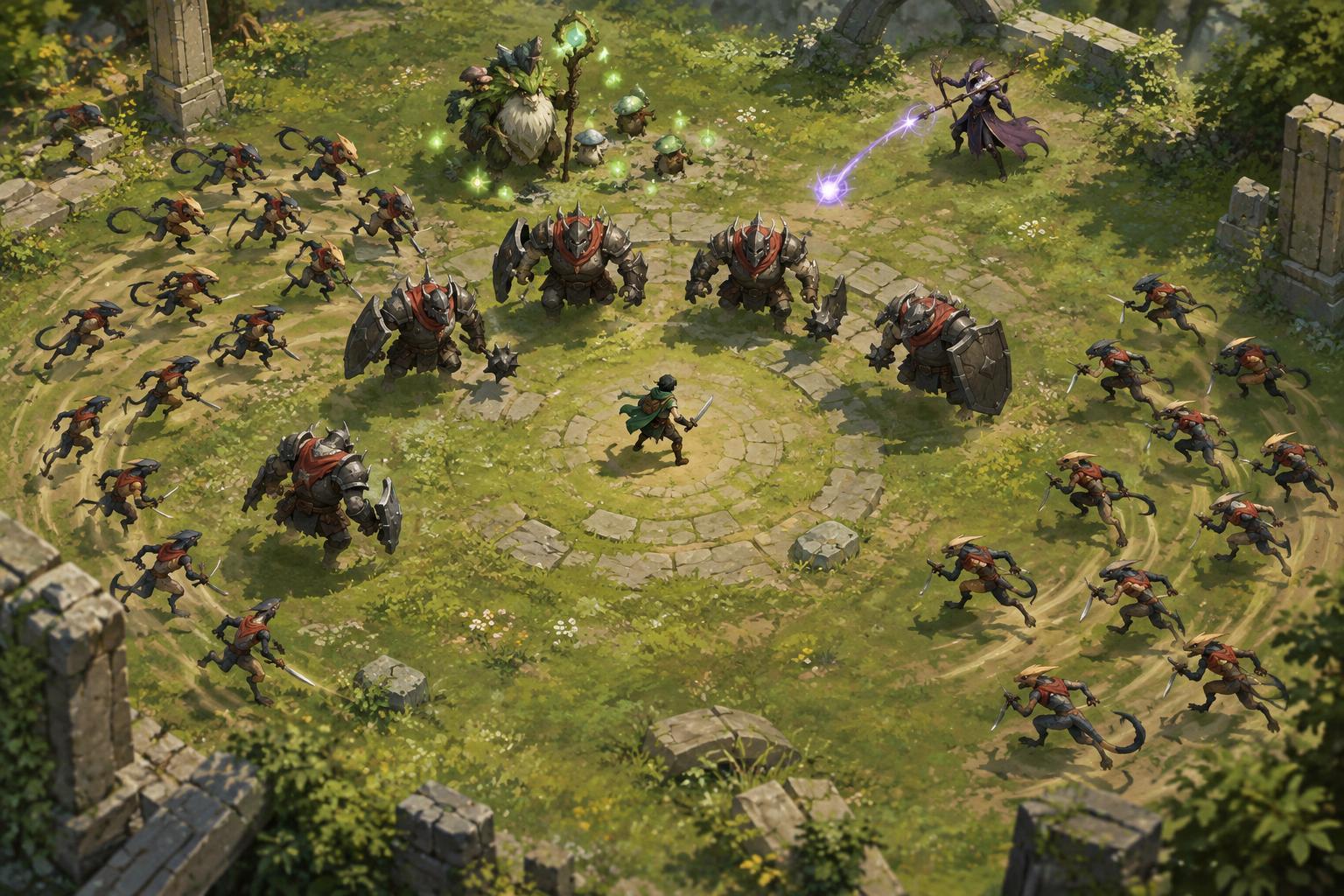
Enemy roles become more interesting in combination. Pursuers encourage steady movement, while blockers can interrupt a familiar escape path. Add a ranged attacker, and the player may need to choose between pushing through a dense group or remaining in an exposed lane. The mixture creates tension without requiring every individual enemy to be complicated.
Introduce combinations gradually. First let players encounter a role in a setting where they can learn its behavior. Then pair it with a role that changes how the familiar response works. A flanker arriving alongside pursuers, for example, may challenge habitual circling without invalidating movement altogether. This progression teaches through play and gives players a chance to recognize why a later wave feels different.
Watch for combinations that remove meaningful options. If blockers seal every route while ranged attacks cover all remaining space, the player may experience the wave as unavoidable damage rather than a difficult decision. Leave at least one plausible response, whether that is a gap to reach, a threat to eliminate or a brief attack window to wait out. Difficulty can come from spotting and executing that response under pressure.
Let builds answer threats without erasing them
In a build-focused survival game, enemies help give upgrades a purpose. A wide-area attack may handle pursuers well but struggle to remove a durable ranged threat. Focused damage may solve that problem while making dense groups harder to manage. These differences encourage players to weigh coverage, targeting and mobility rather than simply choosing the largest damage number.
Avoid designing a role that only one specific build can answer unless that restriction is an explicit part of the game. Several imperfect responses usually create more room for planning: dodge a charger, interrupt it, defeat it early or absorb a manageable hit while escaping. The options need not be equally strong, but players should be able to understand the trade-off.
As builds grow powerful, preserve an enemy’s identity through behavior before relying on larger health pools. A flanker still matters if its approach asks the player to reposition, even when it dies quickly. An enemy that survives longer but changes no decisions may merely slow the pace.
Playtest the choices, not just the outcomes
A successful run does not prove that every enemy role worked. Watch what players do when a threat appears. Do they change direction, adjust their target or recognize an opening? If they take damage, can they explain what caused it and what they might try next time? Those observations can reveal more than a simple win or loss.
Test with effects, speed and enemy counts close to the intended experience. Try different control methods and display conditions where possible; a role that depends on a precise last-second turn may feel very different with another input method. Options such as clearer warnings or reduced visual clutter can help preserve the intended decision without removing the threat.
Revise one variable at a time when a role fails. An enemy that feels unfair may need an earlier tell rather than less damage. One that goes unnoticed may need a different spawn angle rather than more health. The goal is not to make every creature equally dangerous. It is to make each one contribute a recognizable question to the crowded arena.