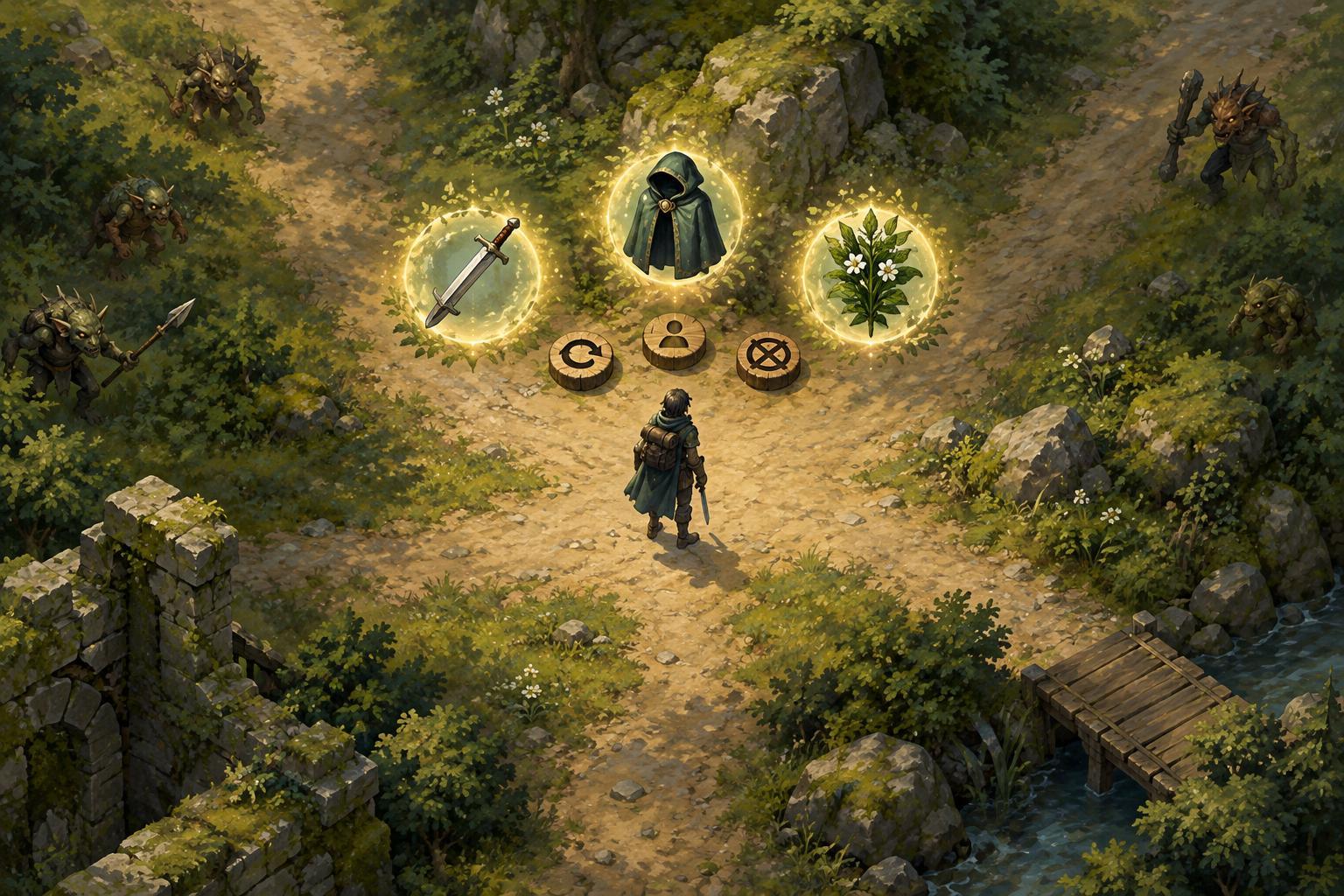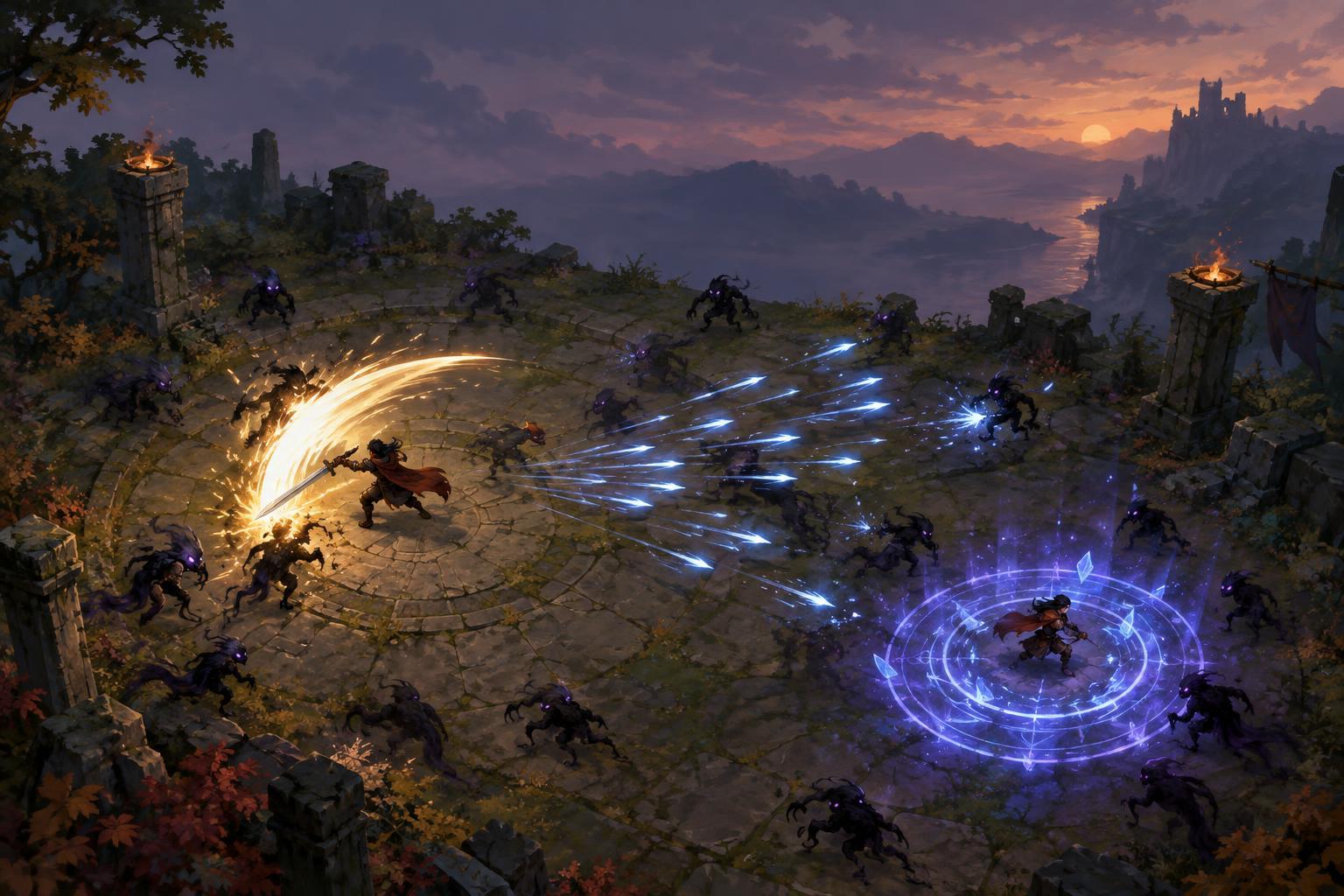
Start with what your build actually does
Damage, attack speed and cooldown can all increase offensive output, but they do it in different ways. Damage makes an individual hit stronger. Attack speed usually makes repeatable attacks happen more often. Cooldown reduction shortens the wait between activations, which may include a weapon volley, a special ability or a temporary effect. The exact meaning of each stat varies by game, so check the upgrade description before treating them as interchangeable.
The best choice is not always the one with the largest-looking number. Ask what is stopping your build from clearing enemies. Are hits landing regularly but failing to finish targets? Are enemies slipping through long gaps between attacks? Does a powerful ability spend too much time unavailable? Those questions point toward damage, attack speed and cooldown respectively. This is independent editorial guidance for comparing common game mechanics, not an official guide to any particular game.
Choose damage when each hit needs to count
Flat or percentage-based damage upgrades are especially useful when a small increase lets an attack defeat a common enemy in one hit instead of two. That change can do more than improve a damage readout: it may free the next attack to hit a different target. Damage can also help slow, heavy weapons make better use of limited opportunities to connect.
Its value depends on whether hits are being used. If projectiles routinely miss, strike empty space or already defeat weak enemies with room to spare, more damage may have little immediate effect on a crowded screen. Against durable targets, however, extra damage is more likely to matter because fewer hits are wasted on excess power. Some games also give damage upgrades different rules for critical hits, damage-over-time effects or summoned units; read the relevant descriptions rather than assuming one stat affects everything.
Choose attack speed when steady pressure matters
Attack speed helps weapons that can keep finding targets. More swings, shots or pulses can fill gaps in a defensive ring and make a build feel smoother as enemy density rises. It may also create more chances to trigger effects that activate on hit, provided the game allows those effects to scale with repeated attacks.
There are limits. A weapon with a fixed number of projectiles, a reload animation or a cap on simultaneous attacks may not gain as much as expected. Faster attacks can also spread hits across weak targets when a single stronger hit would have finished each one. If your build already attacks rapidly but struggles to remove sturdy enemies, damage may be the more useful next step. Treat any displayed attack-rate increase as a starting point, then watch whether it produces a visible improvement in coverage.
Choose cooldown reduction for valuable activations
Cooldown reduction is strongest when waiting is the main constraint. A shorter delay on an area-clearing burst can reduce dangerous pauses. On a protective ability, it may create more frequent chances to escape pressure. For a weapon that fires only when its cooldown ends, the upgrade can function much like attack speed, though the game may calculate the two stats differently.
Pay attention to duration as well as frequency. If an effect lasts for several seconds, shortening its cooldown may increase the portion of a fight during which it is active. But an ability that is already available whenever you need it may gain little practical value from becoming ready sooner. Cooldown upgrades can also have floors or other restrictions. Check whether the ability you rely on is affected before committing a scarce upgrade slot.
Make the next choice by testing the bottleneck
When two upgrades seem close, consider their relative effect rather than comparing the printed numbers alone. In a simple system with no caps or other interactions, 10% more damage per hit and 10% more attacks over the same time could offer similar theoretical output. Real runs are messier: targets move, attacks miss, abilities have downtime and enemy health creates important breakpoints. A small change that solves your immediate problem can outperform a larger theoretical gain.
Use the next wave or encounter as a quick test. Watch one repeatable situation: how long a durable enemy survives, whether nearby enemies reach you between volleys, or whether a key ability is ready when pressure builds. Choose damage if hits are reliable but too weak, attack speed if you need steadier coverage, and cooldown if the wait for a specific activation is the problem. Reassess after adding a new weapon or effect; the limiting factor of a build can change as it grows.