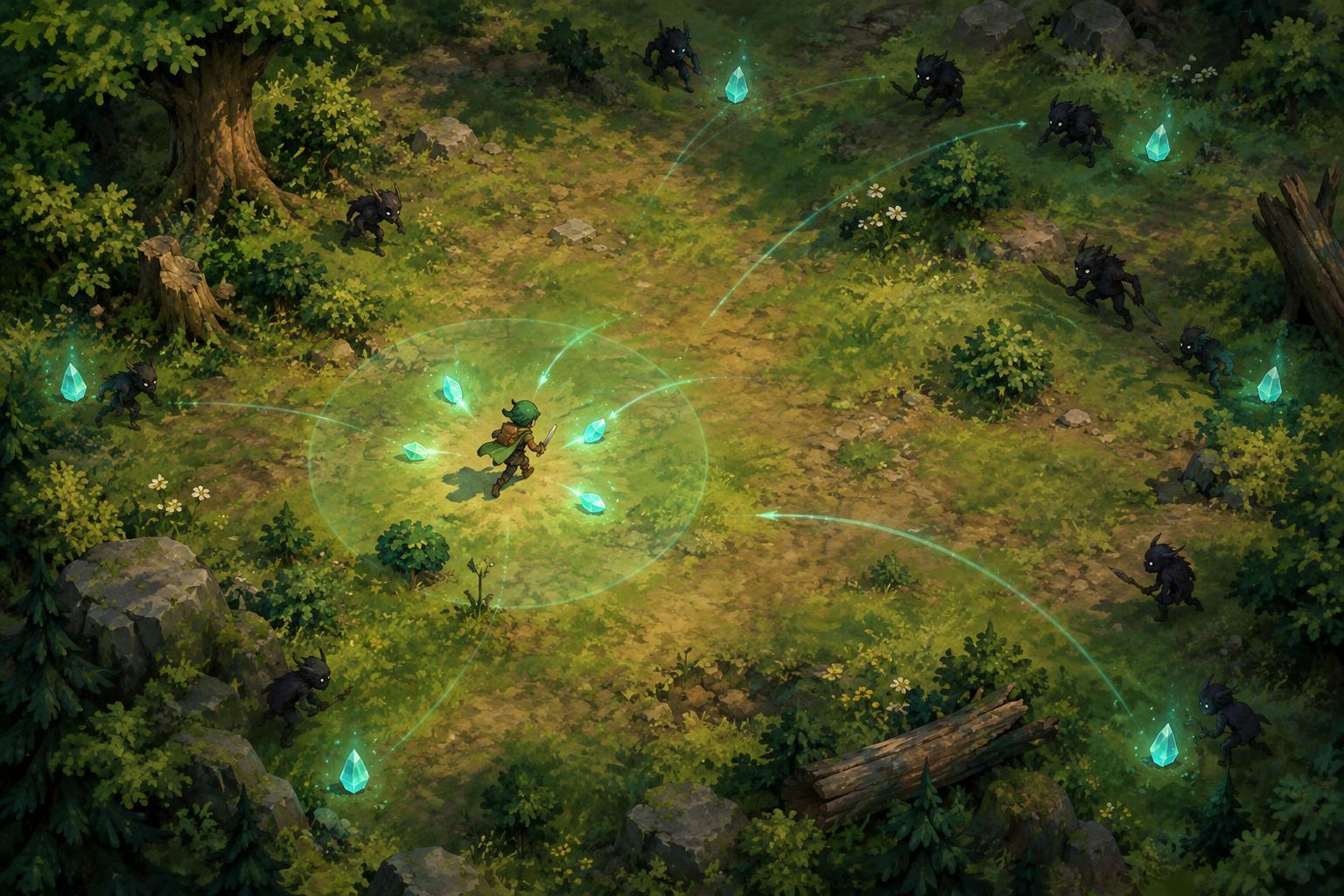
Two ways to solve the same problem
A consistent-damage build deals useful damage throughout a fight. It might rely on rapid attacks, lingering effects, or abilities that are available almost whenever enemies approach. A high-burst build concentrates damage into short windows, often through a charged attack, a powerful skill, or several abilities used together. Both can win a run, but they solve different problems.
Steady damage is especially valuable when weak enemies arrive continuously. It can keep a route open and reduce the time that nearby threats remain dangerous. Burst is valuable when the immediate problem is a dense group or a durable enemy that must be removed before it closes in. The important question is not which build produces the biggest hit. It is whether its damage arrives when and where the run needs it.
Look beyond the damage number
A large hit can feel impressive while doing less practical work than a smaller, repeatable attack. If most targets would have fallen to a modest hit, the extra damage is wasted on them. Conversely, a stream of small hits may struggle against a tough target if it cannot finish the fight before the arena becomes crowded.
Consider coverage as well as power. An attack that reaches several enemies, fires reliably, or continues working while you move may help you survive more than a stronger attack aimed at one target. For burst tools, ask how often the opportunity to use them appears. A long cooldown is less troublesome if each activation clears space at a critical moment; it is a serious weakness if danger returns before the ability does.
Damage also depends on access to targets. Short-range attacks can be effective on paper yet difficult to use safely. Aiming requirements, travel time, and enemy movement can make a burst window unreliable. When comparing upgrades, picture a crowded moment rather than an empty practice area: can you deliver the damage without standing somewhere dangerous?
Build around the gaps
The main weakness of steady damage is that it may not respond quickly enough to a sudden spike in pressure. If a durable enemy blocks an escape path or a packed wave closes from several sides, gradual damage can leave little room to maneuver. A limited-use area attack or a strong single-target option can give a steady build an emergency answer.
Burst builds have the opposite problem: what happens between activations? If ordinary enemies keep arriving, clearing a group once may not be enough. A low-maintenance attack, a persistent effect, or an upgrade that improves control can protect you while the next burst becomes available. Movement and defensive choices matter too, because surviving a cooldown gap is part of making the build work.
This does not mean every run needs an even mix of both styles. It means each upgrade should have a job. When offered a new option, ask whether it improves your strongest tool or covers a failure you have already encountered. Repeatedly adding damage to a burst combo will not help much if you cannot stay safe long enough to use it.
Match the build to the run
Early in a run, reliable attacks can make basic movement and resource collection easier. They reduce the need to wait for a perfect opening before approaching an enemy. Later, tougher targets or denser waves may create more value for burst. That pattern is not a rule: the right choice depends on enemy behavior, arena space, available upgrades, and how safely you can aim or position yourself.
Watch for the moment your current plan stops solving the immediate problem. If enemies consistently survive long enough to surround you, more coverage or faster repeat damage may help. If crowds are manageable but a durable target remains on screen too long, concentrated damage may be the missing piece. If you have plenty of damage but keep taking hits while delivering it, prioritize a safer way to attack rather than another damage increase.
Your preferred controls also matter. A build that requires precise timing and frequent aiming may be rewarding, but it can be tiring or difficult to manage amid visual clutter. Automatic or persistent damage may offer a clearer, more comfortable rhythm. Choose a plan you can execute reliably, not just one that looks strongest under ideal conditions.
Use each run as a simple test
To compare builds, change one major choice at a time when possible. Notice which situations end the run: steady crowd pressure, a sudden swarm, or a single tough enemy. Then judge an upgrade by whether it addresses that situation. A burst ability that looks weaker in a damage summary may still be valuable if it repeatedly opens an escape route.
Consistent damage and high burst are tools, not competing doctrines. The most useful build is one that handles ordinary threats without leaving you helpless during exceptional ones. Start with a dependable way to stay alive, identify the pressure your build cannot answer, and add damage that arrives at the right moment.