Why one reward can cost more than it gives
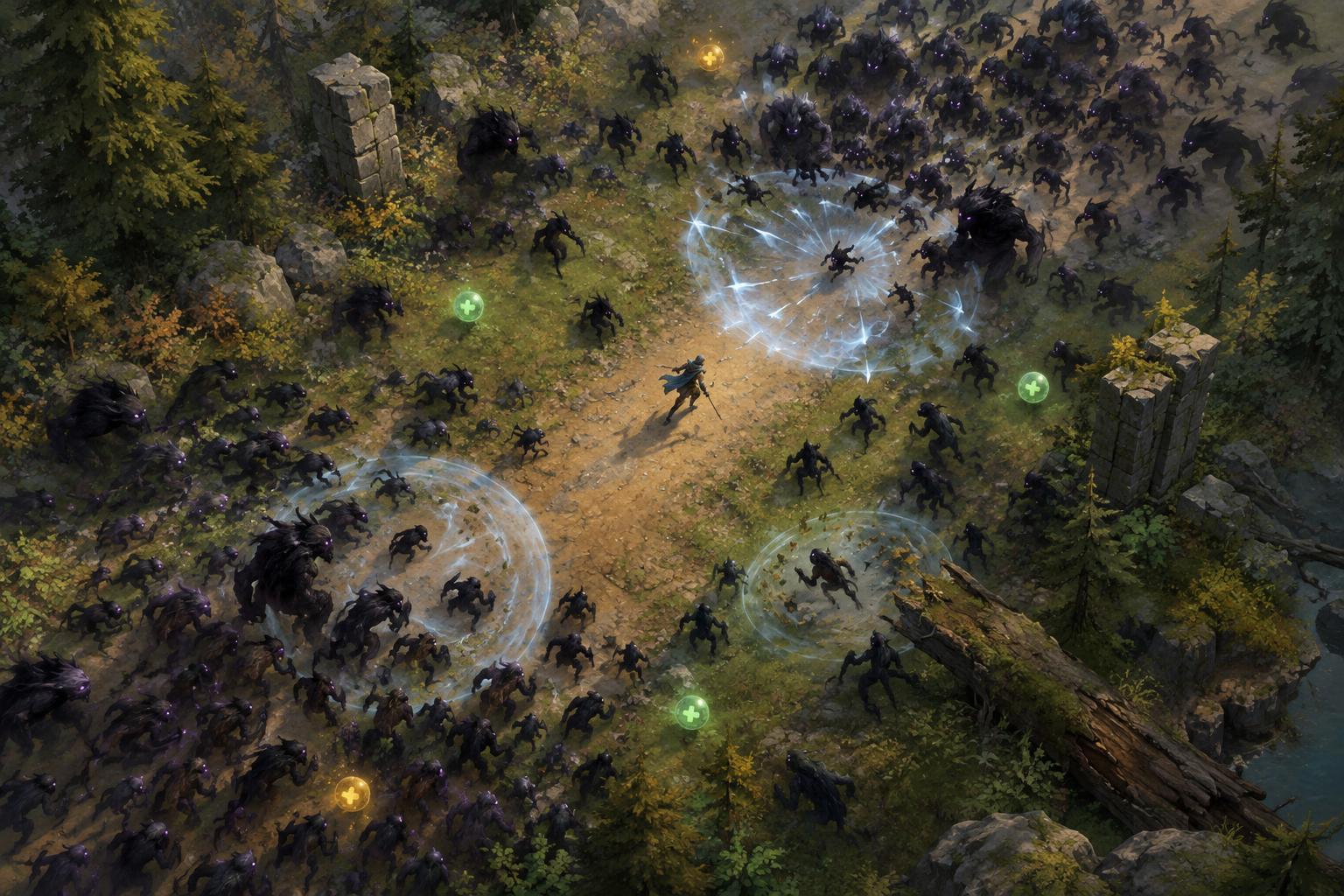
In a survival game, a pickup draws the eye because its benefit is visible. The cost of reaching it is less obvious. You may have to spend health, cross into denser enemies or give up the open space that was keeping you safe. A reward that improves your build is useful only if you can survive the trip to collect it.
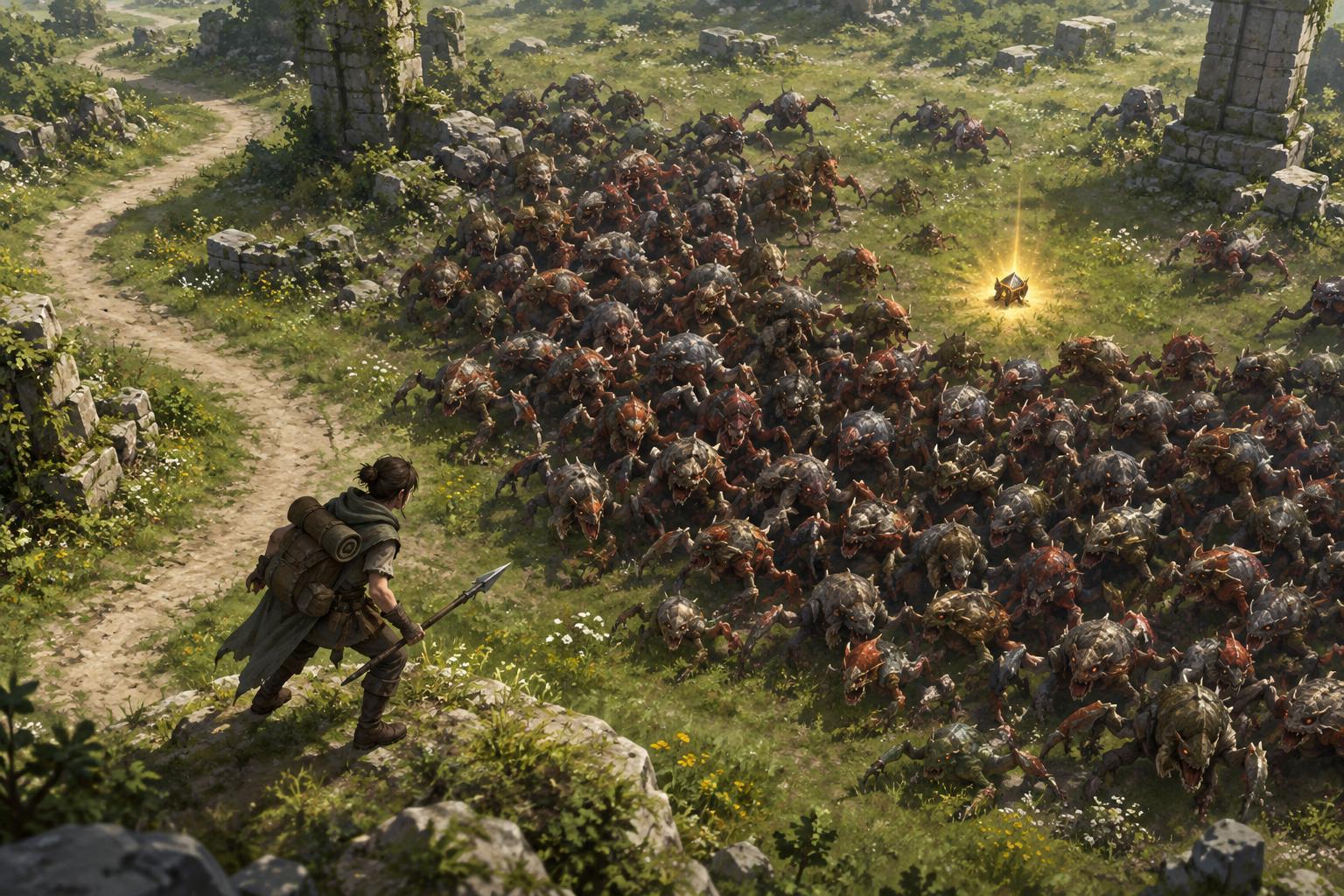
Beginners often judge the distance to the reward rather than the shape of the route. A short dash through a swarm may look quicker than circling around, but enemies can close the gap while you are inside it. Even if you reach the pickup, you still need a way out. Treat the return path as part of the cost.
Look at the route before moving
Before turning toward a reward, take a moment to locate the widest opening around the crowd. Notice where enemies are moving, whether your attacks are clearing a reliable lane and whether you can change direction if that lane closes. If your plan depends on every enemy staying in place, it is probably too fragile.
Pay particular attention to the space behind the pickup. A reward near the edge of the play area or against a thick group can become a trap: you arrive with nowhere to continue. A safer route often approaches from the side and curves back toward open ground. This may take longer, but it gives you more room to react.
Make the crowd move for you
You do not always need to abandon a reward immediately. In games where enemies follow your movement, walking away can pull them out of position. Lead the swarm toward one side, keep a comfortable gap, then loop toward the pickup if a clear route opens. The goal is not to thread a narrow passage; it is to create a wide one.
Keep moving while you reassess. Repeatedly turning toward the reward and backing off can leave you surrounded as new enemies join the group. Choose a direction that preserves space, and look for an opening after the crowd has shifted. If attacks clear an area, wait until that space is large enough to enter and leave, not merely large enough to touch the pickup.
Know when the risk is worth taking
Not every pickup deserves the same caution. A reward that might restore health when you are in immediate danger could justify a risk that a minor upgrade would not. Your current movement speed, attack coverage and available health also matter. There is no universal rule that says to collect everything or ignore every difficult drop.
Ask three questions before committing: What happens if I leave it? What could I lose on the way in? Where will I go after collecting it? If the reward is optional and your exit is unclear, continuing around the swarm is usually the more dependable choice. You can reconsider if the crowd moves or your attacks open a better path.
Build a habit that survives longer runs
A useful beginner habit is to scan for exits whenever you spot loot. Keep enough open space to turn, avoid entering a pocket that has only one narrow opening and resist making a sudden reversal just because a reward appears behind you. These small decisions can matter more than the value of a single pickup.
After a run ends, think back to the moment before a risky collection. Was the route open, or did it only appear open because you were focused on the reward? Did you have an exit in mind? This unofficial editorial guidance is meant to help you make clearer decisions across survival games, not prescribe a perfect move for every situation. Sometimes the strongest play is simply to keep moving and let one reward go.