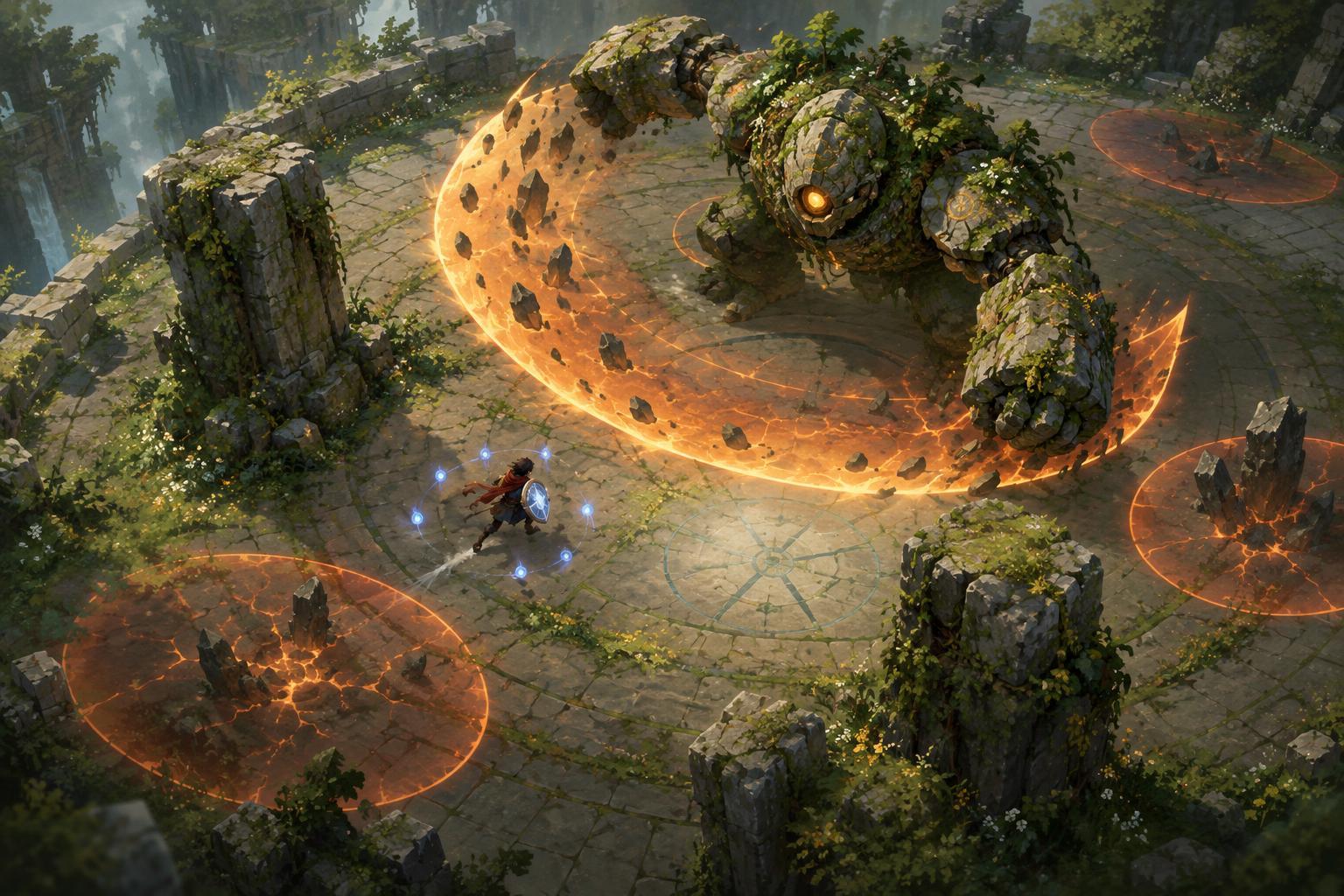
A strong start is not the same as a decided run
In a survival or roguelite game, a good early pickup can make a run feel full of possibility. The player clears a wave more comfortably, tries a new weapon, or earns enough room to take a risk. That momentum is part of the appeal. Snowballing becomes a balance problem when the first advantage makes future advantages substantially easier to obtain, until later decisions barely matter.
Imagine two players leaving the opening minutes with slightly different damage output. If the stronger player defeats enemies faster, collects more experience, and gains upgrades sooner, the gap may widen with every wave. The weaker player is not simply facing a harder fight; they may also have fewer opportunities to improve. An opening choice that looked modest can end up determining most of the run.
Watch for bonuses that improve both power and income
One common mistake is giving a single early option two jobs: it helps the player survive now and accelerates their progression. An area attack, for example, might provide reliable crowd control while also collecting more kills than a narrow weapon. If kills lead to experience or currency, the weapon improves the player’s ability to buy or select even more power. A small damage difference can therefore become a large progression difference.
Early multipliers deserve particular attention. A percentage bonus applied to every later upgrade may be much more valuable than its opening description suggests. The same is true of effects that trigger whenever an enemy dies or an item is collected: their impact grows with the number of encounters remaining. These options do not need to be removed, but their long-term value should be considered alongside their immediate strength.
A useful design question is, “What does this choice help the player earn next?” If the answer is more damage, more safety, and more upgrade opportunities, it may be doing too much at once.
Difficulty curves can amplify a small lead
Enemy scaling can accidentally punish players for falling behind. If a wave expects a certain amount of damage, a player just below that threshold may leave enemies alive long enough for the screen to fill. They then spend more time dodging, miss pickups, and fall further behind. Meanwhile, a player just above the threshold clears the same wave quickly and collects its rewards in relative safety.
This does not mean every run must offer a guaranteed recovery. Failure and uneven luck can give the genre its tension. The concern is whether the game offers meaningful responses to a weak start. Can a careful player change tactics, choose a defensive upgrade, or take a manageable risk for a better reward? If the only viable response is to hope for the same powerful item that would have been strongest anyway, the design may be narrowing rather than testing the player’s choices.
Test the gap, not just the winning build
A spectacular late-game build can hide balance trouble. During playtests, compare runs with ordinary opening choices against runs with the strongest opening choice. Note when their paths diverge: Is it the first upgrade, a particular enemy wave, or the moment rewards start arriving at different rates? Pay attention to whether players are making different decisions or whether one group simply has fewer useful decisions available.
It also helps to test the same opening choice across different skill levels. An option that requires precise movement may be strong for an experienced player without being broadly dominant. By contrast, a safe, low-effort option that reliably earns extra upgrades may crowd out alternatives for nearly everyone. The goal is not to make every choice identical; it is to understand why a choice succeeds and whether its trade-offs are visible in play.
Keep momentum while leaving room for decisions
To limit runaway leads, designers can separate immediate strength from long-term earning power. A weapon that clears early waves quickly might scale less efficiently later, while a slower starter might offer a distinct payoff if the player survives its vulnerable period. Upgrade pools can also present situational answers, so a struggling run has options other than chasing a single universal bonus.
Care is needed with catch-up systems. Quietly giving every weak run enough power to recover can make early choices feel hollow. More satisfying recovery often asks something of the player: changing position to reach pickups, accepting a defensive trade-off, or tackling a riskier encounter for a useful reward. A strong start should still feel strong. Good balance preserves that pleasure while ensuring the rest of the run remains worth playing.