Two ways to make a crowded screen challenging
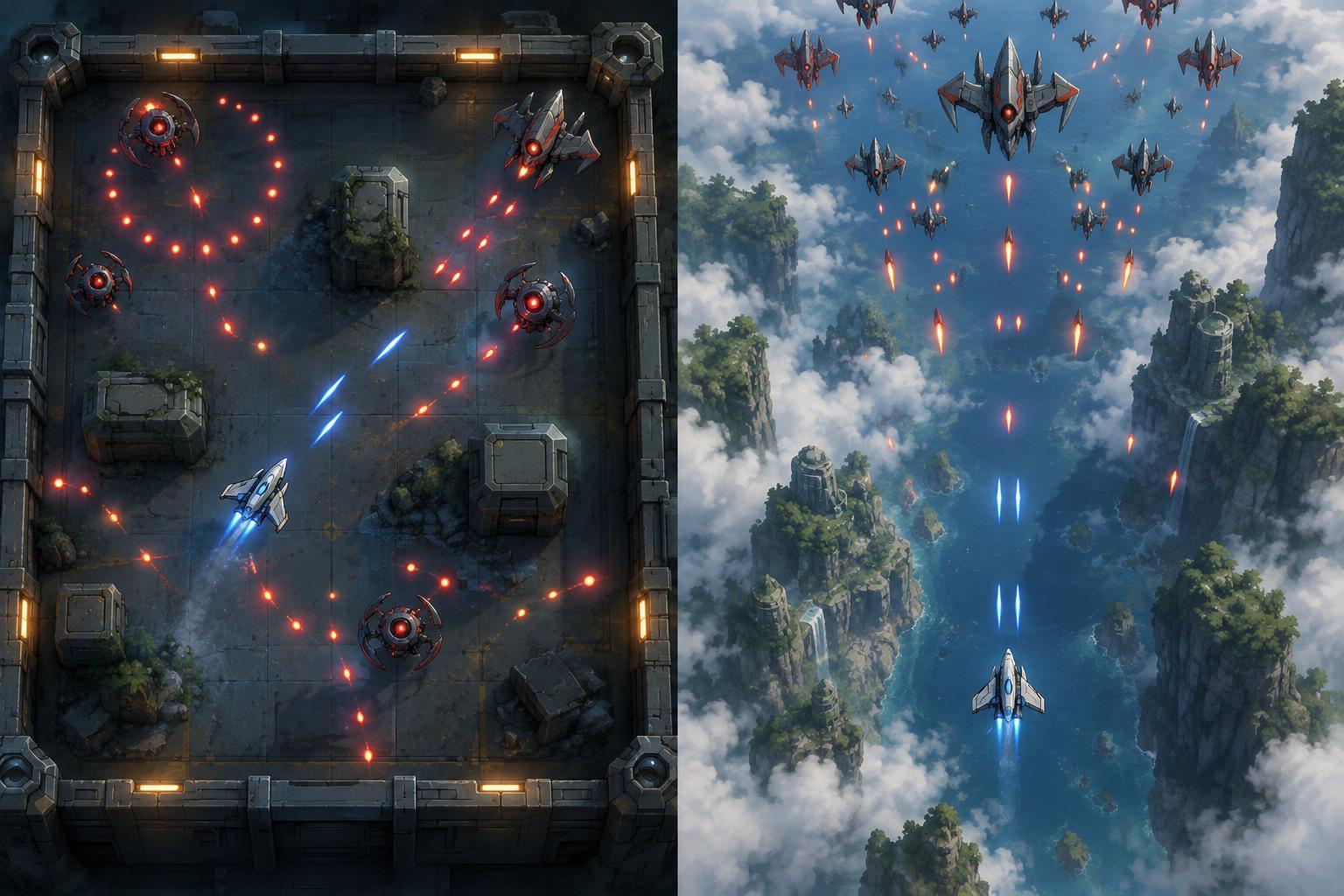
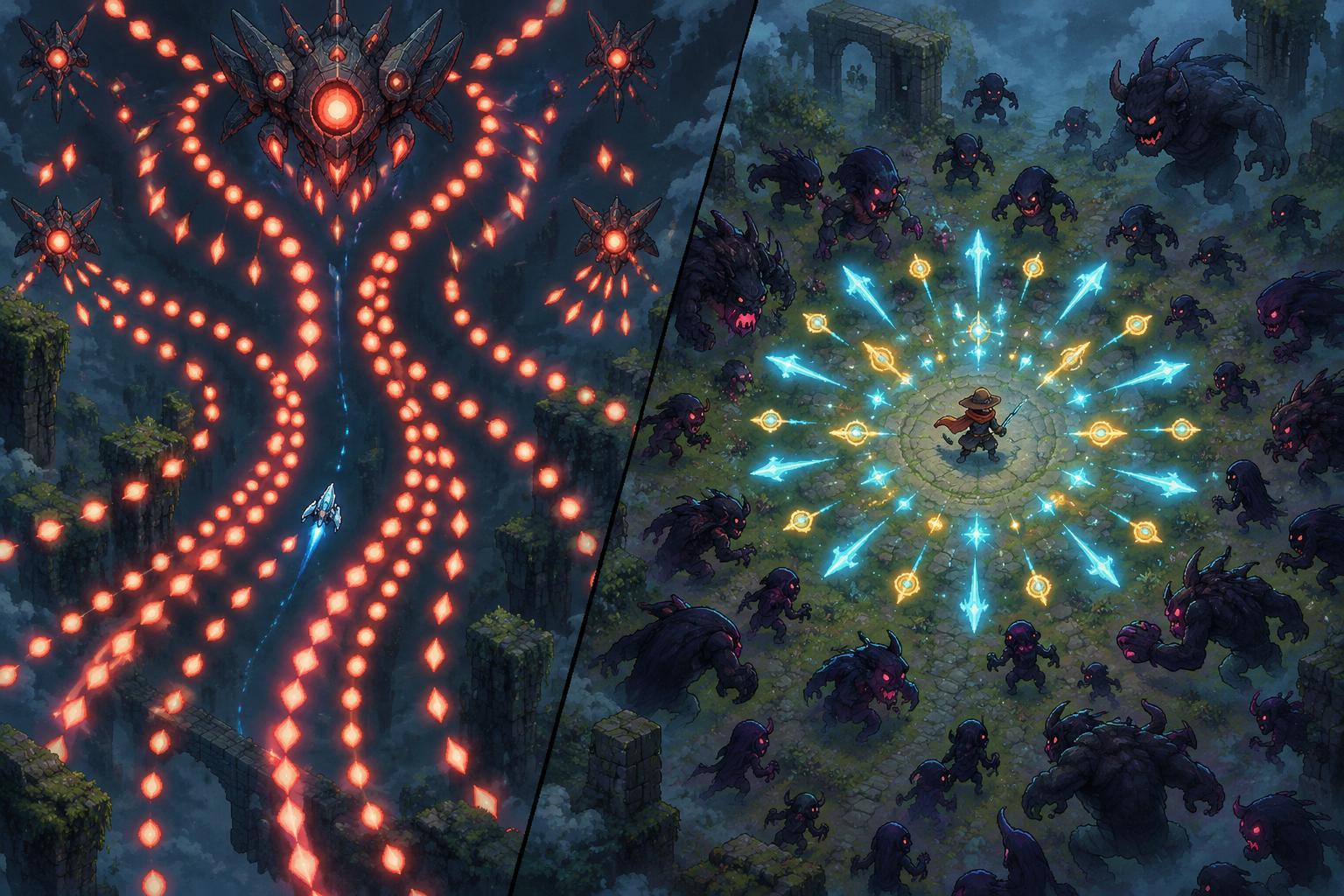
In a bullet hell game, the screen often fills with hostile shots. The central challenge is finding a safe route through patterns while continuing to attack. A narrow gap may look impossible at first, but its movement can become predictable with practice. Progress tends to depend on recognizing patterns, controlling your position, and making small, deliberate adjustments.
Bullet heaven usually describes a different kind of crowded-screen action: waves of enemies approach while the player grows increasingly powerful. Attacks may fire automatically or require little aiming, leaving more attention for movement and upgrade choices. The challenge is often to survive long enough for a build to come together, then manage the threats that still get through. These labels are informal rather than strict rules; a game can borrow from both.
What movement is trying to accomplish
In bullet hell, moving too far can be as dangerous as moving too little. A small step might clear one projectile without putting you in the path of the next. Players often benefit from watching where gaps are going, not just where they are now. Some games add abilities such as a dash or a brief period of invulnerability, but those tools still require timing and an understanding of the pattern.
In bullet heaven, movement often manages space on a larger scale. You may circle a group of enemies, keep an escape route open, or move toward experience and other pickups without becoming surrounded. The safest route is not always the shortest one. Stepping away from a reward can be sensible if collecting it would trap you. Precise dodging still matters in some games, especially against bosses, but the everyday question is often where you want the crowd to be a few seconds from now.
Execution versus build planning
Bullet hell commonly tests execution: can you read a pattern and perform the movements needed to survive it? Even when a game offers different weapons or characters, the player may still need to handle the same incoming shots. Improvement can come from learning when a pattern changes, choosing a consistent screen position, and resisting the urge to make a large correction after a minor mistake.
Bullet heaven often gives build planning a larger share of the work. An upgrade that clears nearby enemies may create room to move; a longer-range attack may weaken threats before they arrive. Early choices can shape which later choices are useful, so a strong build is not necessarily a collection of individually strong upgrades. It is a set of tools that covers weaknesses such as close-range pressure, tough targets, or gaps between attacks. Luck may affect what appears, but recognizing what your current build lacks gives each choice a purpose.
Why the distinction matters for new players
A beginner approaching bullet hell may find it helpful to focus on survival before damage. Watch one stream of shots at a time, look for a reliable lane, and move only as much as needed. If a game allows practice or shorter attempts, repeated exposure can make a confusing pattern easier to read. A crowded screen is not always a demand for faster reactions; sometimes it is an invitation to notice that the hazards follow a rhythm.
For a first bullet heaven run, aim for a dependable way to handle nearby enemies, then think about how you will deal with tougher ones. Keep moving with an exit in mind, and avoid chasing every pickup immediately. When a run ends, ask whether positioning, damage, or a missing defensive option was the main problem. That question is more useful than assuming every defeat calls for a completely different build.
Reading the screen in either style
Both styles depend on clear visual information. Players need to distinguish hostile projectiles from their own attacks, recognize dangerous enemies, and see enough of the play area to choose a route. A game with screen shake, bright effects, or many overlapping sprites may be harder to parse even when its underlying rules are simple. Where settings allow it, adjusting effect intensity, contrast, text size, or control bindings can make the challenge easier to understand without removing it.
The most useful distinction is not which genre has more objects on screen. It is what those objects ask you to do. Bullet hell usually asks, “Where is the safe gap, and can I reach it in time?” Bullet heaven more often asks, “How do I keep space around me, and what tools will help me survive the next wave?” Games can ask both questions at once. This is independent genre commentary, not an official guide to any particular game, so treat the labels as a way to understand play rather than a rigid classification.