Start with a job for each slot
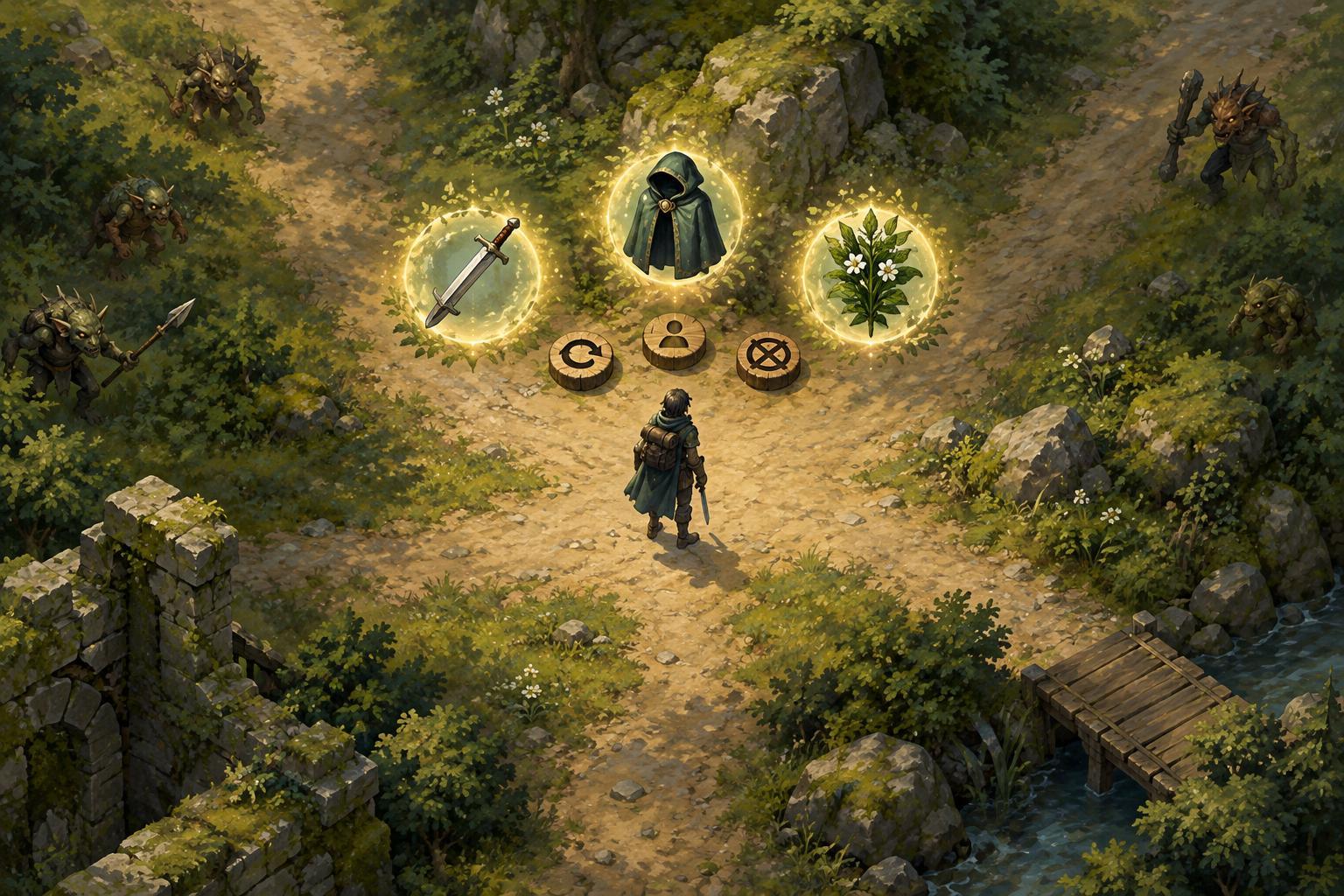
When a game limits your weapon and passive item slots, a new pickup is not just a bonus. It is a commitment that may block a better option later. The easiest way to plan is to give each slot a job before you worry about finding the perfect combination. Your build may need a dependable way to clear nearby enemies, a way to handle tougher targets, and enough movement or protection to survive while those tools come online.
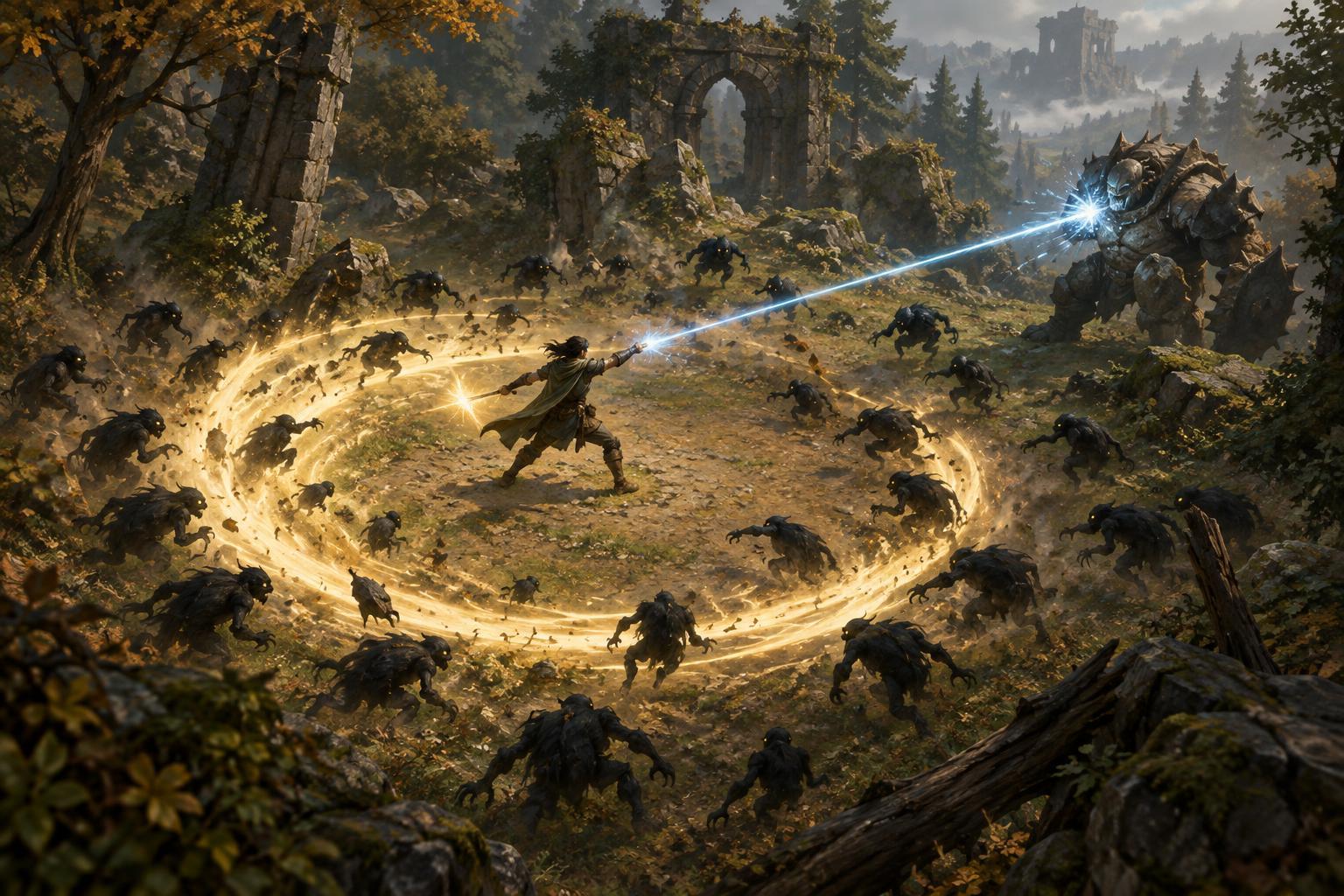
These jobs depend on the game. A weapon that hits in every direction might be excellent against crowds but slow against a durable enemy. A narrow, high-damage attack may do the opposite. Passives can fill gaps by improving damage, attack frequency, range, movement, or survivability. Rather than collecting several items that all solve the same problem, ask what your current build cannot do reliably.
Choose a core, then support it
A core weapon is the one you expect to invest in and use throughout much of the run. It does not have to be the strongest weapon in isolation. It should be a tool you can position around comfortably and improve with items you are likely to find. Once you have a core, compare new choices against it: does this pickup strengthen your main plan, cover a weakness, or merely add another effect that looks appealing?
For example, if your core attacks in short bursts, an attack-frequency passive may help it feel more consistent. If it already clears weak enemies well, a second weapon aimed at tougher targets may add more value than another crowd-clearing option. Some games also link specific weapons and passives through upgrades or evolutions. Where those rules apply, check the pairing before filling the relevant slot; do not assume every game uses the same requirements.
Leave room for a supporting choice that makes the build easier to play. Movement speed, defensive effects, or more forgiving attack coverage can be worthwhile even if they do not produce the largest damage increase on paper. A build only benefits from its damage while you can stay alive and keep enemies in range.
Treat overlap as a trade-off, not a mistake
Overlap is sometimes useful. Two weapons that cover a wide area may make a crowded stage safer, especially for a beginner still learning enemy movement. The question is whether that extra safety is worth a scarce slot. If both weapons struggle against the same threat, the build may feel powerful until that threat appears. Try to identify what each item adds that the others do not.
The same test applies to passives. Stacking offensive bonuses can make an established weapon stronger, but spending every passive slot on damage may leave no answer to positioning mistakes. Taking only defensive passives can have its own cost if enemies remain on screen long enough to restrict your movement. A balanced build is not necessarily an even split; it is one whose pieces address the problems you actually encounter.
When comparing two choices, imagine the next difficult minute of play rather than the final build you hope to have. Which option helps immediately? Which depends on several later upgrades? A delayed payoff can be sensible when you are stable, but an immediate solution is often better when you are already struggling to clear space.
Keep a plan without forcing a preset
Random choices are part of many survival and roguelite games. A rigid list of required items can make a run harder if the key pieces never appear. Instead, plan in roles: one primary source of damage, one complementary attack, and passives that support those tools or solve a clear survival problem. This gives you alternatives when an expected item is missing.
Before accepting an item that occupies your last open slot, pause and check three things. First, can your current build handle both crowds and durable targets? Second, is there a passive you still need for a specific upgrade, if the game has such a system? Third, will this choice help you use the weapons you already have? You may still choose the unexpected item, but the decision will be deliberate.
Reassess after major upgrades. A passive chosen to support one weapon may also improve another, making a new weapon more attractive. Conversely, if your main attack now covers a weakness on its own, you may no longer need the backup you planned. Slot limits reward adjustment as much as advance planning.
Learn from the slot that felt wasted
After a run, you do not need to judge the entire build as good or bad. Look for one slot that contributed less than you expected. Was its effect redundant? Did it arrive too late? Did it require a playstyle you rarely used? Those questions give you a more useful lesson than simply memorizing a different item list.
Also note what caused the run to become difficult. If enemies closed in from every side, consider earlier area coverage or movement support next time. If a tough target stayed alive too long, look for more focused damage or a better way to keep your core attack on target. Limited slots create meaningful choices, but they do not demand a single perfect answer. A build is successful when its items work together well enough for the challenges you face and the way you prefer to play.
This is independent editorial guidance, not an official guide for any particular game. Exact slot counts, upgrade rules, and item effects vary, so use these principles to evaluate the choices available in the game you are playing.