Treat targeting behavior as part of the weapon
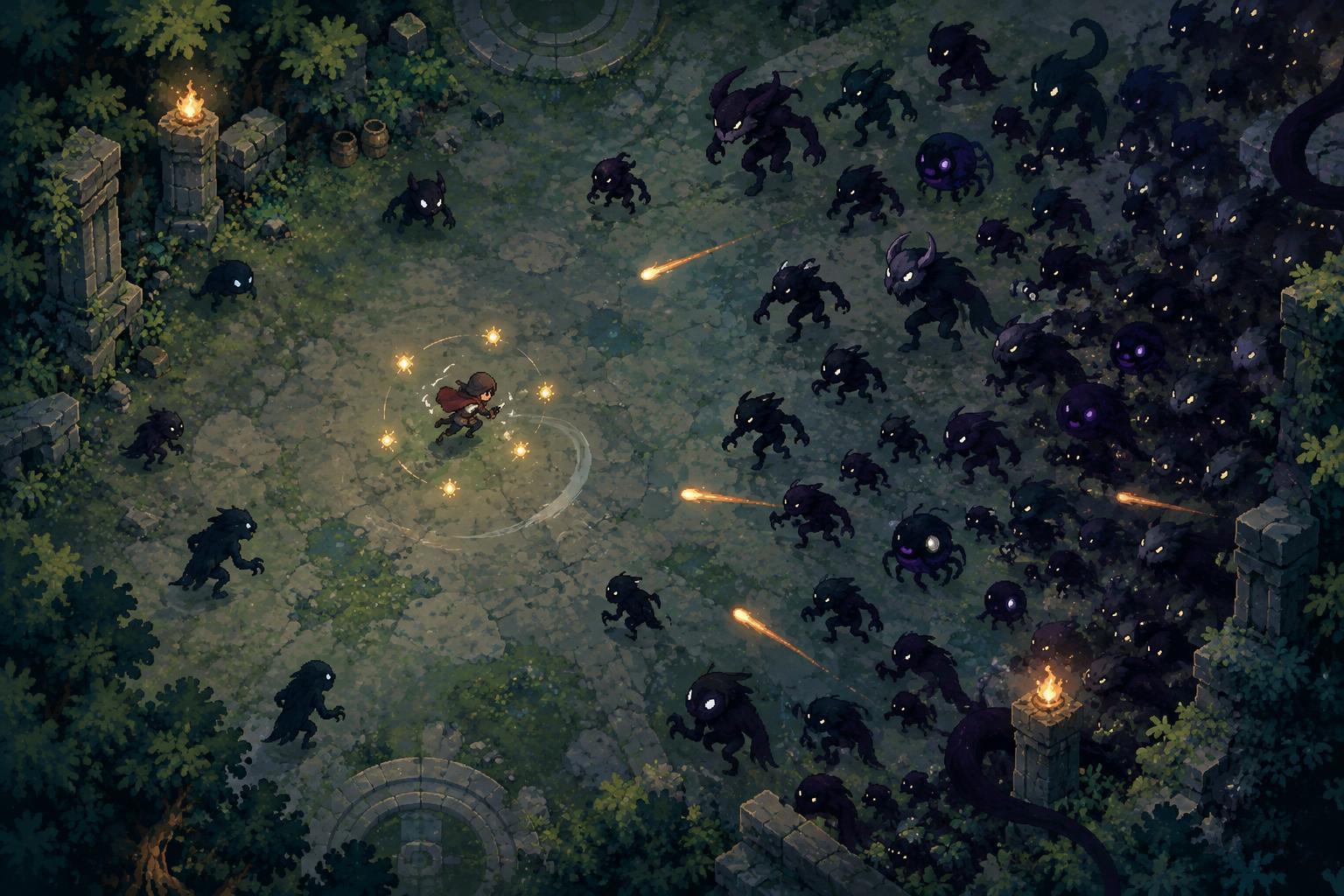
In many survival games, weapons fire without direct aiming. That makes a run easier to control moment by moment, but it also means the weapon’s targeting rules shape your build. A projectile that seeks the nearest enemy behaves differently from one that fires in a fixed direction or selects a random target. Before committing upgrades, watch where each weapon sends its attacks when enemies approach from more than one side.
Ask a simple question: what can this weapon reliably hit? A nearest-enemy attack may keep the edge of a crowd under control while repeatedly ignoring a dangerous enemy farther away. A directional attack can reach a priority target, but only if you have room to face or move toward it. A weapon that strikes at random may work well when the screen is crowded, yet feel inconsistent against a single threat. These are not necessarily flaws; they are constraints you can plan around.
Pair weapons that cover different targeting gaps
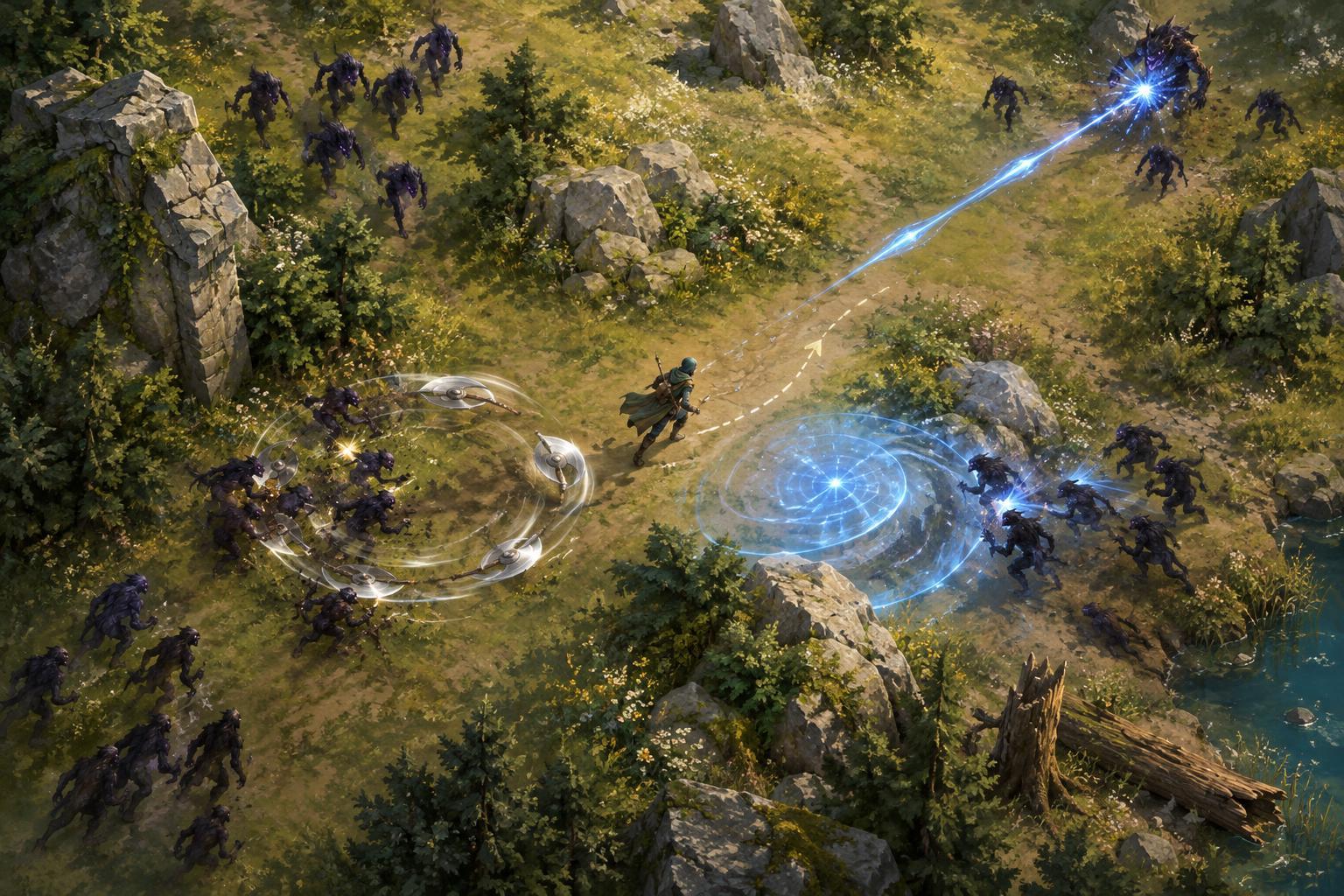
A useful pairing is not always the combination with the highest apparent damage. Look for a second weapon that reaches enemies the first one misses. If your main attack repeatedly hits whichever enemy is closest, an area effect around your character may help when the crowd closes in, while a longer-reaching attack may give you a way to affect threats beyond that crowd. If your main weapon fires forward, a surrounding effect can protect you when you need to retreat.
Pay attention to whether two weapons compete for the same targets. Overlapping attacks can be valuable when you need concentrated damage, but they may leave another approach unprotected. During a run, notice where enemies survive long enough to restrict your movement. That observation tells you more about a missing weapon role than the damage number on a single upgrade screen.
You can also choose upgrades that make targeting more dependable. Extra projectiles may improve coverage for a weapon that misses part of a crowd; a larger effect may make precise positioning less important. Neither upgrade fixes every problem. If the weapon selects the wrong targets for the situation, another attack pattern may be more useful than a bigger version of the same one.
Use movement to influence automatic attacks
Automatic targeting does not mean you are a passive observer. Your position changes which enemies are nearest, how they group together and whether a directional attack has a clear path. If your weapon favors the closest target, moving along the edge of a crowd can sometimes keep its attacks concentrated there. Walking directly through a group may instead cause targets to change rapidly while putting you at risk.
Try to preserve space for deliberate movement. Circling a crowd, crossing an open lane or briefly approaching a priority enemy can change what your weapons hit. The right choice depends on the game’s movement and attack rules, so test positioning when the screen is still manageable. Do not risk contact merely to force a particular target: the aim is to improve your attacks while retaining a safe route out.
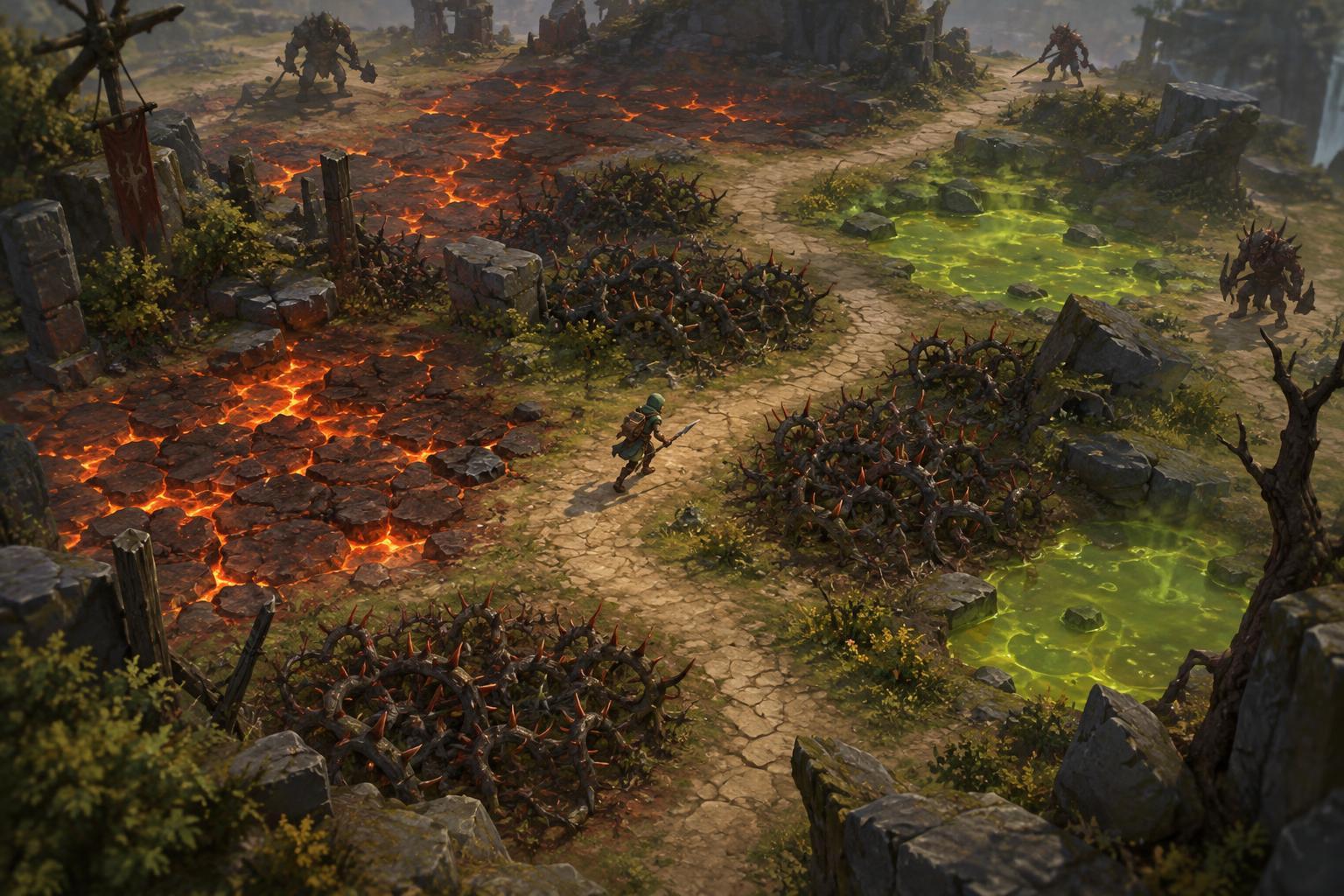
Terrain matters, too. A narrow passage may make area attacks more consistent because enemies approach from fewer angles. In open space, attacks with broad coverage can reduce the need to steer every enemy into one line. Think of the map as part of your targeting system rather than as a backdrop.
Check the build under pressure
A targeting plan should work when the run becomes crowded, not only when a few enemies are on screen. Watch for repeated warning signs: one side of your character is consistently exposed, a sturdy enemy advances while attacks land elsewhere, or your damage drops whenever you must move away from your preferred position. Each sign points to a specific coverage problem you can address on a later upgrade choice.
Change one part of the plan at a time when possible. Adding a weapon with a different attack pattern, improving the reach of an existing weapon or adjusting how you move can each solve a different problem. Keeping brief notes on what actually ended a run makes the next choice more focused than simply selecting the upgrade with the largest-looking number.
Build planning is easier to sustain when you take breaks between attempts. If you want a non-gaming pause before reviewing your run notes, browse Koci Dom, then return with a fresh look at where your attacks did and did not land.