A boss should examine familiar skills
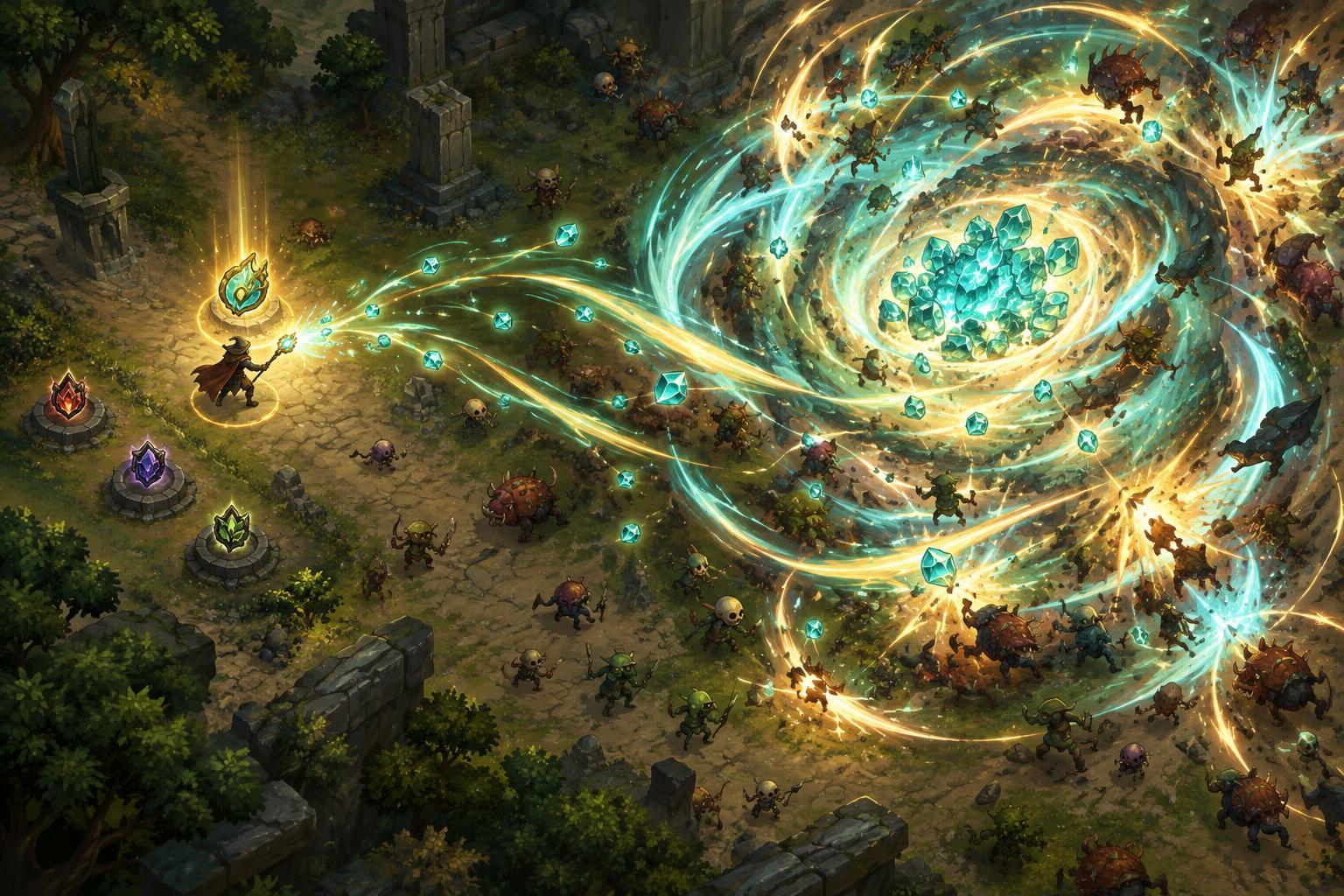
In a survival or arcade-style game, players spend much of a run learning a rhythm: move through threats, judge safe space, collect resources, and make the most of a chosen build. A boss encounter works best when it puts pressure on that rhythm. The boss may be larger or more dangerous than ordinary enemies, but the player should still recognize what good play looks like.
That does not mean a boss must behave like an oversized regular enemy. It can introduce a new attack or change the shape of the arena. The important question is whether players can respond using skills the game has already encouraged. If a run has focused on positioning, a boss might challenge players to find paths between attacks. A sudden, unexplained demand for precise timing may feel less like a test and more like a change of rules. This is independent editorial analysis, not official guidance for any particular game.
Use the arena to deepen movement decisions
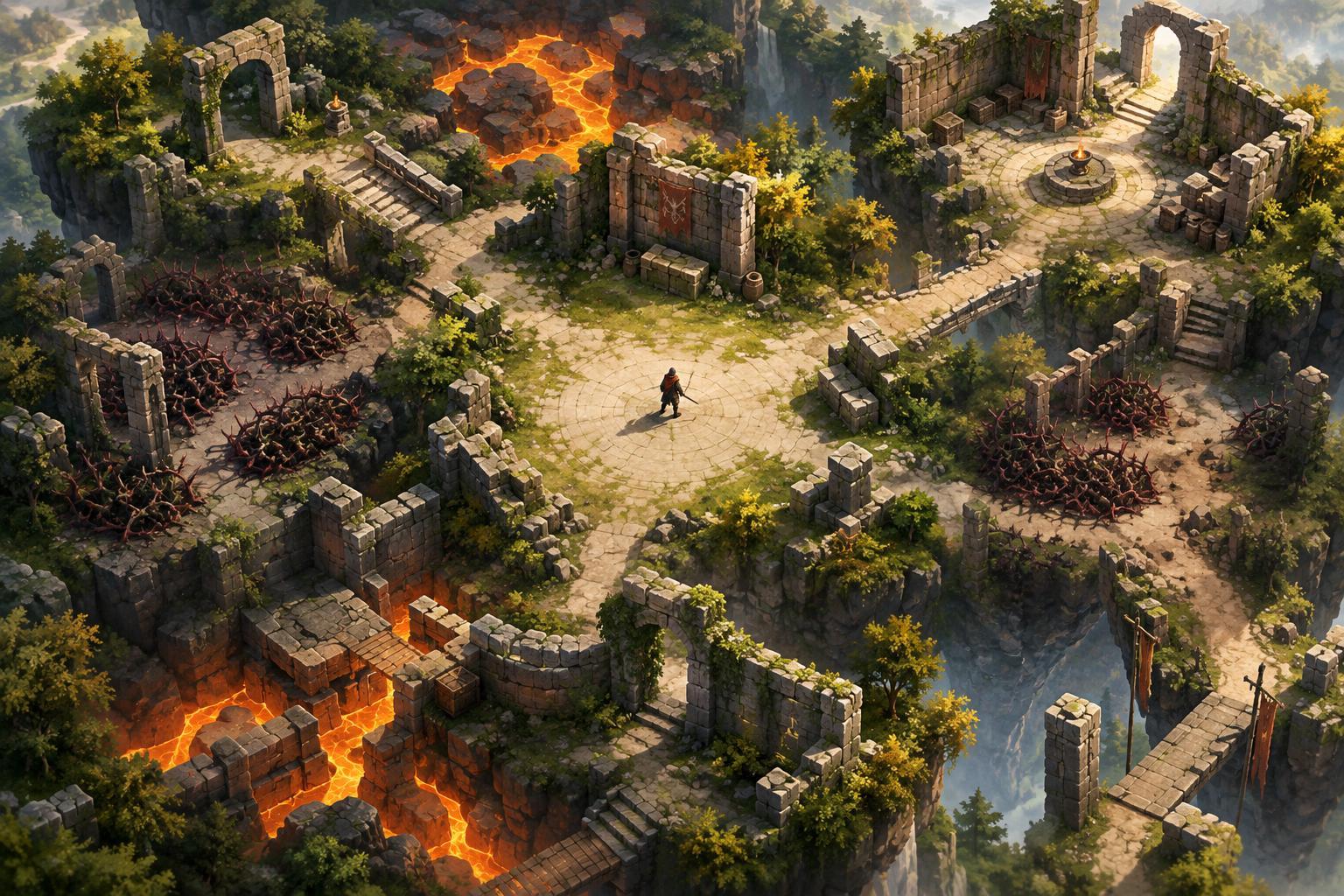
Survival games often make movement a continuous choice. Players steer away from dense groups, circle toward useful pickups, and avoid getting trapped at the edge of the screen. A boss arena can build on those decisions by changing where safety lies over time. An attack that makes one route temporarily dangerous, for example, encourages players to plan an exit before they need it.
The arena should leave room for a workable response. When hazards, minor enemies, and the boss all compete for space, difficulty can rise quickly. That pressure can be exciting if the player can read it and act. It becomes harder to learn from when effects obscure exits or attacks cover nearly every available route. Designers can test an encounter by watching not only whether players survive, but whether they appear to understand why a path was safe or unsafe.
Let builds matter without requiring one answer
Build planning is central to many roguelites. By the time a boss appears, players may have traded range for damage, chosen reliable area coverage, or invested in defense. A satisfying encounter gives those choices consequences without making one specific item or upgrade feel mandatory. A close-range build might need to take greater positioning risks, while a long-range build may have an easier time attacking but still need to manage space.
Bosses can expose weaknesses in a build, but they should also offer ways to adapt during the fight. Clear openings, alternate routes, and manageable minor enemies give players room to use what they have. If only one narrow strategy works, earlier choices may start to feel irrelevant. Testing a boss with several plausible builds can reveal whether it rewards different strengths or merely tolerates them.
Make attacks readable and recovery useful
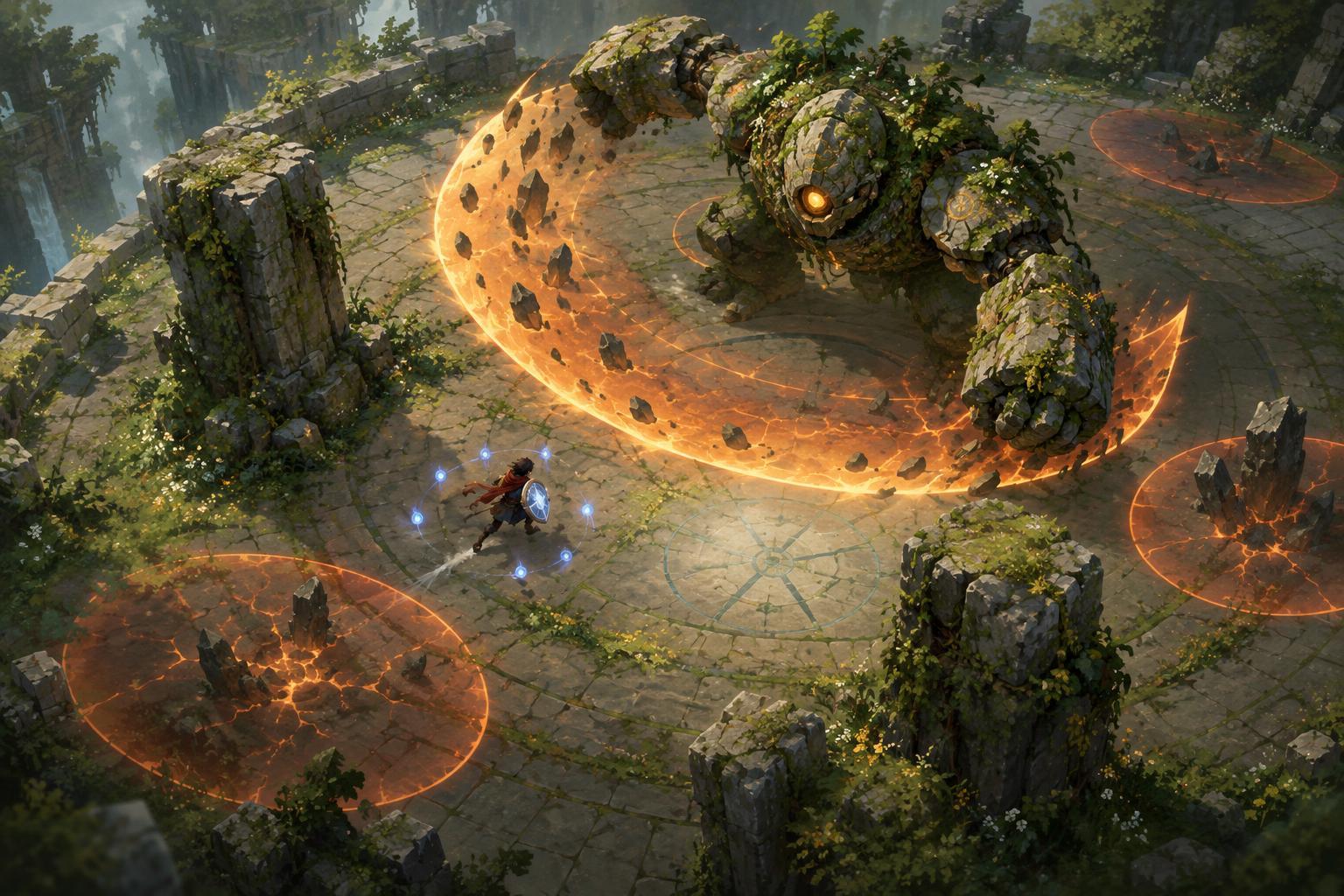
A difficult attack does not need to be a surprise. A visible windup, a consistent sound, or a clear change in the boss’s posture can give players time to decide where to go. The signal should communicate the nature of the threat, not just announce that something is about to happen. If an attack sweeps across the arena, players need enough information to choose which direction offers a safer escape.
Recovery windows matter as much as attacks. After dodging, players should have a moment to reposition, deal damage, or collect something important. Those windows turn defense into a meaningful decision rather than an endless scramble. They also make mistakes easier to understand: a player can see whether they committed too early, stood in a risky place, or missed an opening. Readable cues and consistent patterns support players with different reaction speeds without necessarily removing the challenge.
Keep the boss connected to the run
A boss fight should feel like a peak in the run, not a pause from it. Resources gathered beforehand, movement habits formed against ordinary enemies, and choices made during upgrades should still influence the encounter. Small enemies can remain part of the fight when they reinforce those familiar pressures, though too many may hide the boss’s signals. Pickups or temporary safe spaces can create interesting choices if reaching them carries an understandable risk.
A useful design check is to ask what players learn from losing. If they can identify a missed cue, a poor route, or a build limitation they might address next time, the encounter has given them something to practice. If they cannot tell what happened, adding more damage or enemies is unlikely to make the fight more satisfying. The strongest boss encounters raise the stakes while keeping the game’s basic language intact.