Why one strong weapon is rarely enough
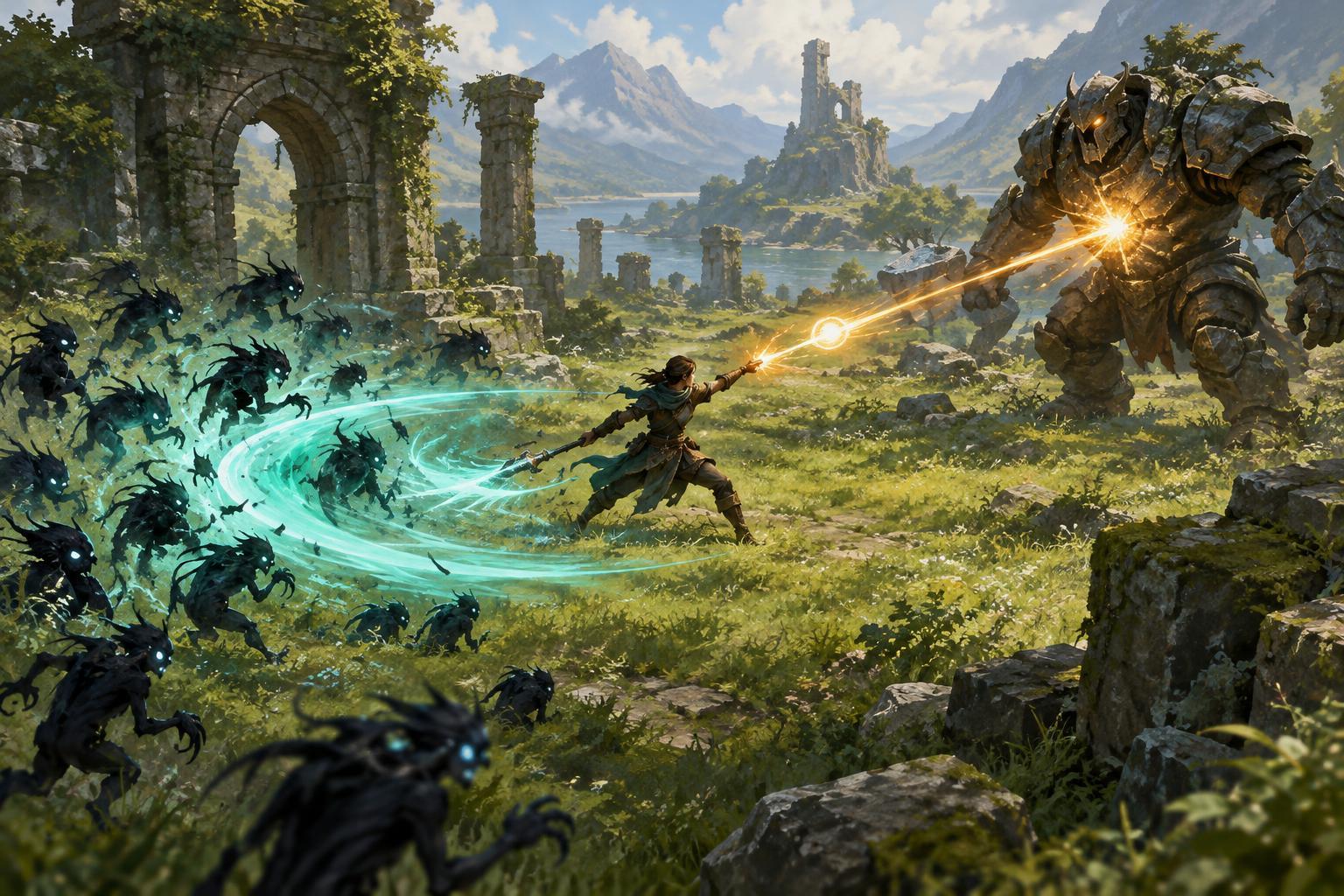
Crowd-clear and boss damage solve different problems. A wide attack may keep dozens of small enemies away but take a long time to defeat a durable target. A narrow, powerful attack may bring down that target quickly while letting a swarm close in from every side. In many survival and arcade-style games, you need enough of both to keep moving and to finish important encounters.
Think of a loadout as a set of jobs rather than a collection of individually strong weapons. One tool creates space, another delivers damage to a priority target, and the remaining slots support whichever job is falling behind. The aim is not necessarily an even split of damage. It is to avoid a failure point: getting trapped before reaching a boss, or surviving the swarm but being unable to defeat the boss safely.
Give each attack a clear role
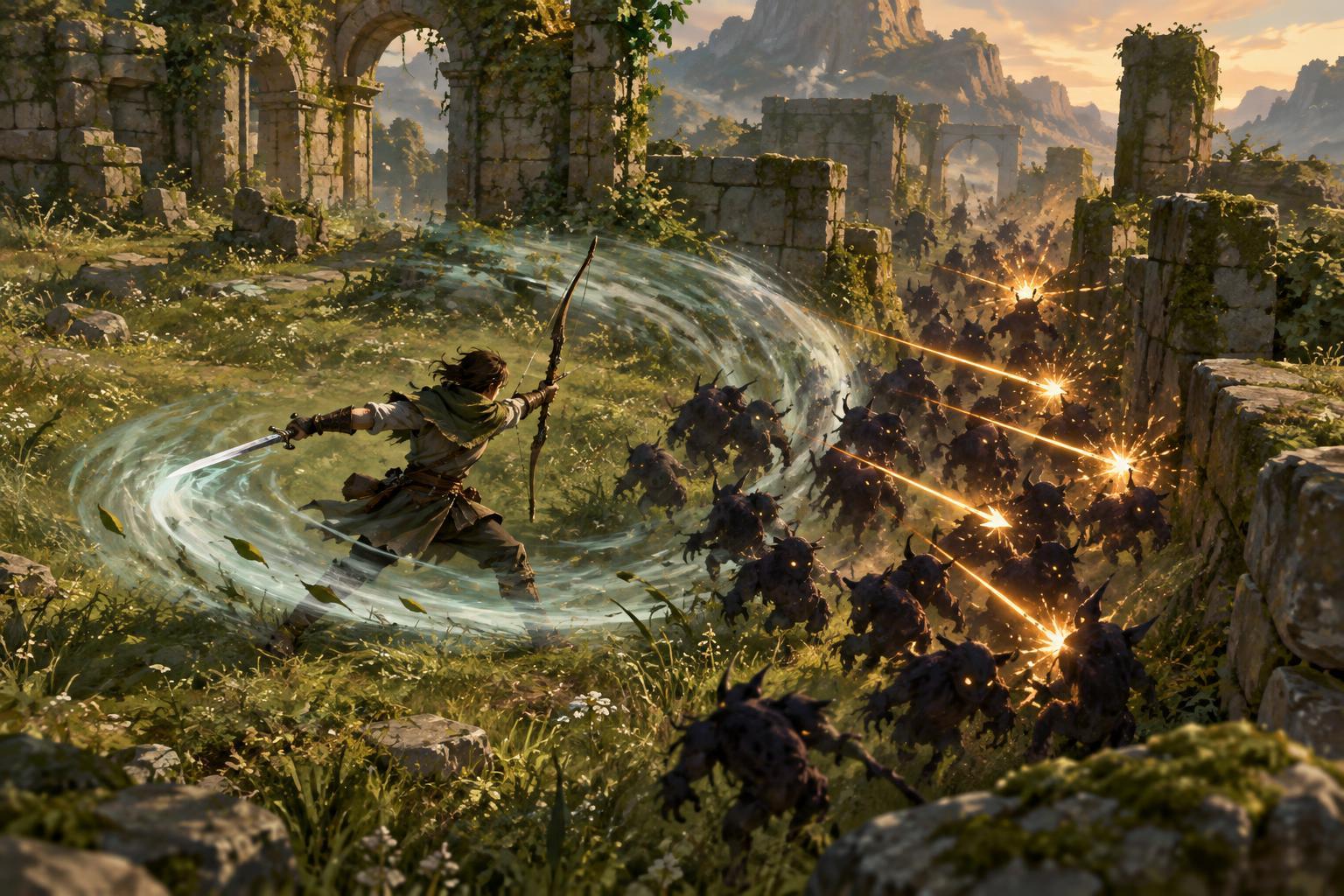
A crowd-clear tool usually offers coverage, frequent hits or reliable knockback. It might strike around your character, sweep a broad area or leave a hazard that enemies must cross. Its value includes the room it gives you to reposition. A boss-damage tool instead needs to put repeated damage into one target. Focused projectiles, attacks that linger on a target and effects that become stronger with repeated hits can fill that role, depending on the game.
Look for a third role: control. Slowing, pushing or interrupting enemies may not produce the highest damage number, but it can give a focused attack time to work. Control is especially useful when your main boss weapon requires careful aim or a consistent distance. Before taking a new upgrade, ask what job it performs and whether another part of the loadout already does that job well.
Upgrade the weakness that threatens the run
Early in a run, reliable coverage often matters most. If small enemies are forcing constant retreats, investing everything in a single-target weapon can leave you unable to collect rewards safely. Establish a way to keep nearby space clear, then strengthen your answer to tougher enemies. Once routine waves are manageable, extra coverage may bring less benefit than improving focused damage.
Use what happens on screen as your guide. If you can move freely but an elite enemy stays alive through several attack cycles, prioritize damage that can reach it consistently. If that enemy falls quickly but ordinary enemies box you in, improve coverage or control. Consider reliability as well as raw power: an impressive attack that frequently misses while you dodge may contribute less than a steadier one. Reassess after major upgrades, because a weapon that was weak earlier may become central to the build.
Choose bonuses that help attacks work together
Shared bonuses can make a mixed loadout more efficient. Attack speed may improve both broad and focused weapons if both can fire more often. Range may help you damage a boss from safety while also catching enemies before they surround you. Cooldown, area and duration can be valuable too, but their effects depend on how each attack functions. Check whether a bonus actually changes the weapons you rely on rather than assuming it helps everything equally.
Synergy also comes from timing and positioning. An area attack that clears a path can create a moment to aim a narrow attack. A slowing effect can keep a boss within a lingering damage zone. Two attacks that both require you to stand dangerously close may compete for the same opportunity, even if each is strong alone. Prefer combinations you can use while moving in a way that feels manageable.
Test the build before committing every slot
Treat the first difficult wave and the first durable enemy as practical tests. During a wave, notice whether you can choose your route or are merely escaping. Against a durable target, notice how much of your focused damage lands while you avoid danger. These observations tell you more about the loadout than a single damage figure. They also reveal whether the problem is damage, control or positioning.
Keep a little flexibility until those tests are clear. Filling every slot with similar attacks can make a build powerful in one situation and brittle in another. If your choices are limited, prioritize a dependable answer to the problem that currently ends your runs, then use later upgrades to cover the other side. A balanced loadout does not have to excel at every encounter; it needs a workable plan for both the crowd and the boss.