Think of the arena as a set of choices
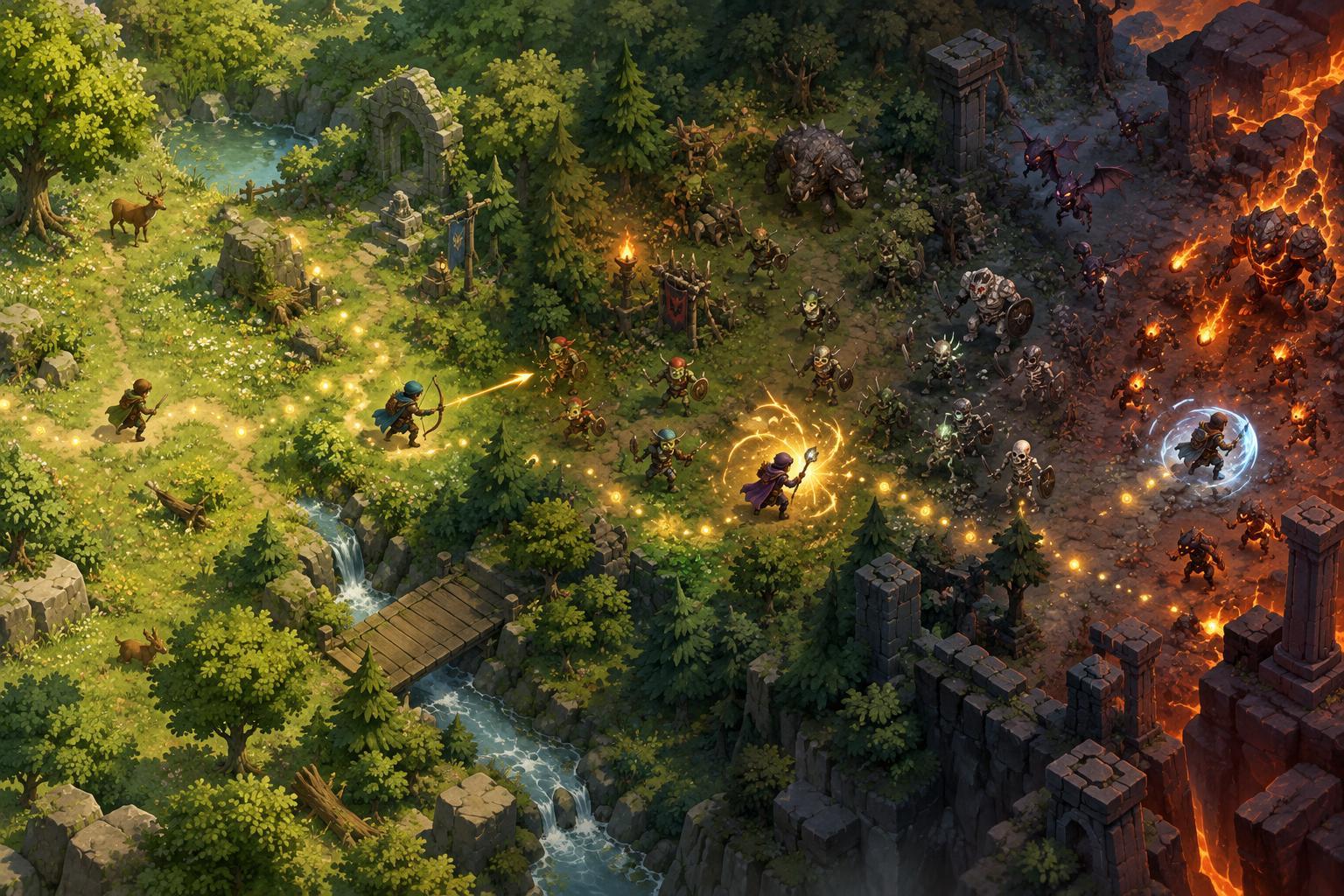
In a survival game, the arena is more than a backdrop. Its shape determines where you can move, how easily you can change direction and whether a safe-looking position can become a trap. Before committing to a path, look for broad areas, narrow connections, corners and obstacles that interrupt movement. The useful question is not simply “Where is the most space?” but “Where can I go next if this route closes?”
That question matters because an arena changes in practical terms as enemies occupy it. An open lane may stop being usable when a crowd crosses it; a gap beside an obstacle may become valuable when the center fills up. Good movement depends on noticing those changes early, while there is still room to choose. The same principle helps designers: a layout feels interesting when its spaces offer distinct decisions rather than one obviously safe circuit.
Use open space without drifting into a corner
Open ground gives you room to turn, circle a group or move away from a threat without threading through a tight gap. It is especially helpful when your attacks need time to connect or when you are still learning an enemy’s movement. Space also makes the scene easier to read: with fewer walls or props nearby, it is simpler to see which direction remains clear.
Open space is not automatically safe. Moving straight across it without checking the edges can leave you pressed against a boundary with enemies between you and the center. Try to preserve room on at least one side, and make wide turns before pressure reaches you. If you are circling a group, watch whether your circle is shrinking. A small adjustment toward a clear area is often easier than trying to break through after you have been surrounded.
Treat obstacles as tools with a cost
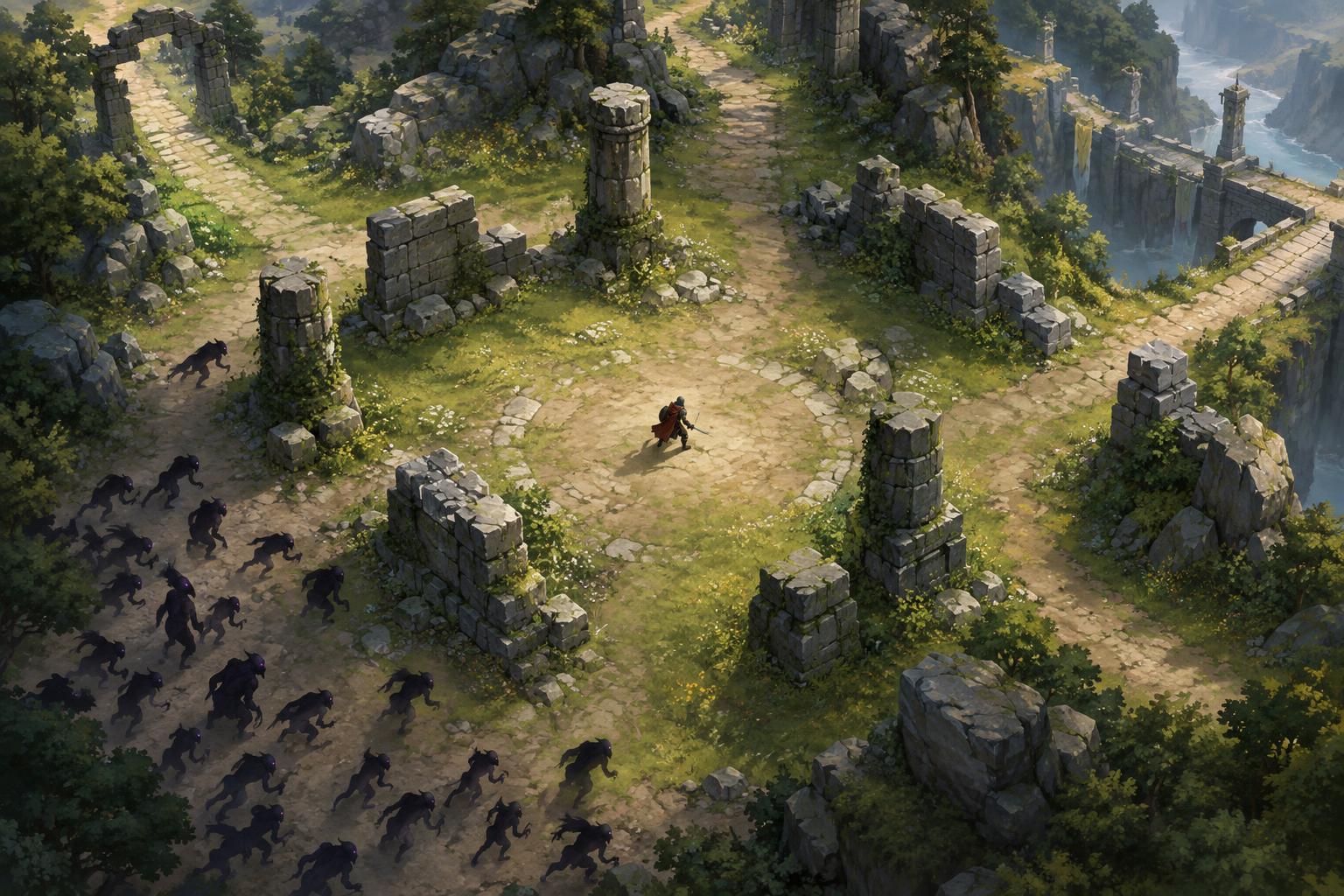
Walls, pillars and other obstacles can break a direct approach and create a moment to reposition. Depending on a game’s collision and attack rules, an obstacle might also block projectiles, interrupt enemy paths or give you a place to guide a crowd around a predictable bend. Learn those rules through observation rather than assuming every object provides cover.
The cost is reduced visibility and fewer exits. Running close to a wall removes one direction of travel, while slipping behind a pillar may hide enemies approaching from the other side. Corners are particularly risky if you enter them without a plan to leave. When using an obstacle, picture the route around it before you arrive: which side is clearer, and can you continue moving if enemies follow? An obstacle is most useful when it helps you redirect pressure, not when it merely delays contact.
Plan escape routes before you need them
An escape route is a sequence of reachable spaces, not just a gap visible in the distance. A narrow opening may look inviting but become unusable by the time you reach it. Check the approach as well as the destination. If the route requires a sharp turn, leaves you along a wall or passes through a crowded choke point, consider a wider alternative even if it takes longer.
It helps to keep a primary route and a backup in mind. For example, you might move toward the open center while leaving enough space to turn around a nearby obstacle if the center fills. Avoid using every available gap at the first sign of danger; some gaps are more valuable as exits than as shortcuts. If a game includes a dash or similar movement ability, treat it as an extra option, not a replacement for positioning. An ability may be unavailable at the moment you need it.
Match the layout to the run—and make it readable
Arena geometry interacts with your build. Broad attack coverage may reward routes that keep enemies at a consistent distance, while attacks aimed in one direction may favor approaches with room to line up a target. Slow or close-range builds can benefit from spotting narrow passages early, but those same passages can be dangerous if they offer no way back. Reassess your route when your movement speed, attack reach or enemy behavior changes; a path that worked earlier may no longer suit the run.
For designers, readable geometry lets players make these decisions deliberately. Clear boundaries, visible openings and obstacles that behave consistently help players understand why a route worked or failed. Providing more than one plausible way out of a pressured area can create tense choices without making success depend on guessing an unseen exit. For players, the practical habit is similar: scan ahead, keep an alternative route in view and move before the arena leaves you with only one choice.