Start with the threat, not the damage number
In an arcade survival game, a weapon can look powerful on paper and still fail to keep you safe. The important question is what it does to the enemies currently limiting your movement. A wide attack may remove small enemies before they form a wall. A narrow, hard-hitting attack may defeat a durable enemy that would otherwise follow you for too long. Neither is universally better; each solves a different problem.
Think of area coverage as the amount of space and time your attacks keep dangerous. A weapon might sweep a broad arc, leave a lingering hazard, or fire frequently in several directions. Focused damage concentrates hits on fewer targets, often rewarding careful positioning or aim. These descriptions are more useful than labels such as “best weapon,” because enemy density, movement speed, and available escape routes can change during a run.
Use coverage to preserve room to move
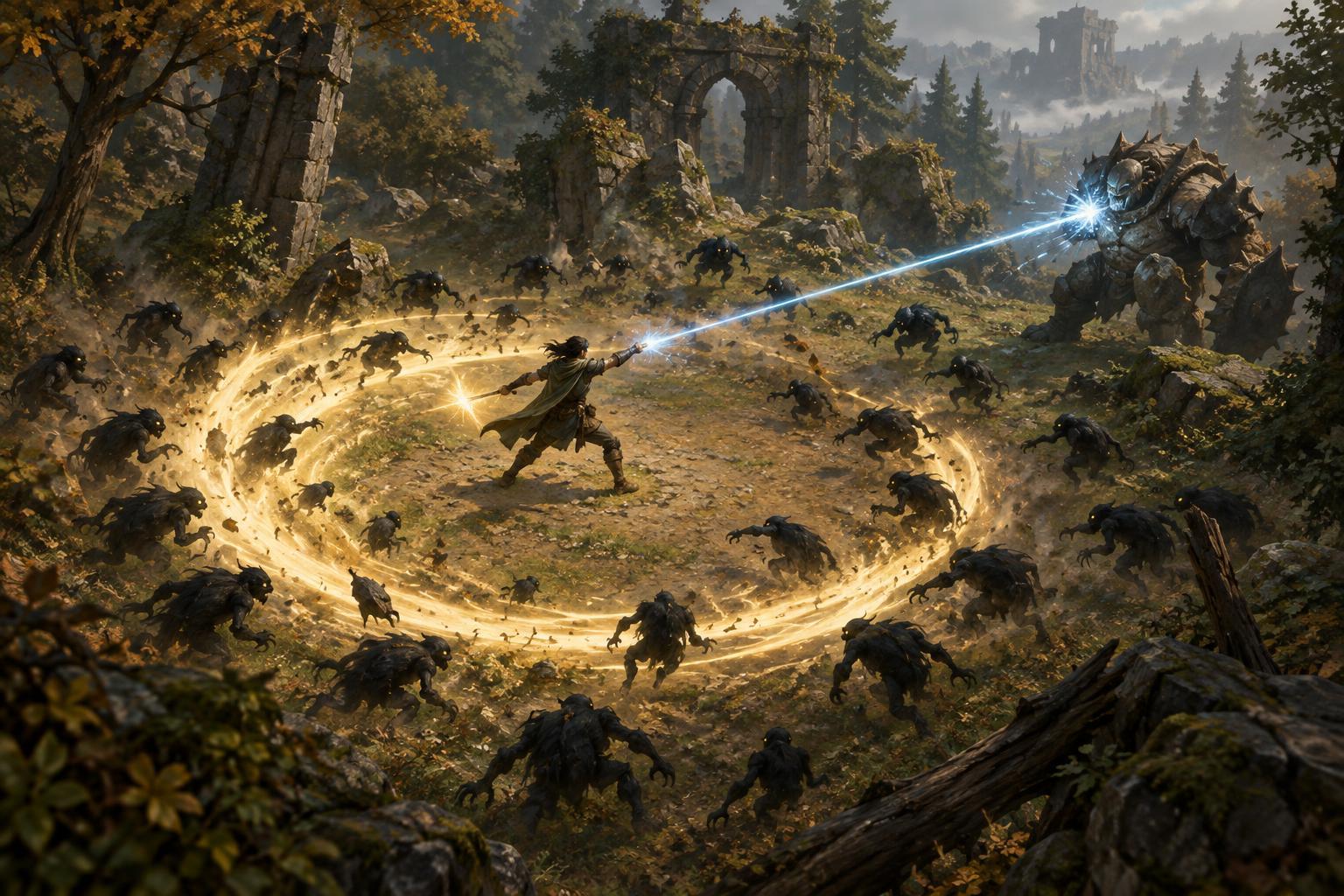
Coverage matters most when many weaker enemies approach from several sides. Consistent attacks can thin a crowd before it closes, giving you room to collect resources or steer toward a safer lane. Frequency and reliability are often as valuable as a large attack radius: a huge effect that triggers rarely may leave gaps at exactly the wrong moment.
Look at where coverage actually occurs. A forward-facing sweep helps when you can turn toward a crowd, but may not protect your back. A close-range effect can be excellent against enemies that reach you, yet do little to open a route through a distant group. If you regularly find yourself trapped despite defeating plenty of enemies, consider adding an attack that reaches the side of your character where pressure is building.
Add focus when tough enemies set the pace
Focused damage becomes valuable when one durable target takes long enough to disrupt your path. You may have to circle it, give up a useful position, or keep dodging while new enemies arrive. A weapon that reliably strikes that target can shorten the problem, even if it clears fewer small enemies than a broad attack would.
Reliability matters here too. A high-damage projectile is less helpful if it repeatedly hits nearby weak enemies instead of the intended target. Targeting rules, projectile travel, cooldowns, and your ability to line up shots all affect its practical value. If a focused weapon needs you to stop or enter a dangerous range, weigh that cost against the time it saves. Damage that is difficult to deliver is not the same as damage you can count on.
Build for the gap your current weapons leave
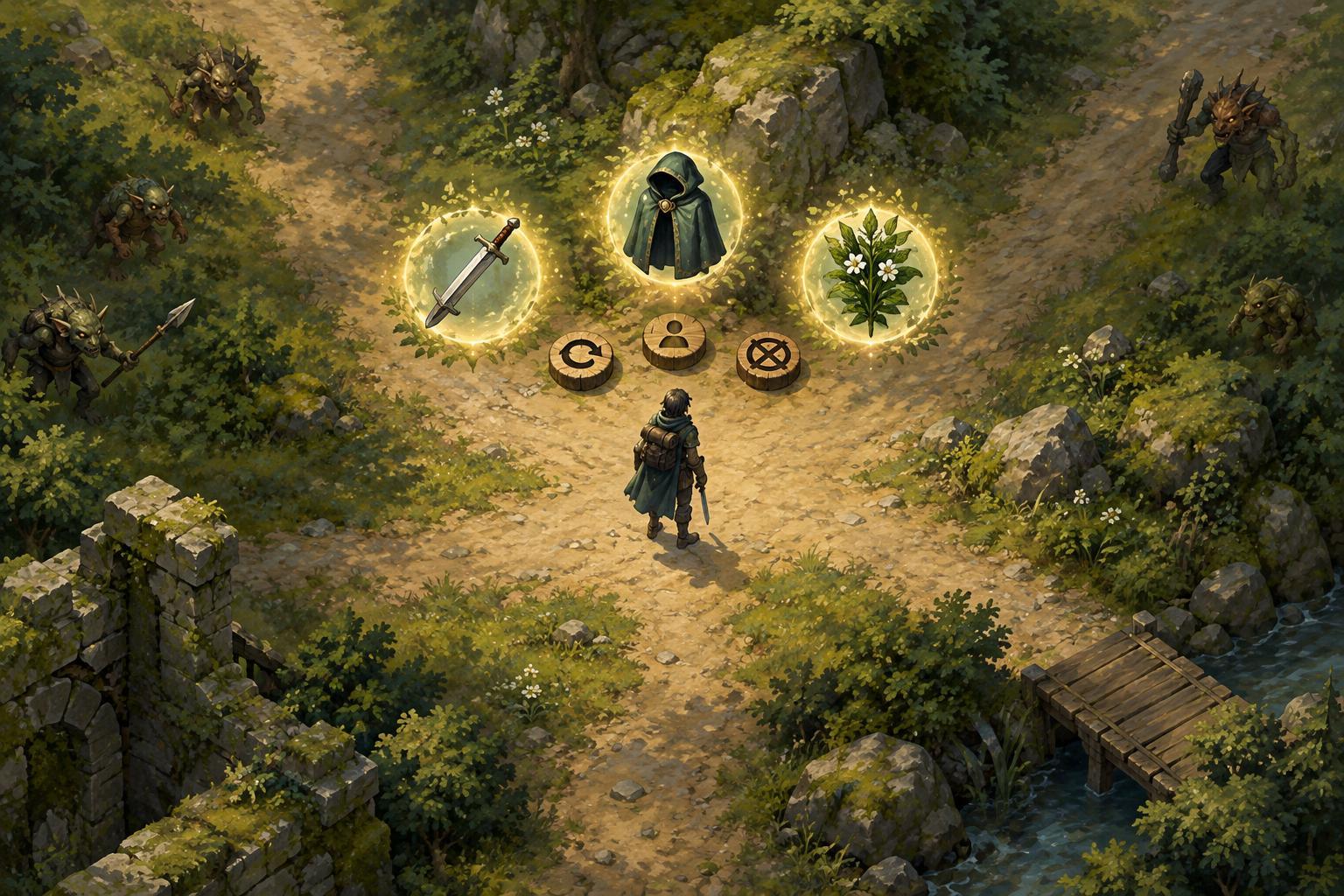
Before selecting another weapon or upgrade, watch one difficult encounter and name the failure. Are small enemies closing in from every direction? Are durable enemies surviving while the screen fills behind them? Can you deal damage only while facing one way? This quick diagnosis is more useful than collecting several weapons that all perform the same job.
A balanced build does not require an equal number of coverage and focused attacks. One dependable crowd-clearing weapon may create enough space for multiple narrow attacks, while several modest area effects may already handle crowds. Upgrades can change a weapon’s role as well: greater reach might turn a defensive effect into a path-clearing tool, while faster attacks can make a focused weapon more dependable. Judge the combined result, not each choice in isolation.
Positioning completes the build. If your strongest attack covers a cone in front, move so enemies gather in that cone rather than scattering around you. If it strikes a single nearby target, leave yourself a retreat route before engaging something durable. When precise steering or aiming feels uncomfortable, favor attacks whose coverage is easier to use consistently. A slightly slower but dependable plan can outperform one that demands constant correction.
Reassess as the run changes
Early on, a small amount of steady coverage may be enough to protect your movement. Later, denser groups can expose gaps between attacks, while tougher enemies can reveal a shortage of focused damage. Use those changes as signals. If crowds are the problem, improve reach, frequency, or coverage in an unprotected direction. If a single target is the problem, improve reliable hits on that target before adding another general-purpose effect.
The simplest rule is to choose the next tool for the threat that costs you the most space or time. Coverage keeps routes open; focused damage removes obstacles that refuse to go away. A strong build uses both when needed, then relies on movement to make each weapon’s strengths count.