Start with a direction, not a destination
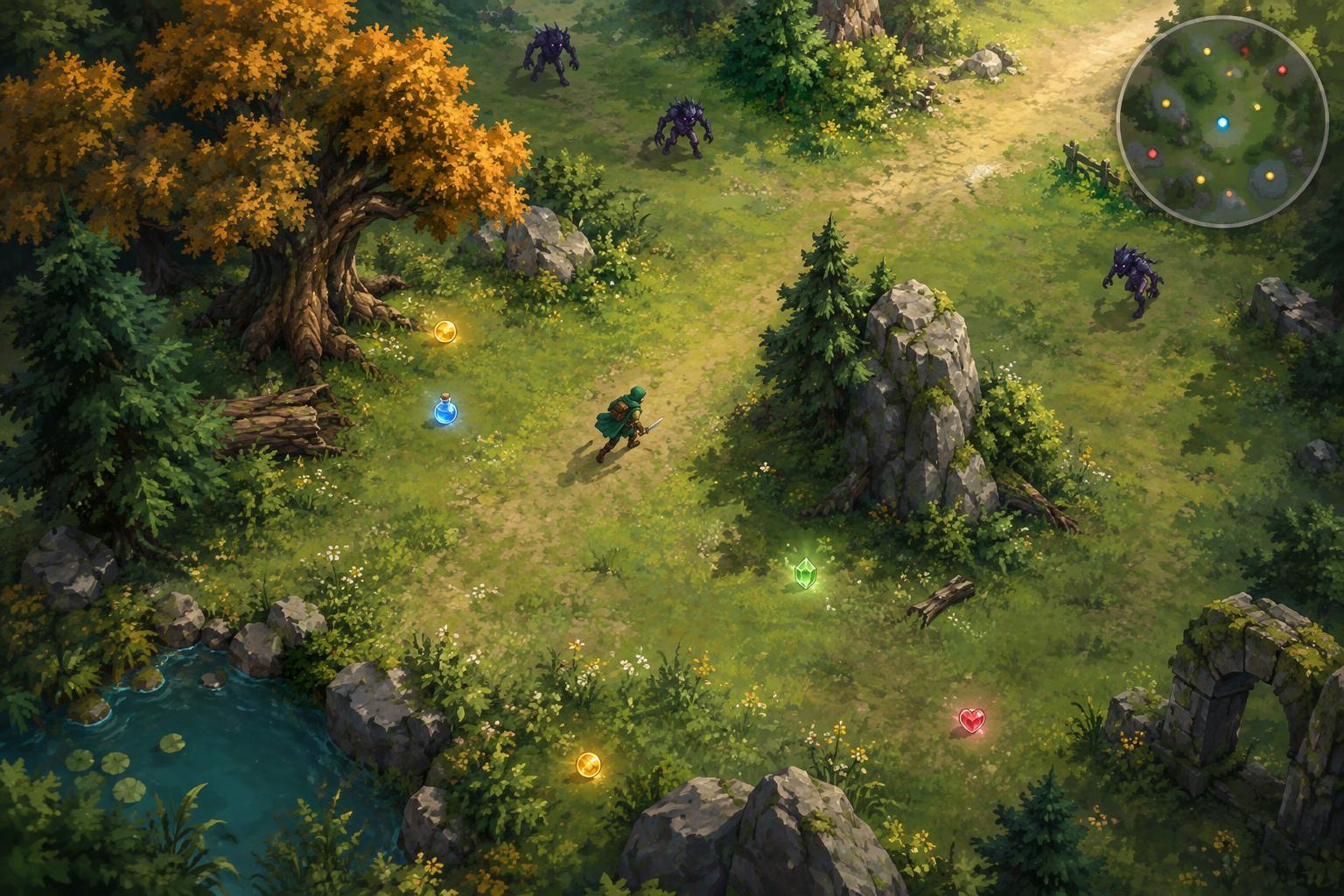
At the start of a run, choose a broad direction and move steadily toward open space. You do not need a perfect route or a specific point on the map. The immediate goal is to avoid standing still while you learn where enemies are appearing and how quickly your starting attack clears them. A gentle curve is often easier to adjust than a straight line that ends at a wall or obstacle.
Treat this as a default, not a rule. Arena survival games differ in map size, enemy behavior, and attack patterns. If your weapon works best while enemies follow directly behind you, a longer sweep may help. If it attacks in a short radius, you may need to pass closer to targets. In either case, leave enough room to turn before the crowd reaches your position.
Make wide loops and keep an exit visible
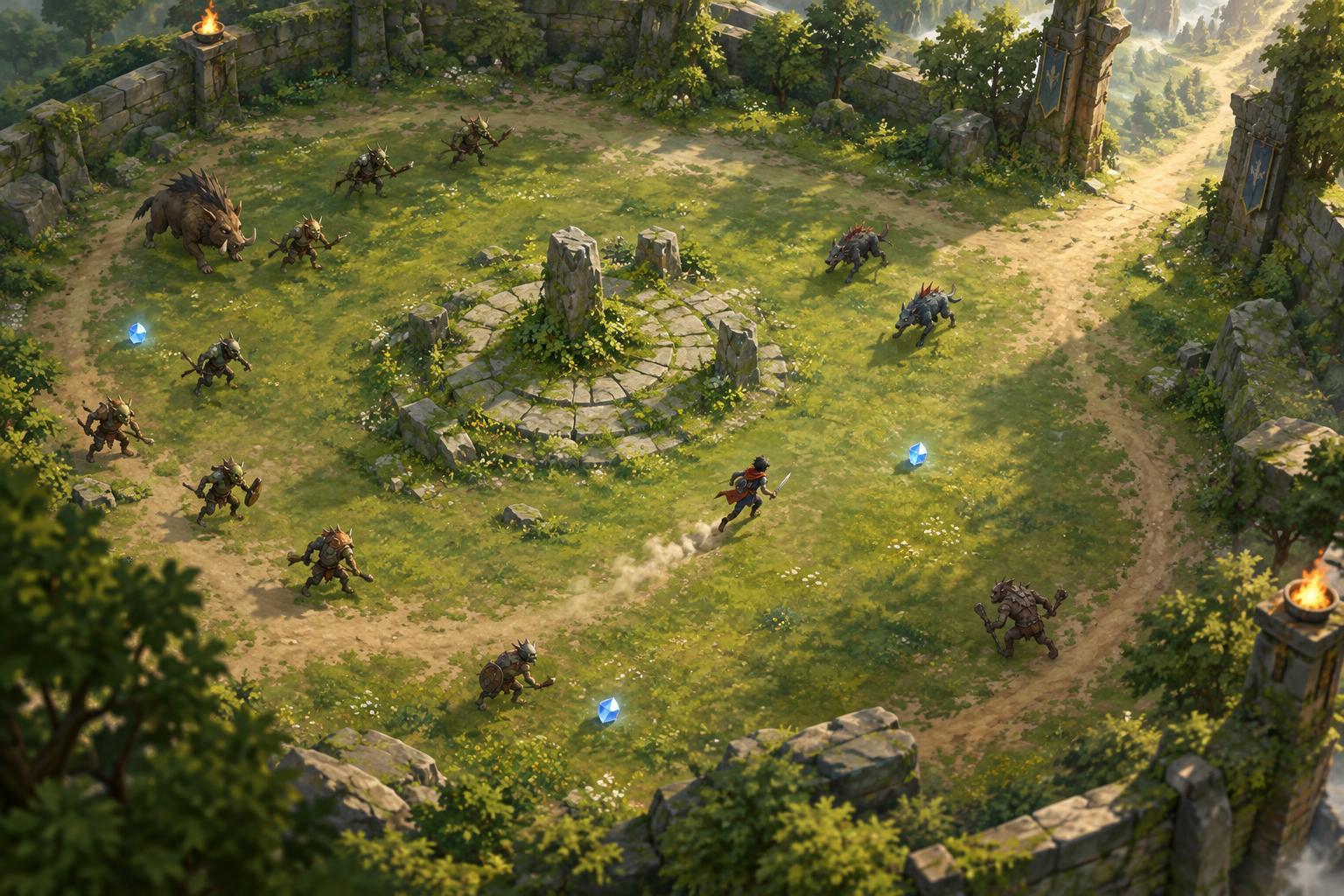
Once enemies begin to gather, try moving around the outside of the group rather than cutting through its center. A wide loop encourages pursuers to collect behind you and makes gaps easier to see. Check the space ahead as often as the enemies behind. Before committing to a turn, identify where you could go if another group enters the path.
Avoid shrinking your loop simply because the next few steps look clear. Tight circles can bring you back into enemies you have not defeated. Near a map edge or obstacle, turn early enough to keep the escape lane wide. If the game has a dodge, dash, or temporary defensive ability, consider saving it for a blocked route instead of using it whenever it becomes available.
Collect pickups on the return pass
Defeated enemies often leave experience or other pickups behind your route. It can be tempting to reverse direction immediately for every item, but that may send you into the group following you. Instead, notice where pickups are accumulating and plan to reach them on the next safe pass. You are still collecting; you are choosing a safer angle of approach.
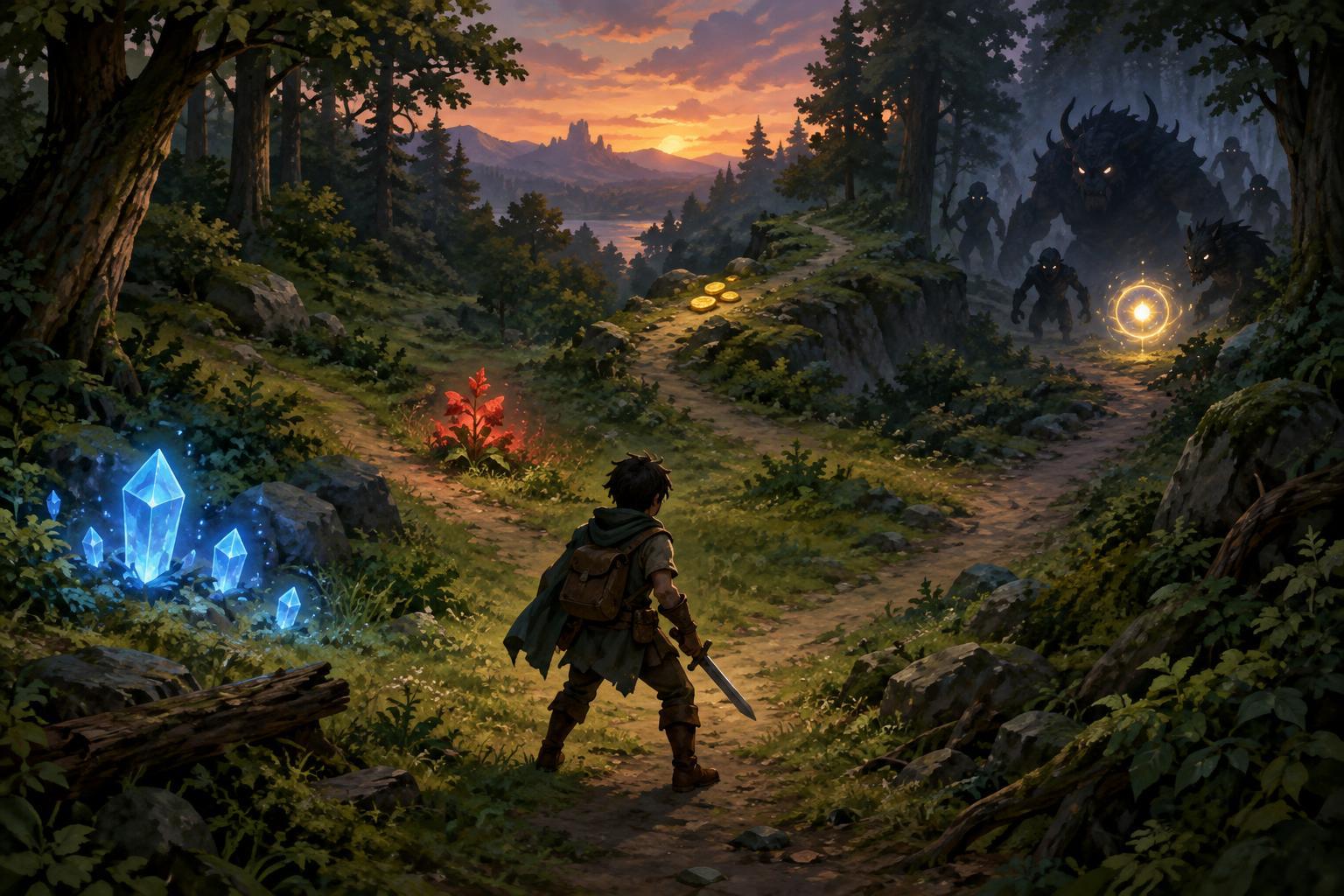
There are exceptions. An early pickup that enables an important upgrade may justify a short detour if the path is open. Before turning toward it, look at both the pickup and the route out. If reaching it requires crossing a dense cluster with no clear exit, keep moving and return later if the game allows. One item rarely helps if the detour ends the run.
Adjust the loop as your build develops
Your movement plan should change when your attacks change. A build that reliably clears space in front may let you travel more directly. An attack that fires at intervals may call for wider spacing while you wait for it to trigger. If enemies remain standing after several passes, give yourself more room rather than assuming the same small loop will eventually work.
Use short checks to guide each adjustment: Is the crowd closing in? Are pickups piling up where you can safely return? Is there still an open side of the arena? These questions are more useful than trying to follow an exact route for every run. When a turn goes badly, focus first on reaching open ground; you can rebuild an efficient path after the immediate pressure passes.
Keep the plan simple enough to follow under pressure
A useful opening routine is easy to remember: move toward open space, curve around the crowd, turn before reaching a boundary, and gather pickups on a safer pass. Repeat that pattern until your upgrades and the enemy layout give you a reason to change it. The aim is not flawless movement. It is to make fewer rushed reversals and preserve room for the next decision.
If precise movement is difficult or tiring, favor larger turns and clearer paths over narrow escapes. Adjusting control sensitivity or using an input method that feels comfortable may also make the routine easier to maintain, where the game offers those options. This is independent editorial guidance for the genre, not an official guide to any particular game; use it as a starting point and adapt it to the rules on your screen.